Winter Construction

We have finally slipped into a more typical Iowa winter, even if we are lacking a good solid snowfall. With heaters inside the building keeping it a moderate 55 degrees, progress continues.


Those temperatures have allowed Ryan Companies to dry out the 4 inches of ice that had fallen inside the building before it was enclosed and install “floor board,” a cardboard-type product that will protect the concrete from damage during construction.

IMG_20160202_112240197_HDR

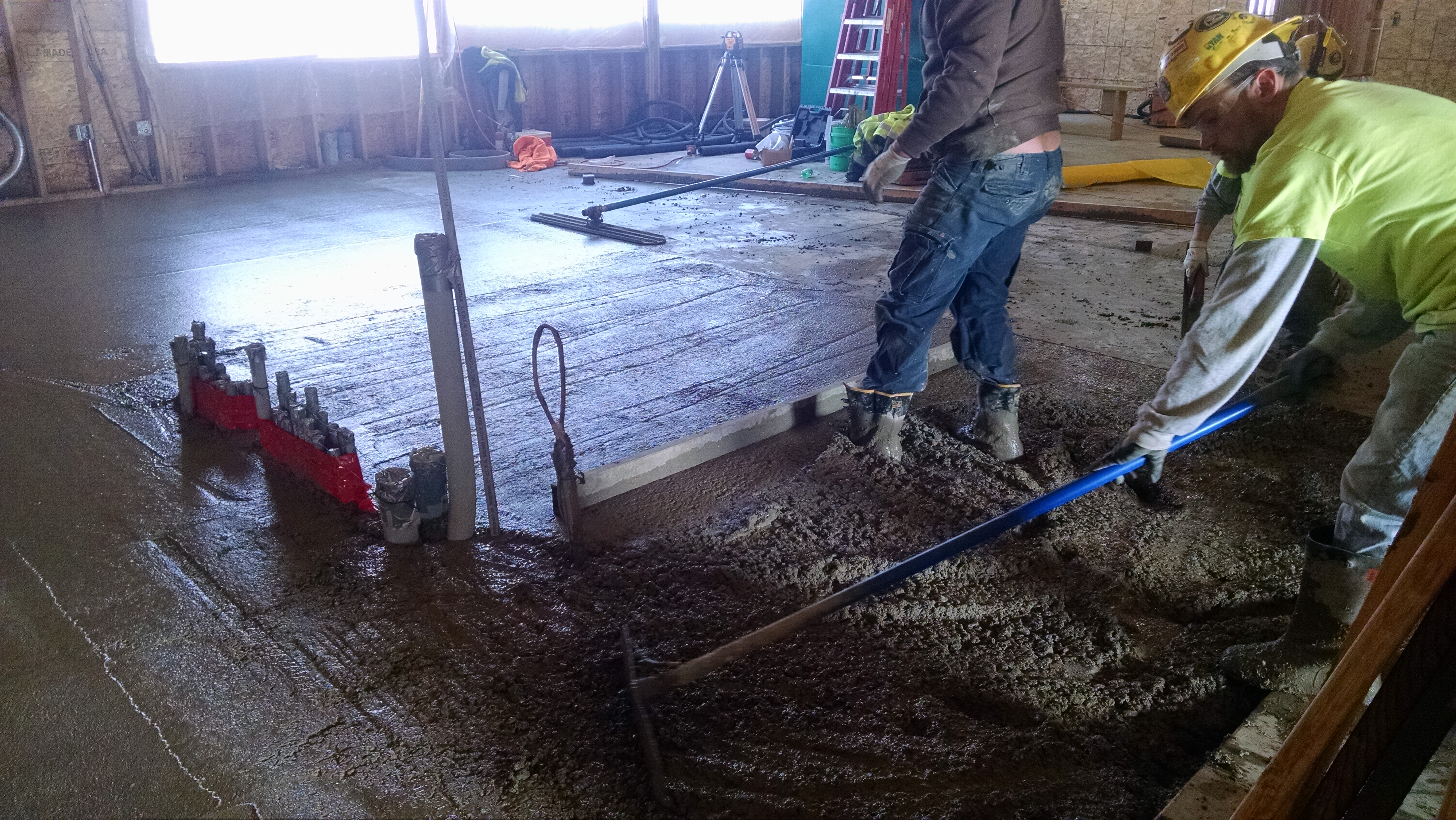
The warm air has also enabled the last of the interior concrete slab to be poured in the mechanical room and around the columns.
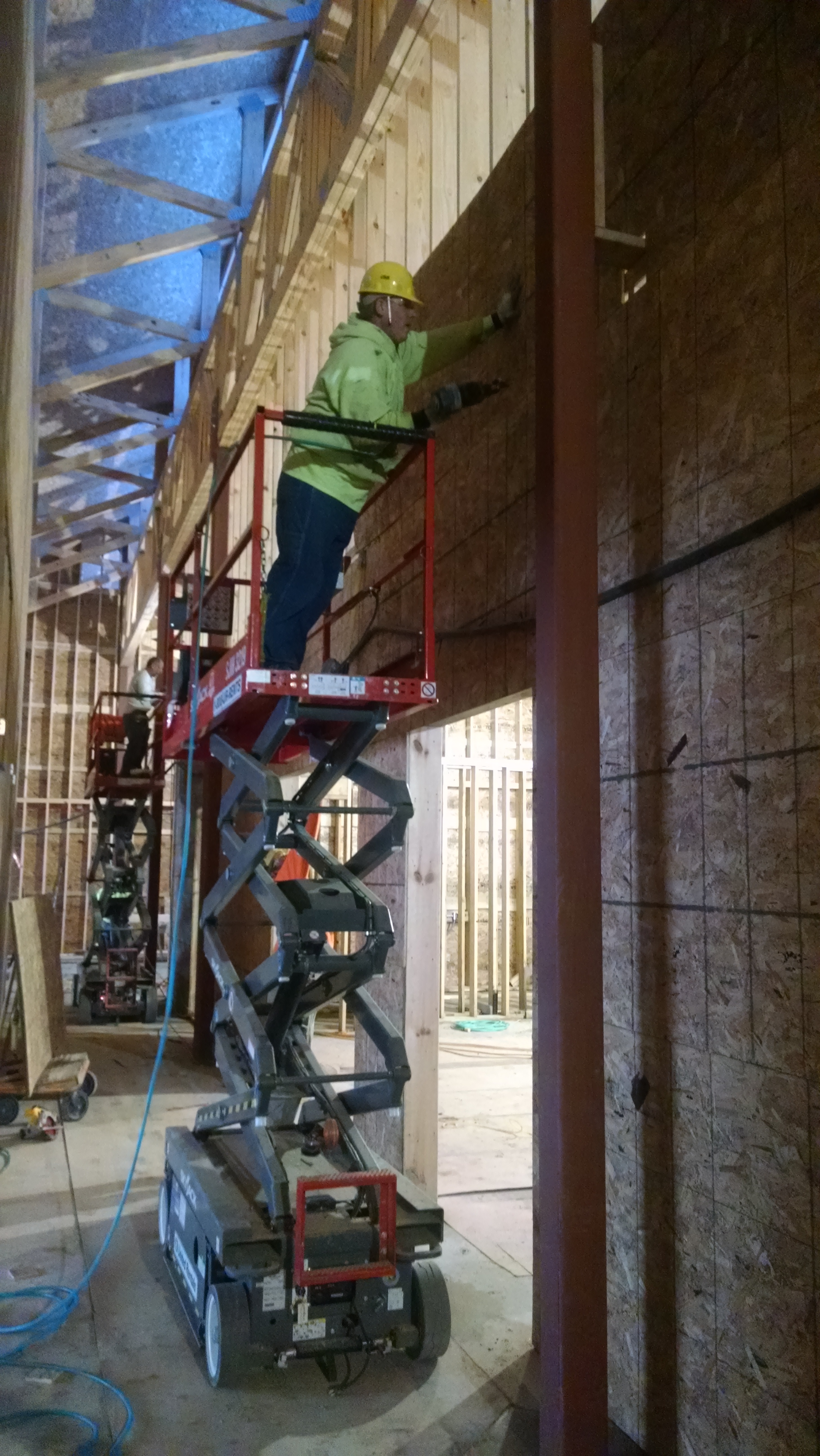
IMG_20160127_095901552The carpenters are nearly finished framing the interior wall structures and installing the sheathing.

IMG_20160202_112108896 (1)

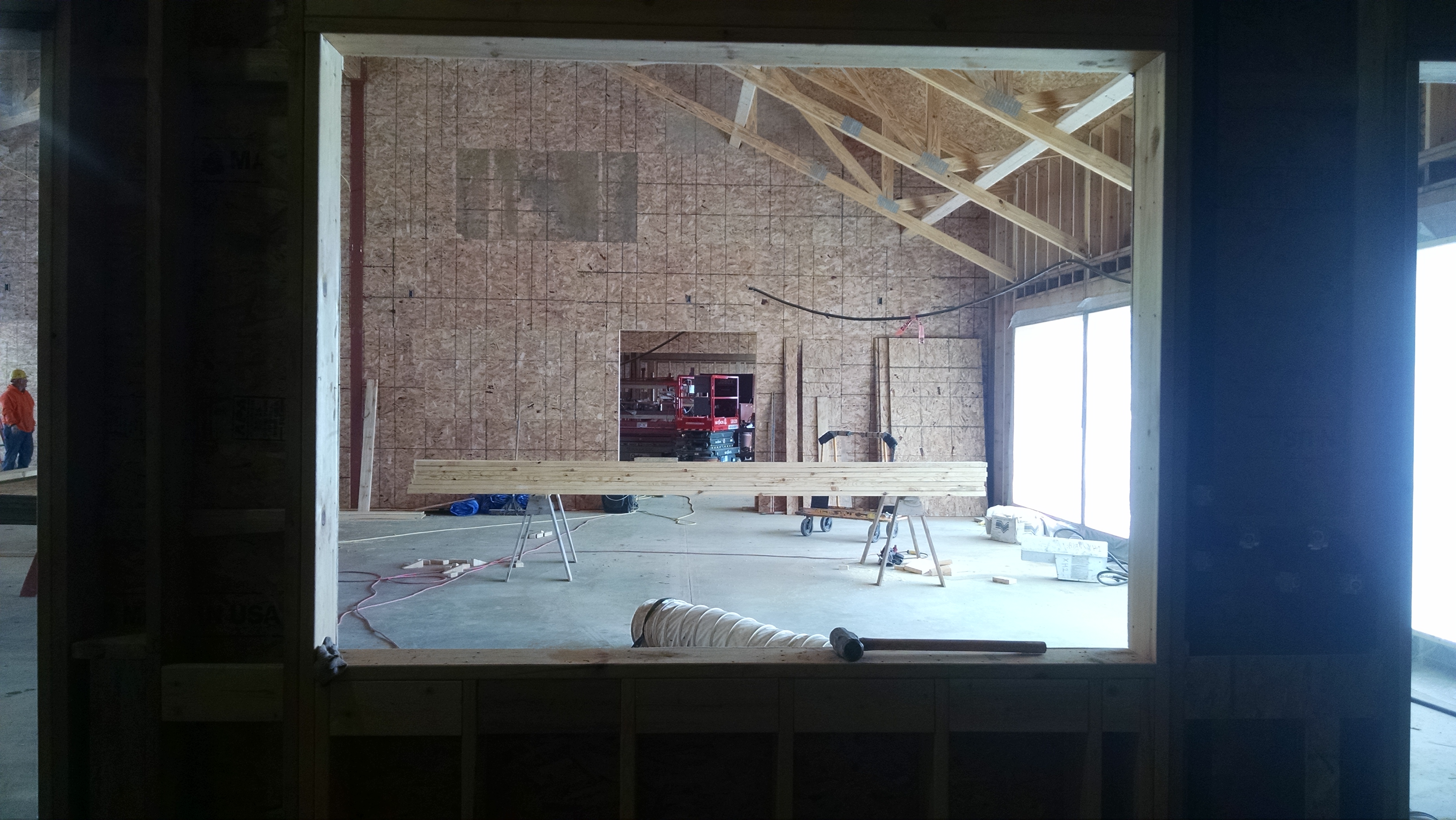
Looking out of the pass-through window of the kitchen, across the auditorium into the main exhibit hall.
IMG_20160210_113015129Next week, progress should resume on the exterior of the building. WIndows are on-site, ready to be installed. The stone masons will create a tent and heat the space,  allowing them to continue working.

Structural Insulated Panels

Structural Insulated Panels (SIPs) have arrived.

IMG_20151223_120718571[1]These panels go under the roof to provide insulation. The panels consist of expanded polystyrene, sandwiched between 2 sheets of oriented strand board.

IMG_20151223_120702840[1] By  prefabricated the panels offsite, they are made efficiently to the exact dimensions they need to be for installation.

IMG_20151223_095553108[1]This allows Ryan Companies to install them efficiently and minimizes waste. Combined with the standing-seam metal roof, they will provide an insulating R-value of 30.

IMG_20151222_092809579[1]

What’s in the Wood?

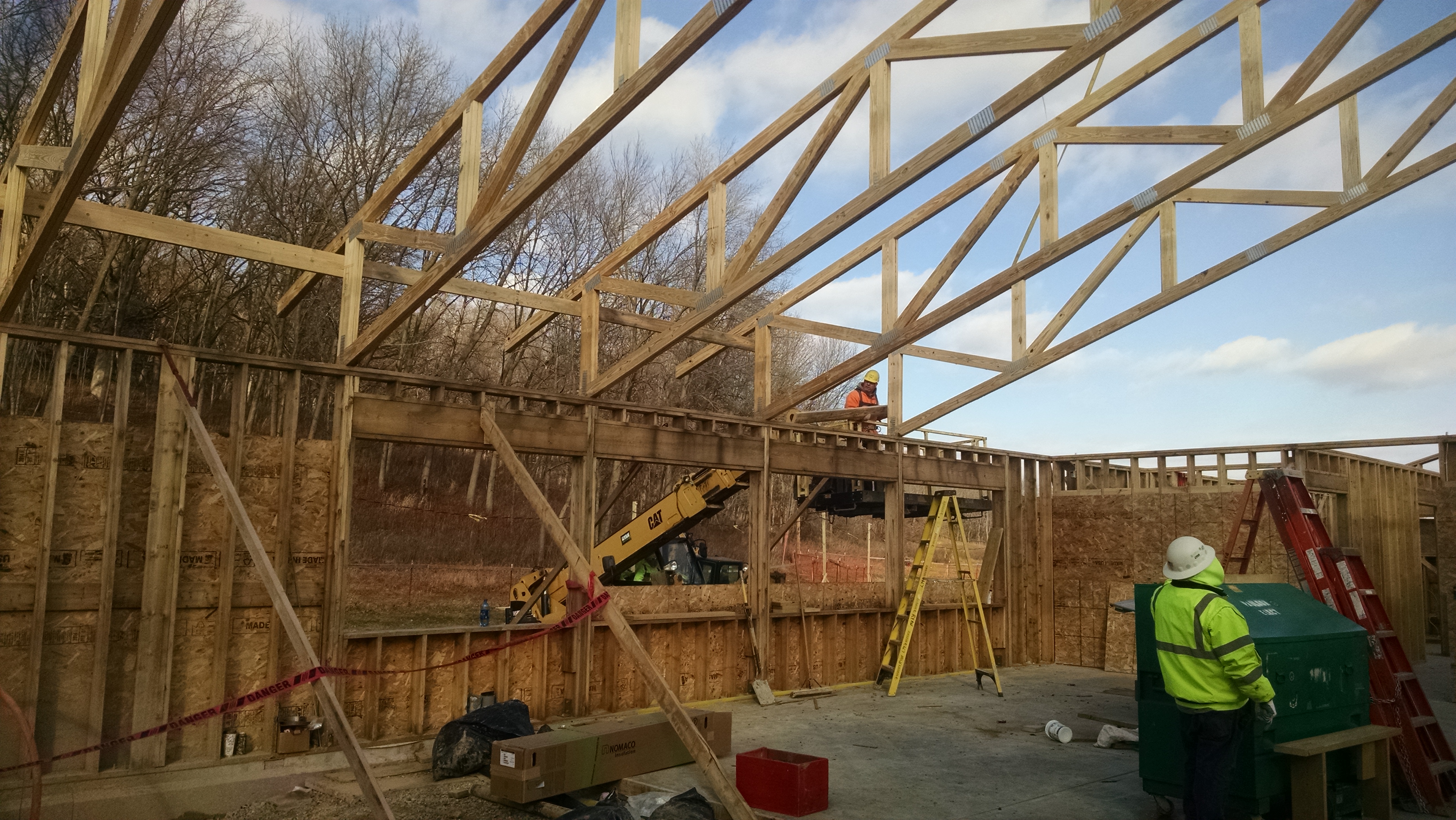
The trusses of Amazing Space are going up.

IMG_20151214_131839641
Not only does that move us closer to being enclosed before cold weather, but it is a visible reminder that the environmental impacts of this project extend far beyond the building itself. Each beam and board purchased for the project meets high environmental, sustainable, and socially responsible standards set by the Forest Stewardship Council.
airial

Once upon a time, the forests of the United States were clear cut for their lumber. Even before the invention of the chainsaw, companies would cut all of the trees out of an area and then move on to the next area. Ecological communities were devastated and mudslides were common. Modern equipment accelerated both the speed of the destruction and the areas that could be reached for logging. The old growth forests are essentially gone across the United States. Old growth forests are disappearing worldwide as developing countries cut and burn their forests to provide a place to grow annual agriculture crops or graze cattle, or cut their trees for milling without replanting.

IMG_20151217_132902892

The Forest Stewardship Council was founded in 1993 to provide a set of voluntary standards for timber companies to follow. This allowed consumers purchasing the wood to make an informed choice in how their lumber is produced, and created the market for sustainable wood.

SONY DSC

When we made the decision to only purchase FSC wood, a requirement set by the Living Building Challenge, we were concerned about what that would cost. We were pleasantly surprised that the premium for sustainably harvested, certified lumber products has dropped significantly, and even with a wood frame building, quite affordable. What was more challenging was finding suppliers of FSC wood and FSC wood products. There is high demand for certified products, and most of the timber industry in the United States now practices some level of sustainable harvesting, as part of a sound business model. Replanting trees, for example, ensures a future for the industry.

There are 10 principles that must be met to receive the Forest Stewardship Council certification, ranging from protecting the rights of indigenous people to monitoring forests and replanting efforts over the long-term. The principles create a comprehensive, holistic approach to sustainably incorporate wood products into our lives.

A few of the Forest Stewardship Council’s Principles:

Principle #4: Community Relations and Worker’s Rights – Forest management operations shall maintain or enhance the long-term social and economic well-being of forest workers and local communities.

Principle #5: Benefits From the Forest: Forest management operations shall encourage the efficient use of the forest’s multiple products and services to ensure economic viability and a wide range of environmental and social benefits.

Principle #6: Environmental Impact: Forest management shall conserve biological diversity and its associated values, water resources, soils, and unique and fragile ecosystems and landscapes, and, by so doing, maintain the ecological functions and the integrity of the forest.

Hunting Red in October

Every fall, two things happen that mark the shift from summer into the fall. The first is when someone calls to ask when to stop feeding the hummingbirds. The answer is whenever the hummingbirds stop eating the sugar water. They know when they need to fly south, and no amount of enticement on our part will convince them to stick around for winter.

The second is when someone brings me a beautiful red leaf to identify.

This is poison ivy. Stunning, and still full of oil. Off of its vine, there are no "leaves of three." The characteristic "mitten tips" curl under almost immeidately making it a tough one to identify.
This is poison ivy. Stunning, and still full of toxic oil. Off of its vine, there are no “leaves of three.” The characteristic “mitten tips” curl under almost immediately making it a tough one to identify.

There is, of course, plenty of non-hazardous beauty out there.

Oak leaves after a rainstorm.
White oak leaves after a rainstorm.
IMG_20151012_094635328
Sugar maple leaves. Both the oaks and the maples produce golden leaves as well this time of year.
Sumac leaves only turn red before falling off.
Sumac leaves, on the other hand, only turn red before falling off.
IMG_20151023_150624105
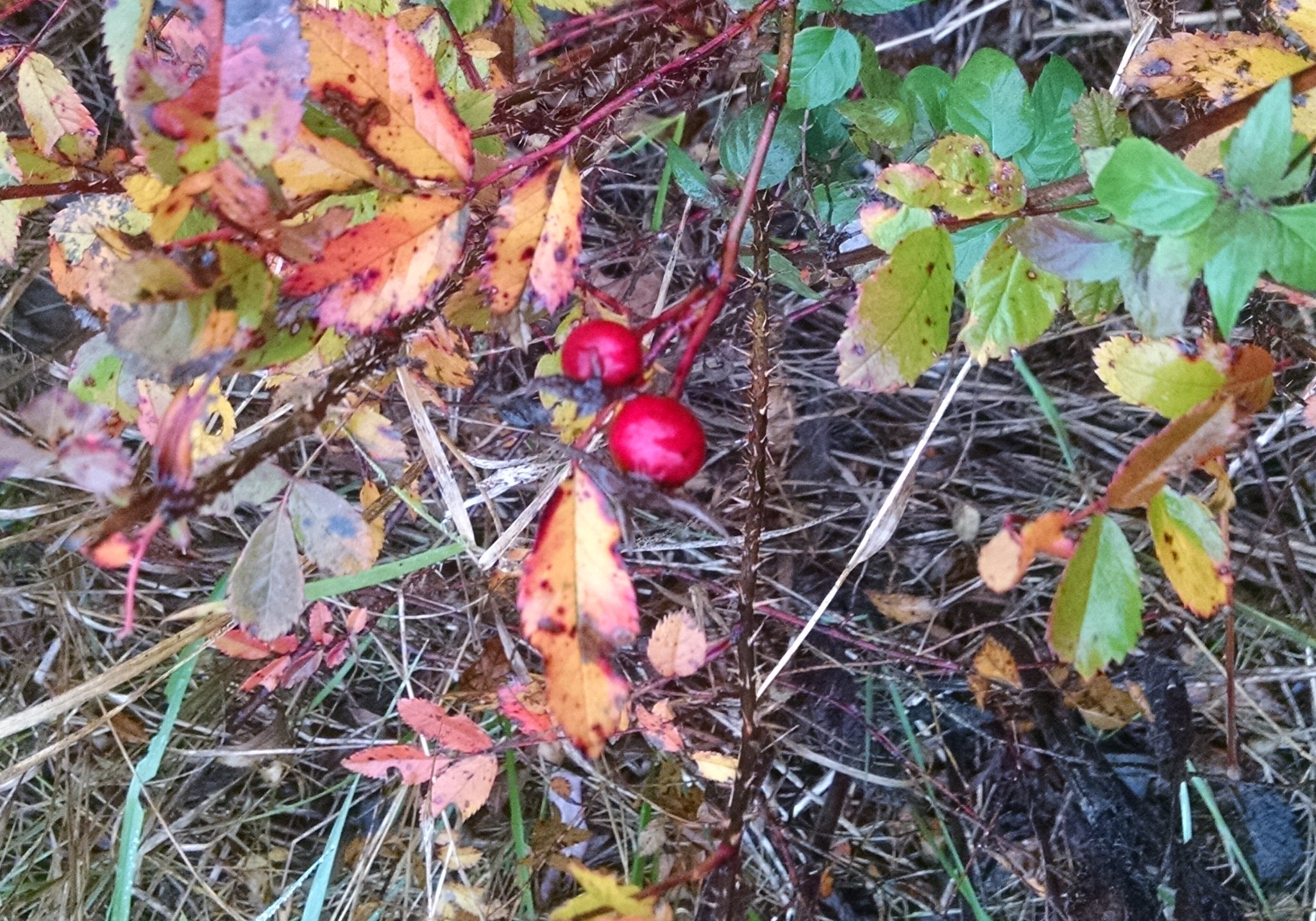
The red I was most excited about discovering on my last walk was a lovely patch of rose hips. Not only are the hips edible, I was able to cut them in half and save the seeds for future plantings, while drying the rose hips for turning into tea.

Planting a bioswale, part 1

Walls are going up.
Walls are going up.
Septic system is nearly complete.

Amazing Space is progressing quickly, both above ground and underground. Three of the bioswales are complete. Finishing them early allows us to protect them with silt fence immediately and re-establish permanent native prairie in the same season they were initially disturbed. We started dormant seeding already to provide the seeds a natural cold, wet stratification and good soil contact for spring germination.

Planting the bioswale with a seed and sand mixture.

In a few days, the more traditional annual oat cover crop will be planted. If these warmer temperatures hold, they should establish roots yet this fall to protect the soil, and they will die back over the winter. The site will also be mulched, to protect the bare soil.

Prairie seed is expensive, and local seed is the best, so we have been busy collecting. Paper bags are better, but we didn't have any on hand when this culver's root presented itself.
Prairie seed is expensive, and local seed is the best, so we have been busy collecting. Paper bags are better than plastic, but we didn’t have any on hand when this Veronicastrum virginicum presented itself.

Because these are bioswales, they are designed to move water through them. While it will be a lot of water, it won’t be standing and puddling. The species we plant need to be able to withstand drought far more than they need to be able to withstand flooding. For this first round of planting, we used: common milkweed (Asclepias syriaca), butterfly weed (Asclepias tuberosa*), white wild indigo (Baptisia alba), river oats (Chasmanthium latifolium), rattlesnake master (Eryngium yuccifolium), cream gentian (Gentiana flavida), sweet pearly everlasting (Pseudognaphalium obtrusifolium), grey coneflower (Ratibida pinnata), wild rose (Rosa arkansana), little bluestem (Schizachyrium scoparium), late horse gentian (Triosteum perfoliatum), culver’s root (Veronicastrum virginicum),  purple prairie clover (Dalea purpurea), and narrow-leaved coneflower (Echinacea augustifolia).

wild coffee
Triosteum perfoliatum

As fall harvesting continues, so will the number of species we plant. For species that we don’t have a lot of already on-site, such as white prairie clover (Dalea candida) and rough blazing star (Liatris aspera),  we will purchase. Due to the support of Rockwell Green Communities, we also have a number of established plants started in the Butterfly Hoop House to transplant.

Butterfly weed ready for transplant.
 Asclepias tuberosa ready for replanting outside.

*It’s worth learning the Latin. I recently had a great conversation with a volunteer interested in helping us establish more pleurisy root on the property. Never having heard of pleurisy root, I had to do a bit of research to determine if pleurisy root was native (it is) and if it fit within our land management plan (critical to the plan, in fact).  I was also initially introduced to Triosteum perfoliatum as wild coffee, no Latin provided. I had to key that out in a guide book to find its Latin name, because what most people call wild coffee isn’t native here…

A fall field day

IMG_20150925_184848508_HDRThe autumn skies have been beckoning, so we headed out to investigate a nearby park on the Wapsipinicon River. A helpful fisherman cautioned us when we arrived that the trails weren’t well maintained, which we quickly learned was a euphemism for “non existent” but that didn’t slow us down. Figuratively. Literally, beating your way through tangled masses of vegetation, that even deer were avoiding, over uneven ground…definetely made it an adventure. We weren’t worried, because we had both the river to follow “back” and in this particular part of eastern Iowa, there is typically a road every square mile.

We didn’t know it at the time, but it quickly turned in to a mushroom treasure hunt.

IMG_20151002_122246145

IMG_20151002_132137229_HDRIMG_20151002_122928396_HDR

We were also treated to brilliant red of the false Solomon’s seal (Maianthemum racemosum). The real Solomon’s (Polygonatum biflorum) seal has blue berries, and instead of clustering at the top like this, they appear intermittently along the stem.

IMG_20151002_141638884When we were ready to head home, we pulled out the smart phone with map ap, which let us know exactly where we were. It helped us avoid detouring the long way around an oxbow and a wetland. A magical afternoon in the woods.

IMG_20151002_135224777


Soil on a Construction Site

Soil provides a foundation for all other life. It determines which wild plants flourish, which animals survive, and which crops grow. That doesn’t change on a construction site. How the soils are treated before, during, and after construction have repercussions long after the backhoes pull out and planted saplings reach maturity. For the Amazing Space project, we implemented a variety of strategies to maintain healthy soils.

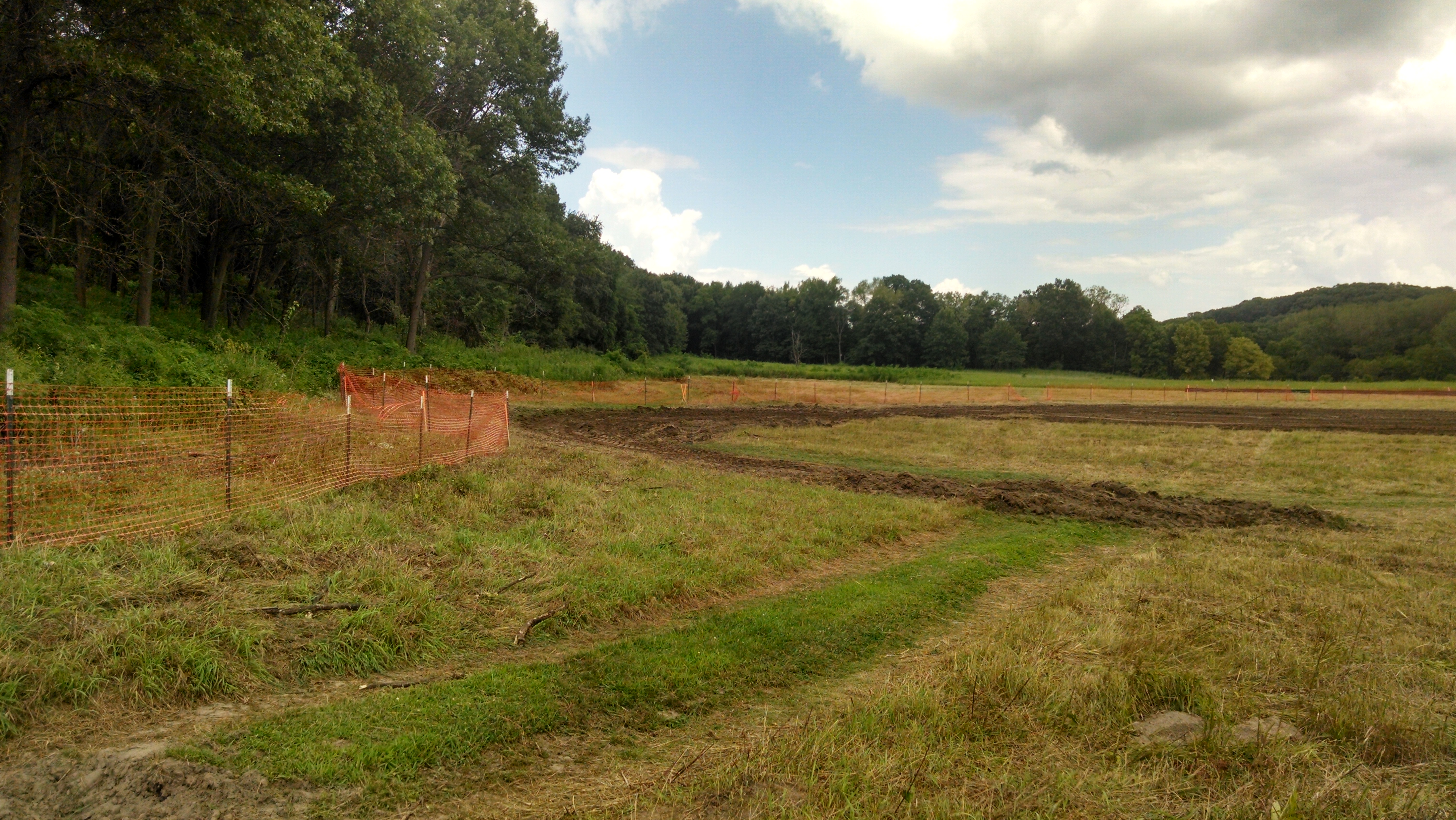
The construction fence keeps machinery within the boundary of the project. Heavy equipment, dumpsters, and stockpiles of rock and supplies destroy the existing vegetation and compact the soil. Keeping that impact confined to a small area protects the surrounding forest and prairie.

construction fence protecting trees

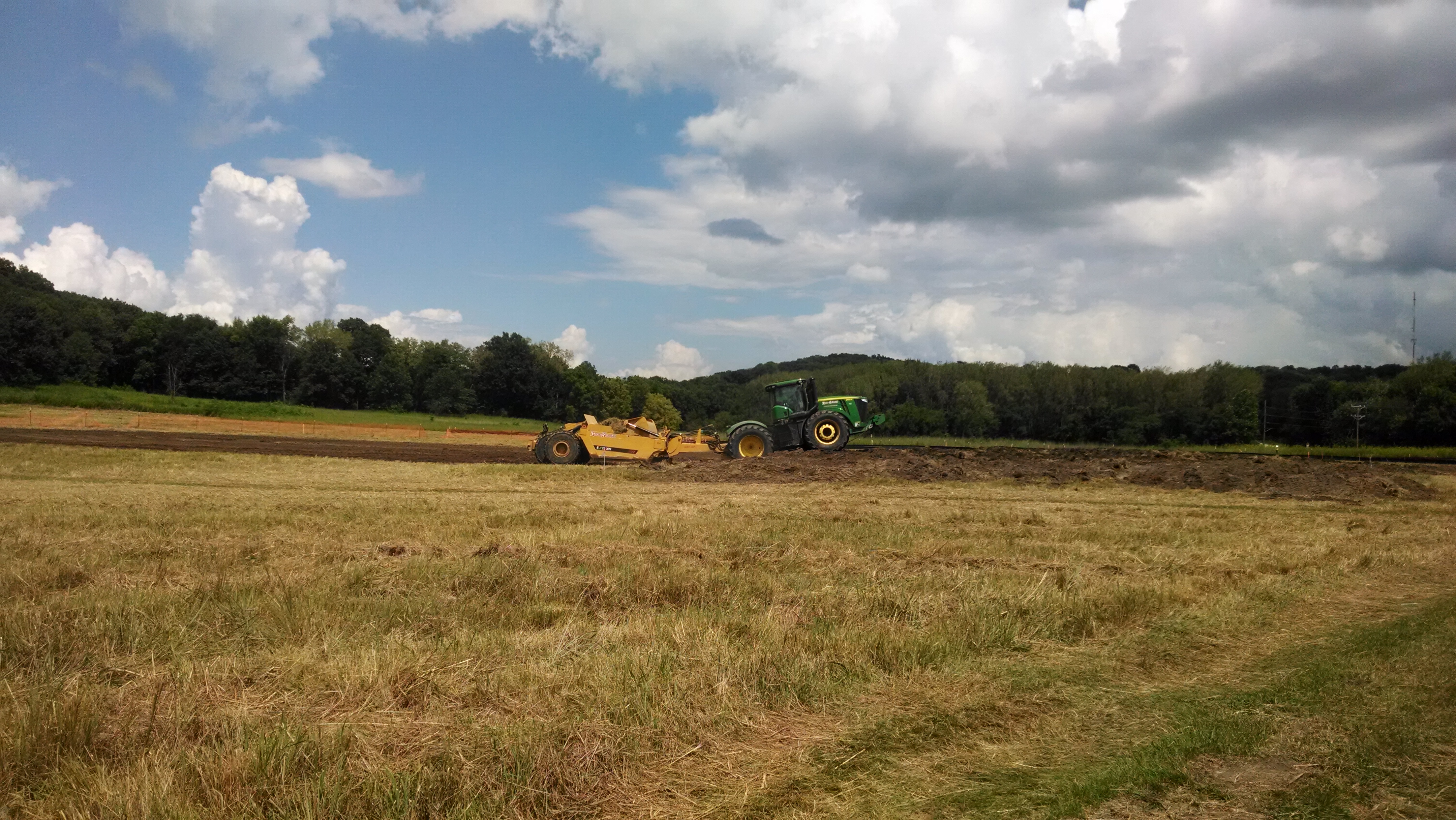
The topsoil, full of rich organic material, was scraped off the entire area and stockpiled. At the end of construction, this soil will be respread six inches thick over the area, creating a place for new plants to take root in healthy soil.

scraper stockpiling, 3

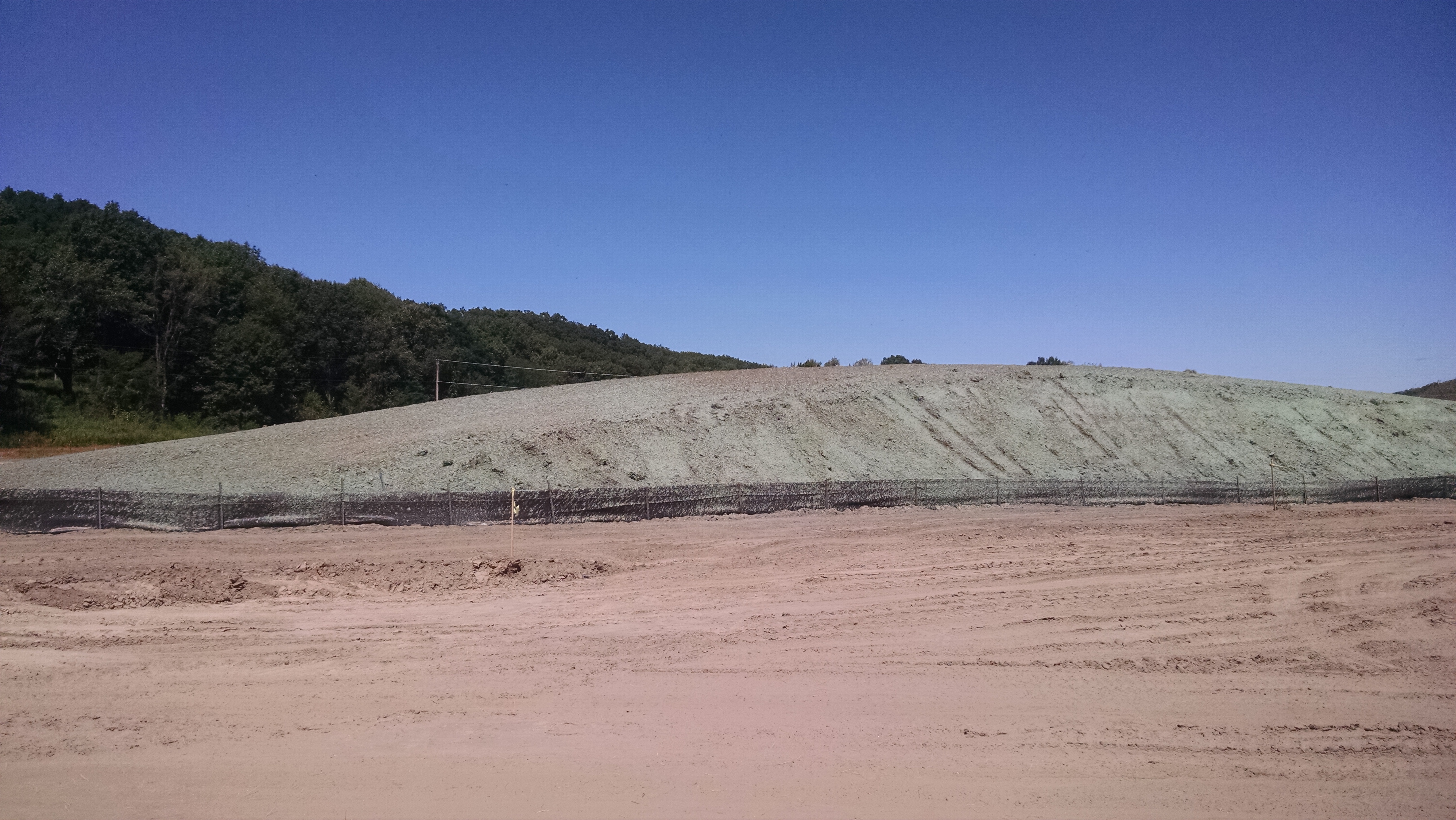
The pile of soil was immediately planted with a cover crop, to protect it from erosion. As work finishes in different areas, those areas will also be planted with a stabilizing crop (a combination of oats, rye and wheat).

IMG_20150825_134603970

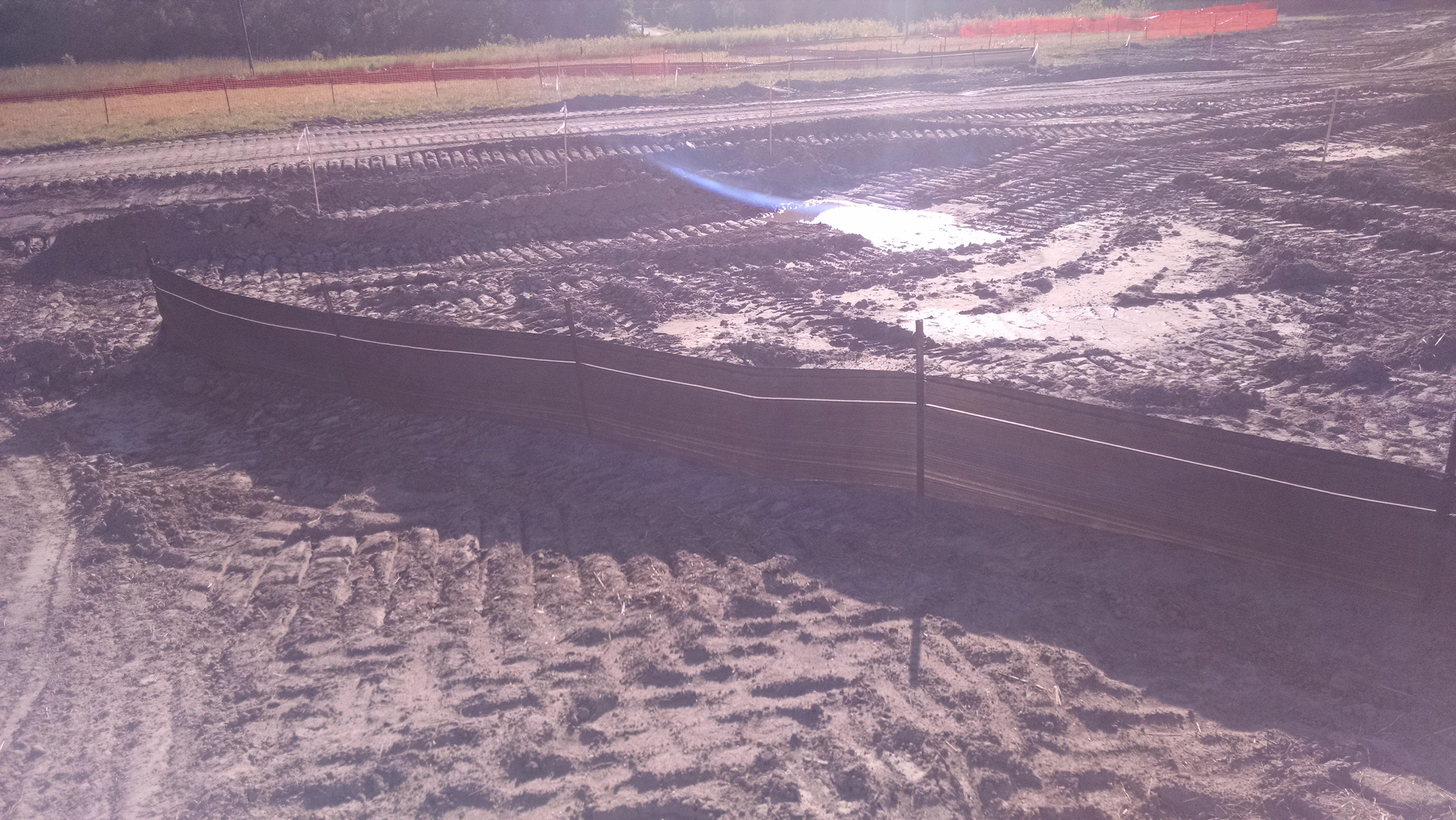
To prevent heavy rains from washing silt and sediment out of the project site and into the neighboring prairies, ditches and creeks, erosion socks and silt fences were established. They are monitored weekly and after rains for any problems that may occur.

erosion fence

These basic steps will ensure the area around the project remain healthy, and that the soils on the site will support everything from the edible forest to the pollinator garden.

The Saga of the Shinleaf

Having spent years roaming these woods, there are some plants I can identify, a lot more plants I recognize but can’t identify, and every once in a while, there is the sheer, delightful beauty of stumbling across a plant I’ve never even seen before.

IMG_20150612_095754827


I took a picture (there was only one, so I wasn’t about to pick the plant). And, in this heat, frequently a “real” specimen is a droopy, crumpled mess by the time I get it home, whereas digital photos can be easily shared, magnified and examined. The flower shape and size looked a bit like the non-native lily of the valley, but the leaves and growth patterns were all wrong. There is a false/wild lily of the valley, but that was definitely not it either.

I shared the picture around the office. Sharing is typically, in my opinion, way more fun than keying plants out (which is always Plan B, and a good skill to have!).  A day later, a colleague at Indian Creek Nature Center told me what it was-the shinleaf (Pyrola elliptica).  She had seen it before backpacking up north, where it is far more common. Like orchids, the shinleaf has strong micorrhizal associations, making it difficult to transplant or spread. So this little beauty has been hanging on in the woods here for a long time, and hopefully, as we continue to remove invasive species, it will spread on its own.

The shin leaf takes its name from its traditional medicinal value. Historically it was used as a poultice for bruised shins and other small skin problems, or gargled for sore throats. But, as it is rare here, its value is far greater as a keystone species for the woodlands.

30 Days Wild

A woodland treasure hunt

Random acts of wildness are not something I’m really good at. Oh, I’m all about being in the wild, and my attention is easily diverted by any random thing when outside. Mushroom! Snake! Bat! But my forays beyond my yard tend to be…planned. Dog. Leash. Water for me. Water for dog. Destination selection. Coordinating friends, who all love the idea of wilding away, but, but, but something else is almost always going on. Meanwhile, nature carries on, heedless of my attention or lack thereof. Which is good…

The bloodroot leaves are bigger than my hand.

…because their are treasures to be found. The bloodroot leaves have grown bigger than my hand, and the verdant green provides a backdrop for some of Iowa’s rare treasures.

When I was a kid, I loved the smooth, perfect swells of the orchid blossoms, the way they could grow in the air, and the way they needed perpetual heat and humidity year round. Despite sweltering Midwestern summers, the frigid winters made the landscape inhospitable. I would repeatedly buy ones that “could” live indoors, and I would take them home, where they would never flower and gradually die.

But I was oh-so-wrong about one thing. There are actually 32 species of orchid that live in Iowa, and a woodland treasure hunt this month at the Indian Creek Nature Center revealed two.

Showy orchis
Showy orchis
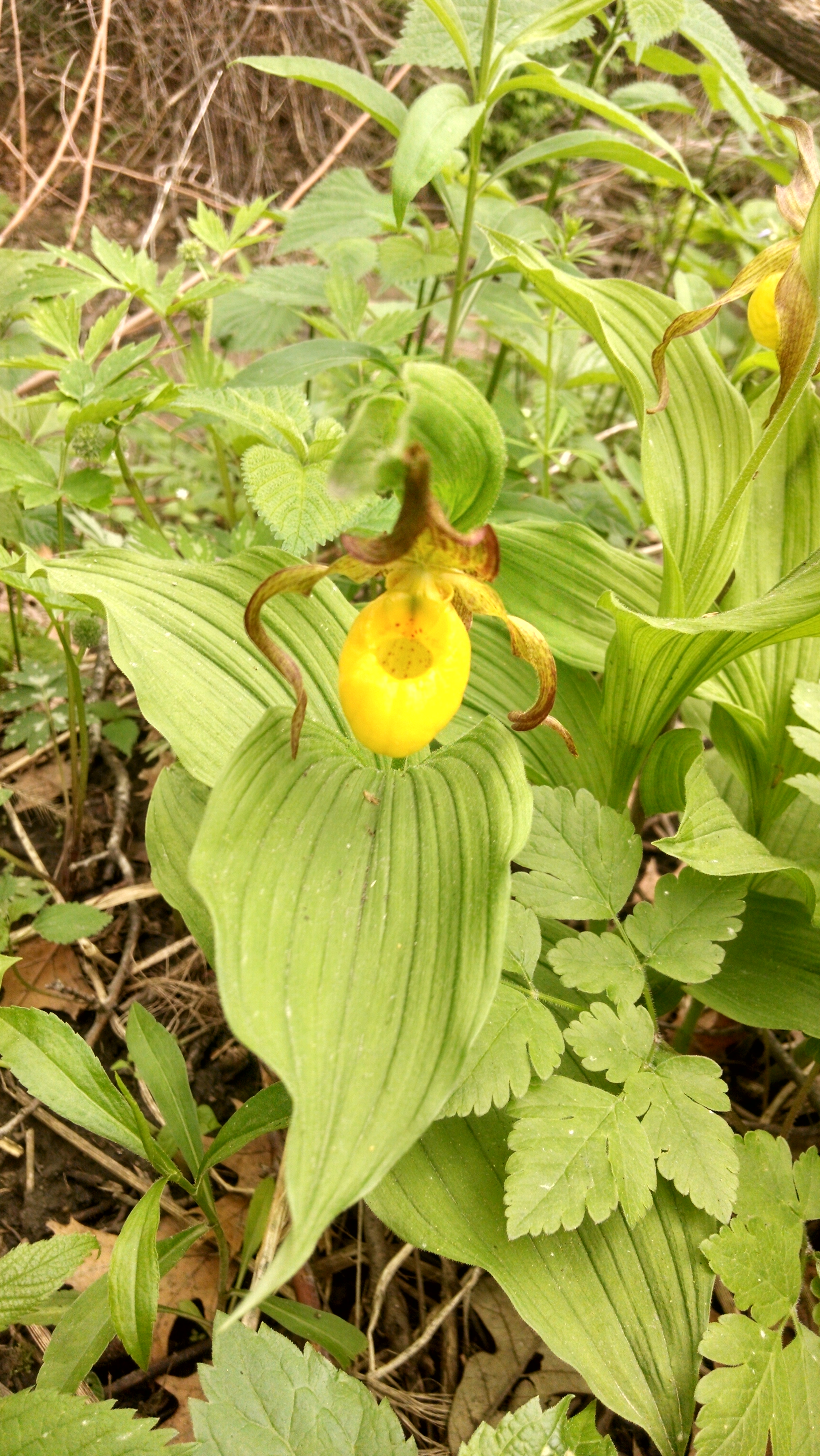
This is the more rare yellow lady slipper. Because of its beauty, people are tempted to dig them and take them home. Because of their strong underground mycorrhizal associations, they seldom survive transplant-leaving a hole in the woods they came from, as well as a hole in the receiving garden.
Yellow lady slipper

The yellow lady slipper is far more rare than the showy orchis. Because of their beauty, people are tempted to dig them and take them home. Because of their strong underground mycorrhizal associations, they seldom survive transplant-leaving a hole in the woods they came from, as well as a hole in the receiving garden. Not quite The Orchid Thief, but I only found one lady slipper on my walk.  The beautiful rare delicacy of these flowers reminds me that if I just go outside, nature will provide the random wildness.

TWT 30 Days Wild_countdown_02
30 Days Wild


30 Days Wild

Being in Iowa in the springtime is being immersed in a million shades of green unfurling around you.

IMG_20150430_193710510

IMG_20150525_172726274_HDR

IMG_20150430_193649236_HDR

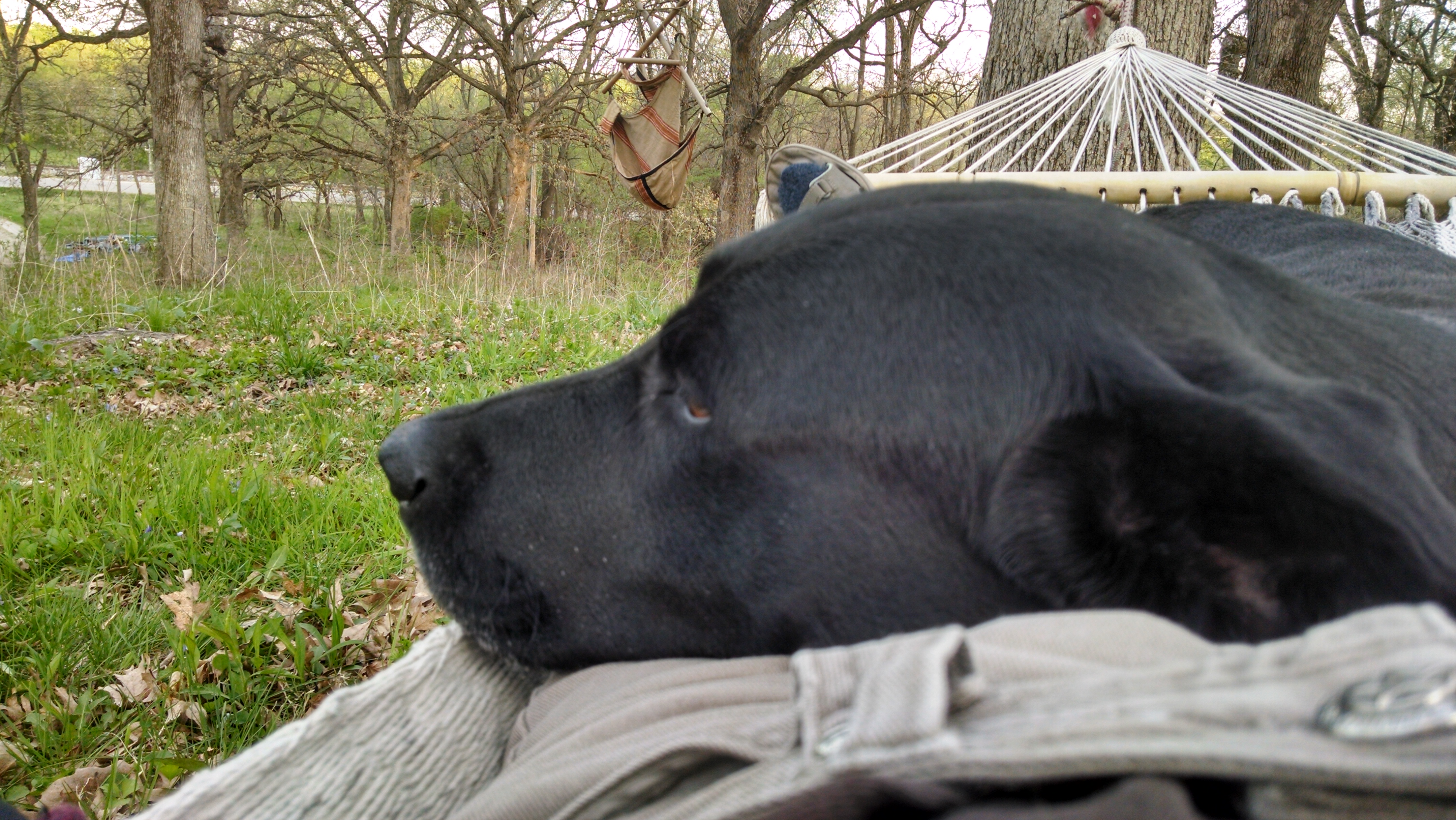
Nitro and I started and ended the 30×30 Nature Challenge in the hammock-it has gotten us pumped up about 30 Days Wild.

For 30 Days Wild, engage in a random act of wildness every day with us-you’re only limited by your imagination.


Take a walk in the woods, and discover what's blooming in your backyard.
We are starting the 30 Days Wild with a full moon walk, as the fireflies are beginning to dance in the evening.