Maple Syruping Season is here!

Mother Nature provided us with beautiful 60 degree weather in which to tap the maple trees. The sap was already flowing.
IMG_20160219_093638628

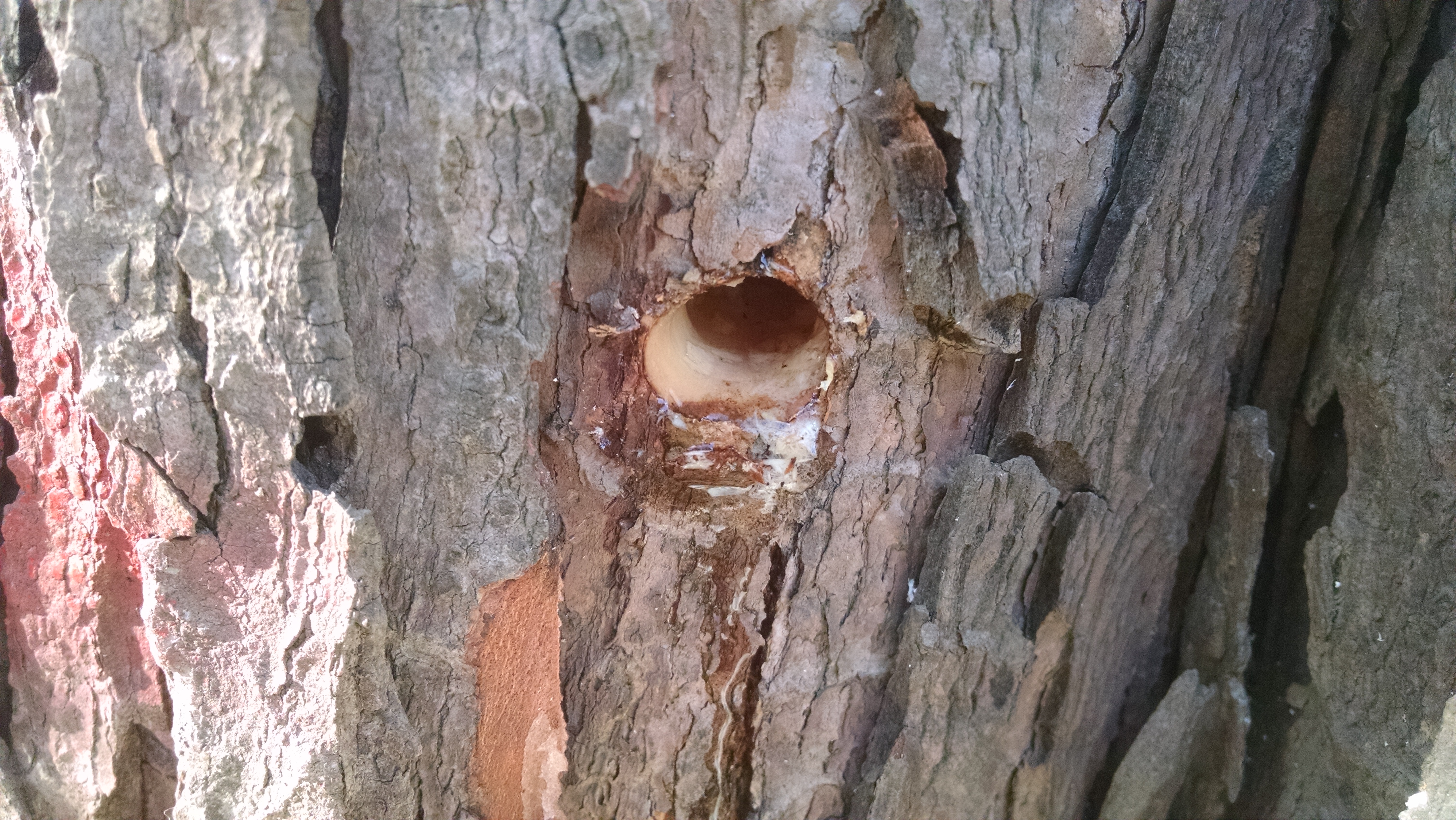
We use 7/16″ drill bits, set 275 taps, and produce anywhere from 7 to 40 gallons of syrup a year. It all depends on the weather. Doesn’t everything?

IMG_20160219_093808243

Winter Construction

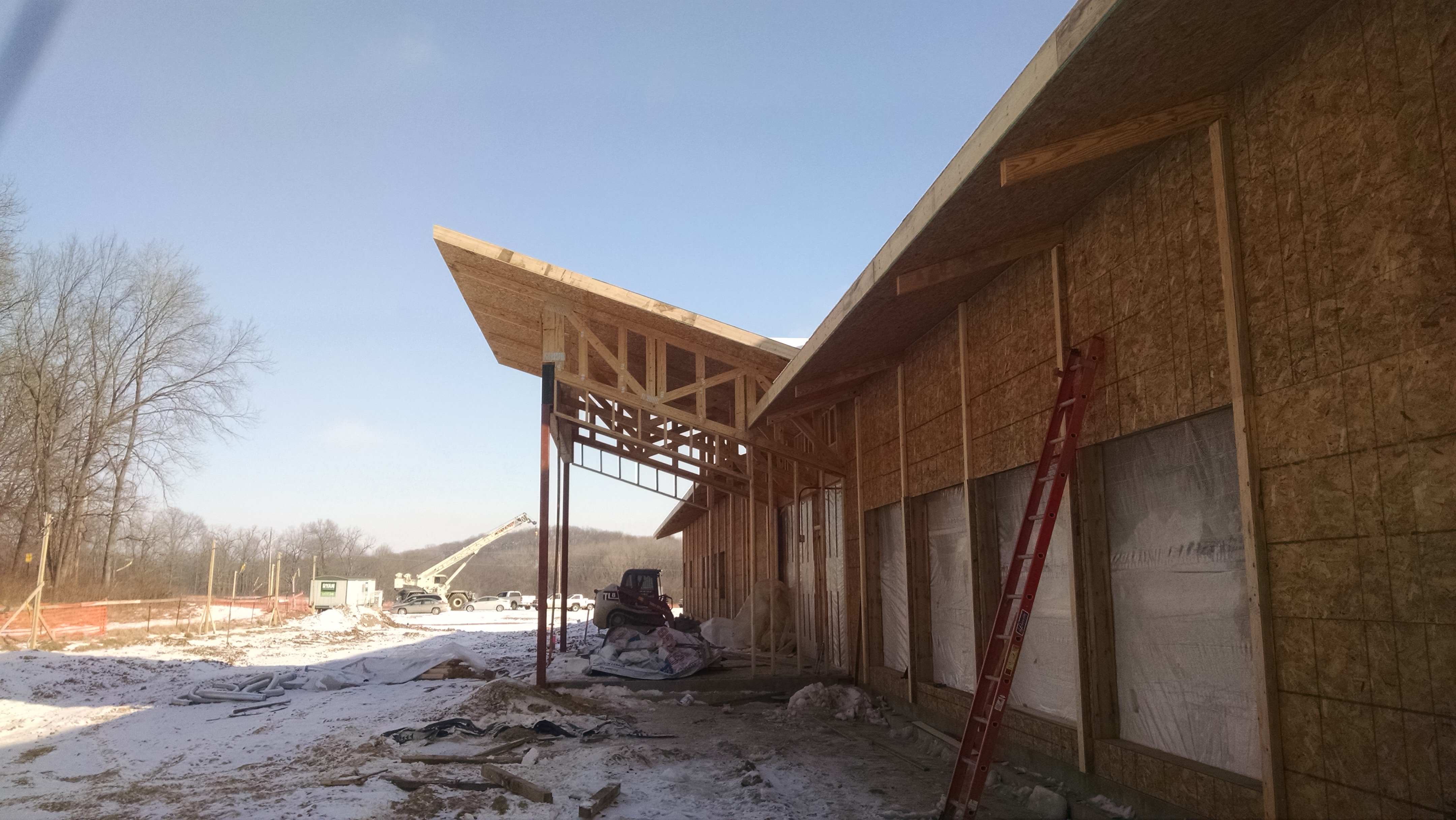
We have finally slipped into a more typical Iowa winter, even if we are lacking a good solid snowfall. With heaters inside the building keeping it a moderate 55 degrees, progress continues.


Those temperatures have allowed Ryan Companies to dry out the 4 inches of ice that had fallen inside the building before it was enclosed and install “floor board,” a cardboard-type product that will protect the concrete from damage during construction.

IMG_20160202_112240197_HDR

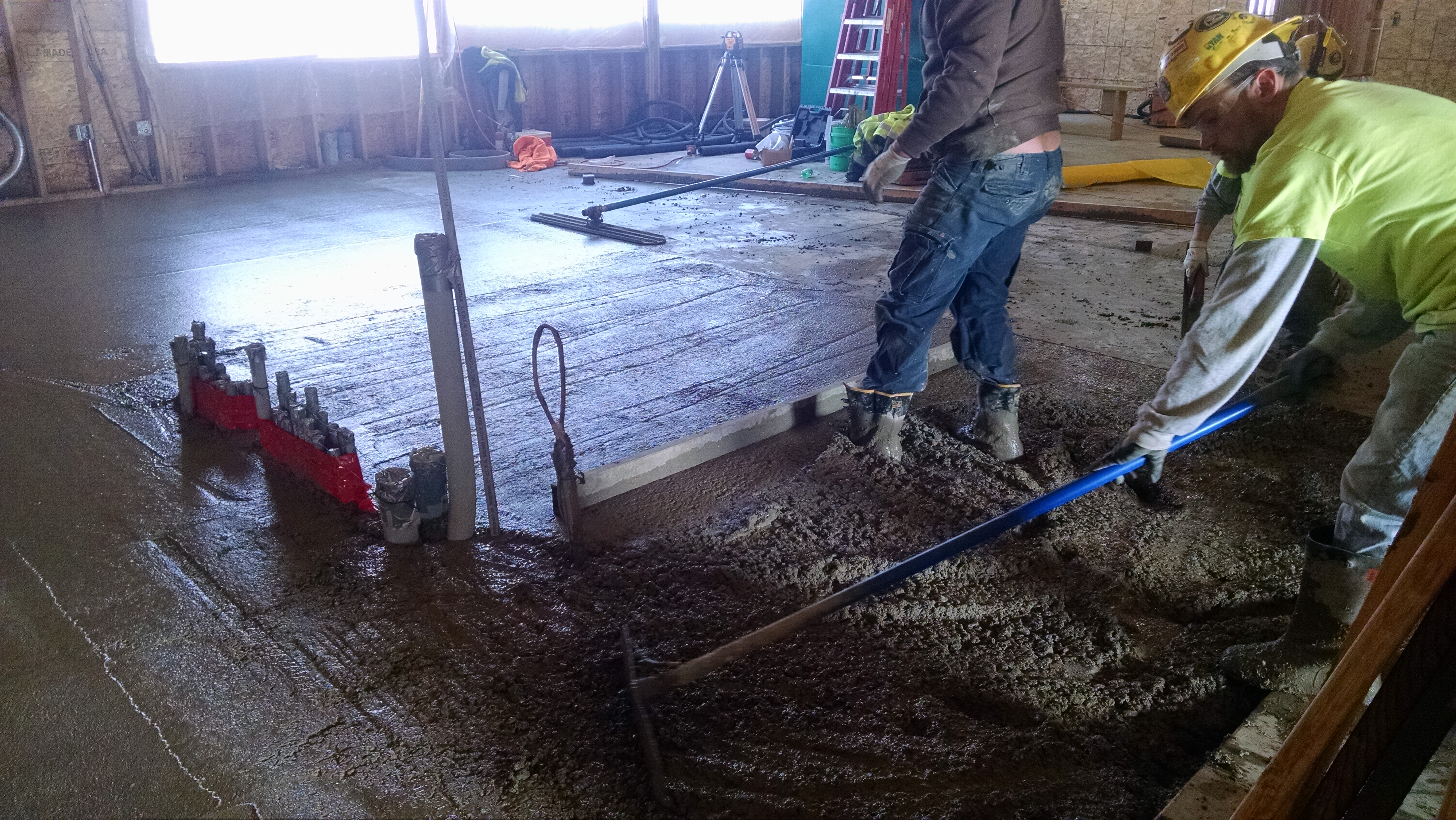
The warm air has also enabled the last of the interior concrete slab to be poured in the mechanical room and around the columns.
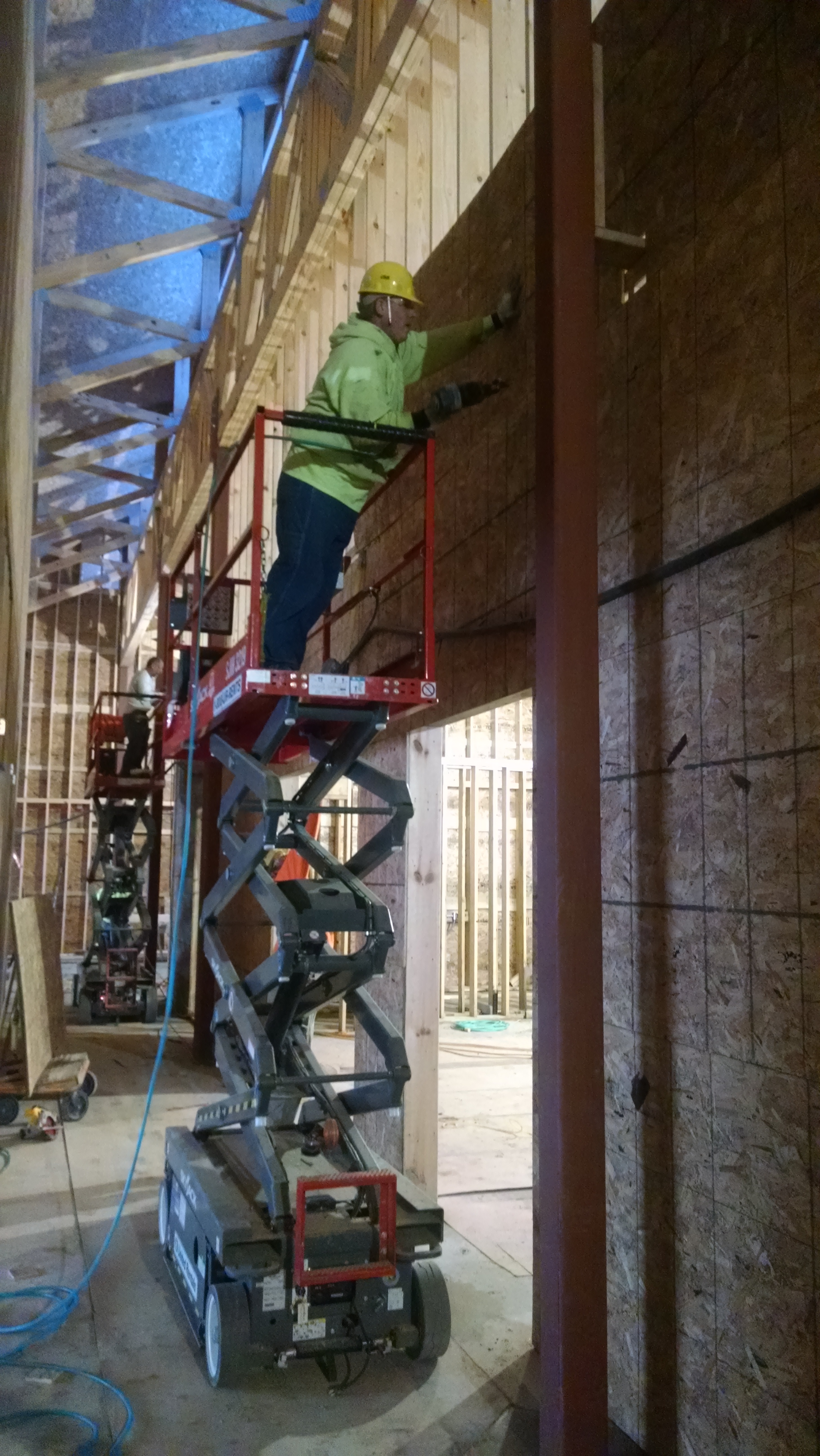
IMG_20160127_095901552The carpenters are nearly finished framing the interior wall structures and installing the sheathing.

IMG_20160202_112108896 (1)

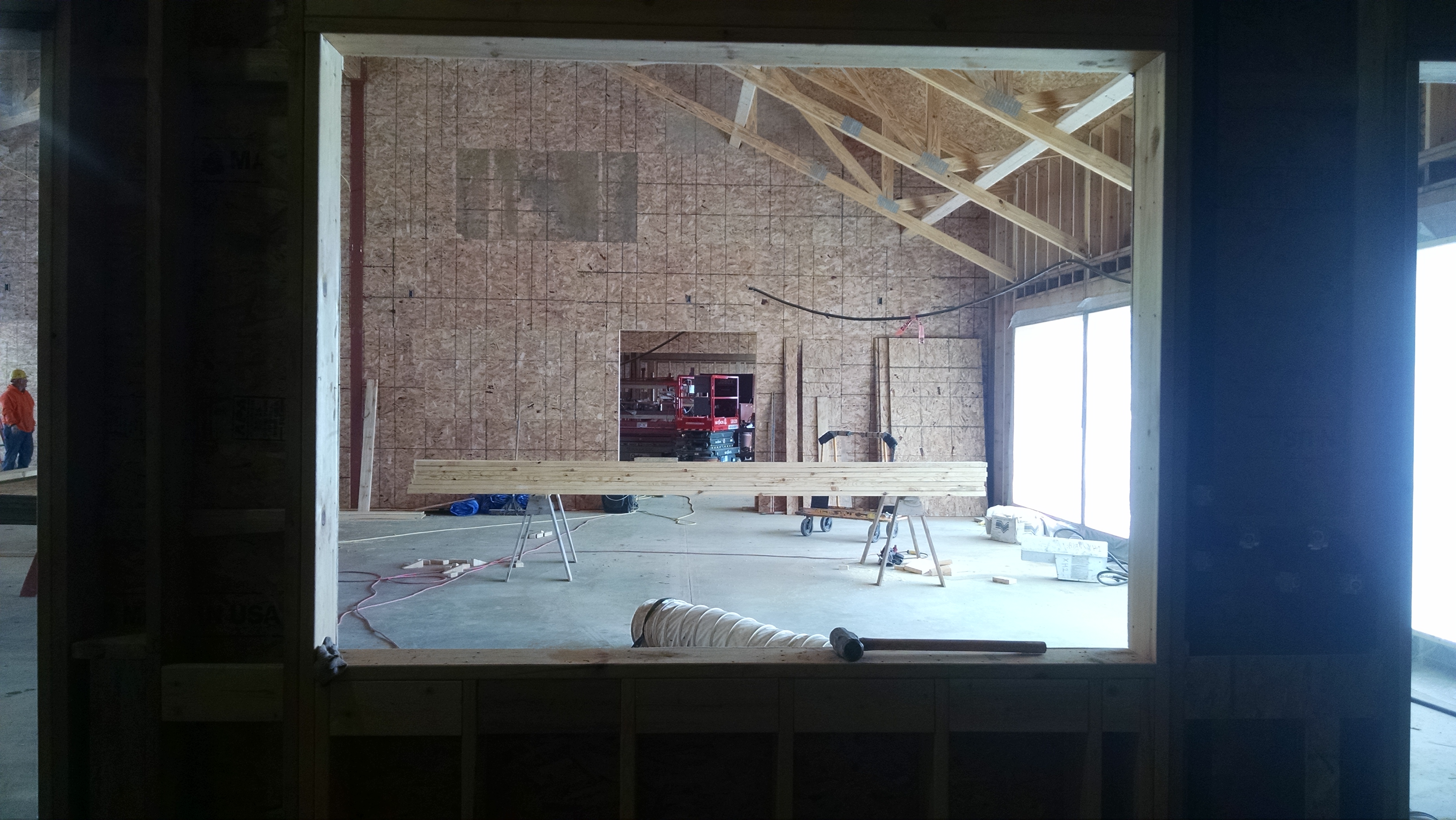
Looking out of the pass-through window of the kitchen, across the auditorium into the main exhibit hall.
IMG_20160210_113015129Next week, progress should resume on the exterior of the building. WIndows are on-site, ready to be installed. The stone masons will create a tent and heat the space,  allowing them to continue working.

Desert Survival: Prepare & Prevent

As a part of learning to survive, appreciate, and maybe even love our new desert habitat, I took the children to a program called “Desert Survival” at the nature center of a large (3500+ acres) regional park yesterday.

Desert Survival: Prepare & Prevent


We did not learn how to extract water from giant saguaros.  Nor did we learn how to create a bow drill to start a fire.  We didn’t even learn how to fight zombies with cholla cactus spines.

Instead, we learned about the importance of preparation and prevention.  Proper preparation is something every hiker in every climate can do to prevent a survival situation from happening in the first place!  As the fabulous ranger explained in at the beginning of the talk: his information does not make for popular TV shows, but it will keep you off the TV news!

Here are 3 new-to-me ideas for staying safe in the desert (or any hike!):

1-Instead of trying to find water, bring more water than you think you need.  Yes, water is heavy. Yes, it can be awkward to carry. But in the desert, by the time you start to feel thirsty, you’re already becoming dehydrated.  Bring the extra water.

In fact, bring an extra-extra bottle of water: Drink at your car until you feel satiated, then hike, then when you get back to the car, drink the rest of your extra-extra bottle.

2-A cheap emergency blanket has a variety of uses.  The park sells them for $3 each and I plan to buy one for each of us when we go back for a hike.  They look like these (excellent reviews & sold in a 10 pack).  Not only can an emergency blanket keep you warm in the cold and cooler in the heat, it makes a great distress signal!

3-Leave a detailed note about your hiking plans: Where you’re going, where you’re going to park, when you plan to be back.

“Took the kids hiking in the Superstition Mountains” is not the level of detail that is going to get you found!
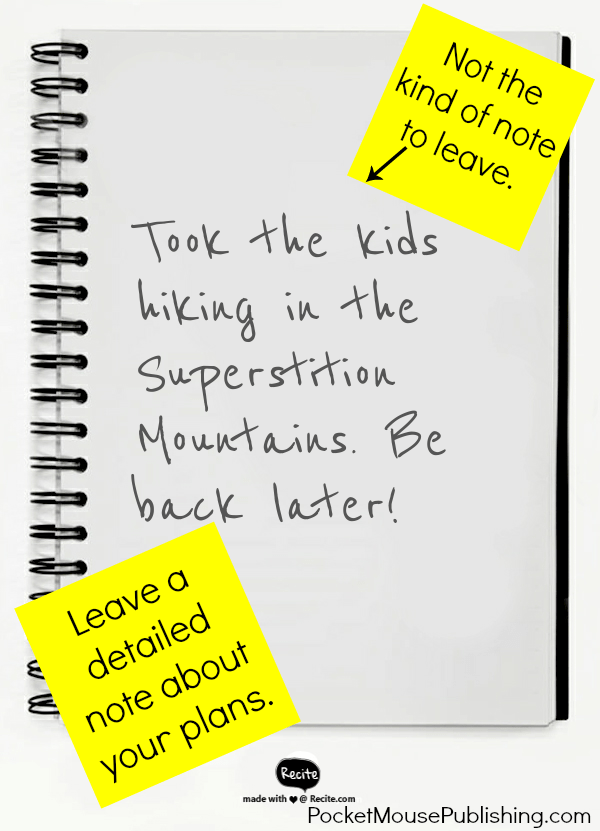
Leave a detailed note: Desert Survival is about Preparing!

While I feel better about going for a family hike in the desert now, I guess we’re on our own for designing zombie-stopping cholla cactus weapons!

And if you’re ever in Arizona, stop by the Usery Mountain for a fabulous presentation or hike!

*This page may contain affiliate links which help support the site, click here & scroll to the bottom of the page for full disclosure.


Full Moon Walks 2016

Take a Full Moon Walk in 2016 with a FREE printable trackerDid you walk by the light of a full moon last year?

As a family, we tried to get out each full moon to take a walk. It didn’t always happen…it rained, it snowed, someone had to work late, or had a evening class. But we did try! And having a calendar showing when the full moon would be did help us remember to get outside at night.

Take a Full Moon walk with your family in 2016

Download your free printable full moon walk calendar here.

January’s full moon is the Wolf Moon — leave a comment and share about your walk this month.

Take a walk by the light of the full Wolf Moon this January!

Space.com’s 2016 Full Moon Calendar has more information about the Native American names for the full moons and information on the moon’s phases.

Also, visit EarthSky.org if you’re wondering why there is no blue moon in 2016!

Want even more full moon viewing inspiration? Check out Wilder Child’s Moon Gazing post — hint, she’s got an awesome free color download of all the full moon’s of 2016!

Enclosing the Building

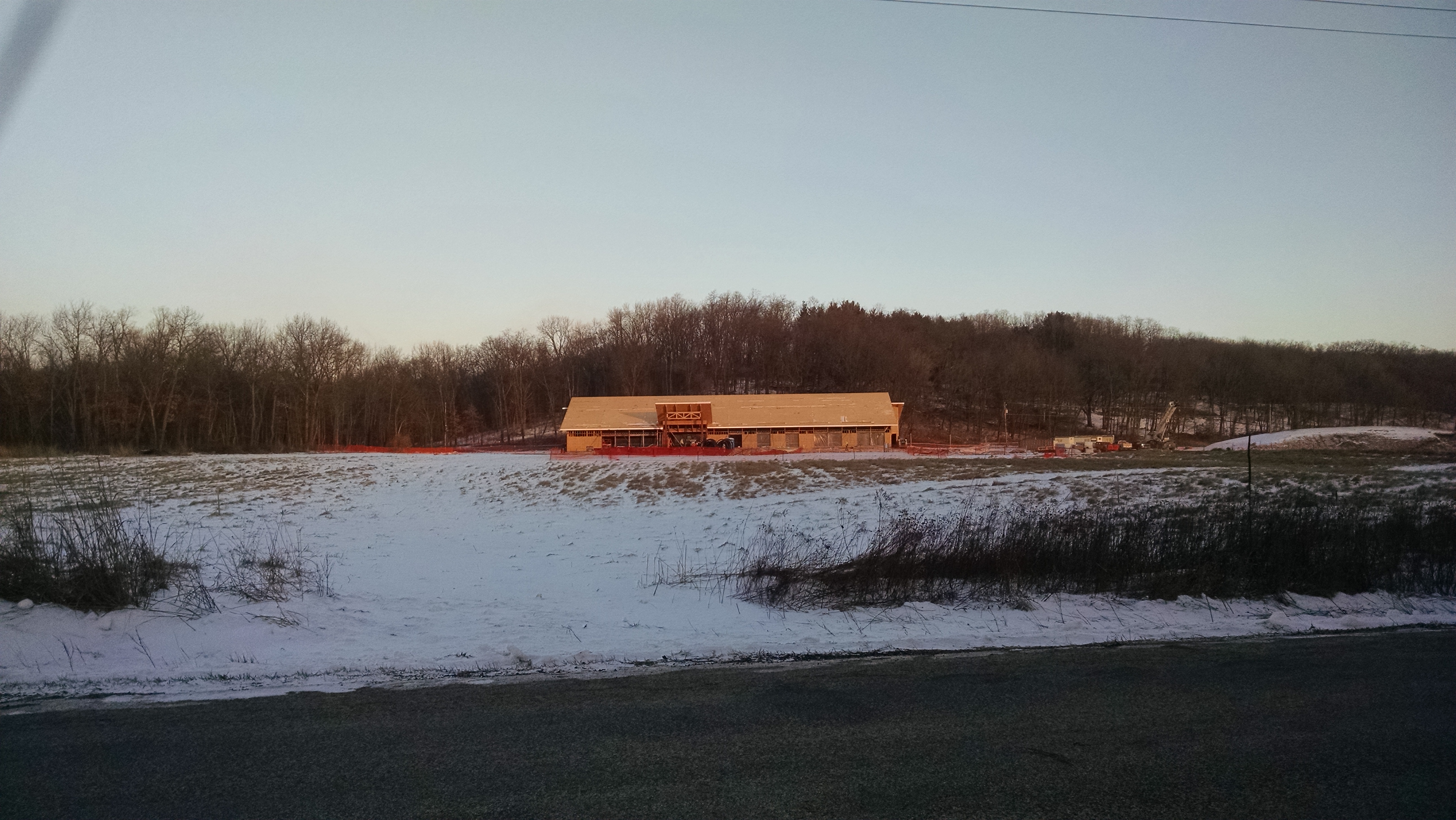
After all, the enclosing of a building is really what sets a “building” apart from pavilions, porches, and other open-air structures.placing SIP panel

The last of the Structural Insulated Panels are placed.

plastic over windows

Plastic over the window and door openings allows the building space to be heated so work can continue throughout the winter.

cracks to be caulked

Cracks such as these will be caulked and sealed around the entire building to provide the R-30 insulating value. SystemWorks is commissioning the building to ensure details like these are addressed during construction.

internal rythm and light

The rhythm of the exposed trusses, and the natural daylight that will come through the upper clearstory window are starting to define the natural patterns and biophilic elements integrated throughout the spaces.

from the road
Amazing Space!

A New Habitat to Explore


As an occasional contributing poster here at Pocket Mouse Publishing, I’ve enjoyed posting about how my children and I got out into nature regularly.  How we had consistently enjoyed forest freeplay and learned through the book Hunting Red.

Our Former Habitat

Then, we moved.  A job-relocation across the country.

Our habitat is no longer the lush green forest and small creeks of the temperate East Coast pictured above but rather the Sonoran desert of the Southwest: a place of dry sands, endless sunshine, and prickly cactus.   See below.

Our New Habitat

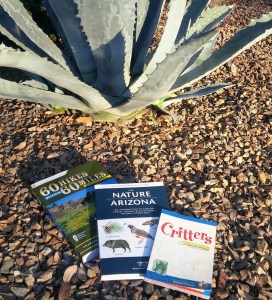
We’re adjusting.  Adapting. We’re ready to explore our new habitat. We’re reading about desert life in books like 60 Hikes within 60 Miles: Phoenix, The Nature of Arizona, and Critters of Arizona Pocket Guide.

Desert Book recommendations

We’ve even ventured to take a couple walks in the desert and are planning some more. It’s not the forest freeplay we had grown to love. In fact, one child refers to it as “desert doomplay” due to the sheer number of opportunities to interact with cactus spines.

One thing remains the same, despite this new habitat: the night sky.  The stars are the same. The constellation Orion is still the only one we all recognize.  I wrote about that nearly a year ago in Walking the Nature Talk. And the moon!  The moon is still the same. Did you know that we all see the same side of the moon, all the time?

In a few days it will be the first full moon of 2016!  I’ll be making a calendar to share the dates of each full moon — check back soon.

And enjoy your habitat, whatever it may be!

*This page may contain affiliate links which help support the site, click here & scroll to the bottom of the page for full disclosure.

The Challenges of Creating a Living Building

At a recent Amazing Space presentation, a guest asked me what was in our contract with our general contractor to ensure that our Living Building Challenge goals are being met, and what the repercussions would be if the challenge wasn’t met.

IMG_20151022_124808183[1]

As the project owner, our priorities are:

  1. Respect and integrate the Living Building Challenge throughout all aspects of the project. Achieve as many imperatives as the design team, construction team, and owner find feasible.
  2. All project team members are focused on quality customer service and high quality interactions.
  3. Nature and respect for the environment is held in the highest regard when making decisions.
  4. Be a true community project, by this community, for this community.IMG_20151208_122322189[1]

The Living Building Challenge provides a comprehensive framework for helping us meet those priorities. Our general contractor, Ryan Companies, and many of the larger subcontractors, were brought on as partners early in the process so they understood and took ownership of the standards set by the LBC. Products were preselected by the design team. We meet weekly, and sometimes daily, to address concerns/issues in a timely manner. There are a number of obvious places that may make it difficult to meet the challenge. A few that we are aware of:

  1. Our specification manual is 2.75” thick and details every single product and material used in the construction process. Given the thousands of materials used, and the need to review every product down to the chemical composition, a “standard” material may have slipped through the cracks (as the project manager, I haven’t read the whole thing yet).
  2. Our budget is limited. As part of this project, we allocated $1.4 million for sustainable and appropriate materials, above and beyond a “standard” construction product. Spending more than that would not be financially prudent, and a key part of organizational sustainability is financial.
  3. The long term performance of the project, from water usage calculations to energy usage calculations, from indoor air quality to annual rainfall, is based on estimated projections. They have been independently looked at, tested, and modeled, but they are just projections for a unique, ultra-sustainable, leading edge building. How the community uses the interactive space and how the weather shifts in the coming years will provide valuable information on how good our models were for the next project.IMG_20151124_103055115[1]

Ultimately, we would like the word “standard” to not have to be used when discussing building materials or stormwater management practices. The sustainable thing to do will have become the standard thing to do.  Building practices and material sources aren’t truly sustainable yet. Regardless of whether we meet all twenty imperatives of the Living Building Challenge, the framework set by the challenge and our early adoption will ensure that the building is as integrated and sustainable as possible, and that it will provide a valuable resource for architects, developers, contractors, and others for years into the future.

IMG_20151230_111904041 (1)

Welcoming 2016

Snow has finally arrived. It has transformed the woods into a magical place full of wonder, and on a more practical note, I haven’t seen a tick in a few days. We’ll ring in the New Year quietly in the forest, celebrating the beautiful natural world around us.

IMG_20151223_162343940_HDR
The clouds are forming.
Bena Brook starts to freeze over.
Windblown snow creates delicate patterns on downed trees.


Waldeinsamkeit

Usually I celebrate full moons, eclipses, solstices, and anything else I can think of outside walking with friends, followed by a little fire.

While the browns and greys of tree bark and leaf litter dominate the woodland winterscape, some of the smaller plants stay green all winter in the woods.

This season has been unusually hectic between Amazing Space (of which I love every moment, it just takes a lot of moments), the construction of the natural amphitheater, preparing the apiary for 2016, and everything else I normally do.

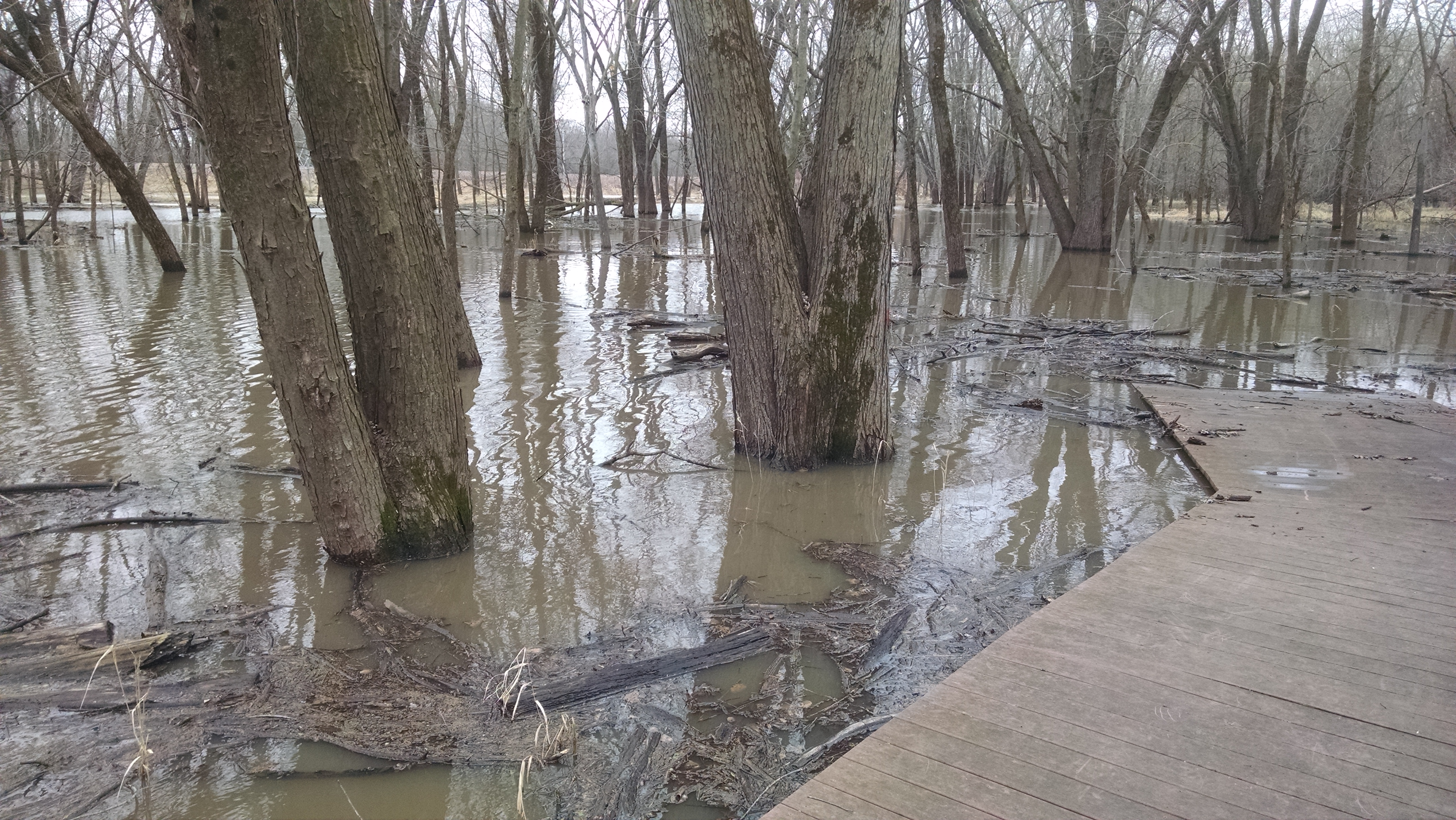
I've never known it to flood in December before. It is usually a light precipitation month for us, and the precipitation is usually in the form of snow, not rain. But Wood Duck Way and the silver maples in the floodplain are under water, as the Red Cedar River and Indian Creek spill over their banks.
I’ve never known it to flood in December before. It is usually a light precipitation month for us, and the precipitation is usually in the form of snow, not rain. But Wood Duck Way and the silver maples in the floodplain are under water, as the Red Cedar River and Indian Creek spill over their banks.

For this winter solstice, I opted to take a break and enjoy waldeinsamkeit. It literally translates into woodland solitude, and I find it is a beautiful way to connect with myself, and with the natural world around me. I actually had to visit waldeinsamkeit twice, once during the day and once after dark on the solstice. The warm temperatures, moist air, and clouds skittering across the moon were beckoning me back outside. Since English is based on German, why we didn’t we keep that word?

IMG_20151127_090703223
The unseasonably warm winter and frequent rains are supporting a prolonged mushroom season in the woods.


Structural Insulated Panels

Structural Insulated Panels (SIPs) have arrived.

IMG_20151223_120718571[1]These panels go under the roof to provide insulation. The panels consist of expanded polystyrene, sandwiched between 2 sheets of oriented strand board.

IMG_20151223_120702840[1] By  prefabricated the panels offsite, they are made efficiently to the exact dimensions they need to be for installation.

IMG_20151223_095553108[1]This allows Ryan Companies to install them efficiently and minimizes waste. Combined with the standing-seam metal roof, they will provide an insulating R-value of 30.

IMG_20151222_092809579[1]