A stable foundation

A significant part of what goes into a sustainable building will never be seen after it is installed. People use the “good foundation” analogy a lot for everything from business practices to personal relationships. In terms of real structures…a good foundation starts with a trench.IMG_20150915_081423486

Ultimately, the building will stand on this spread footing. Ryan Construction reuses the wood for the footing on multiple projects, until it eventually disintegrates. All wood from this project that is damaged or cannot be reused will be recycled. As it is not green treated, it can be ground and used for mulch in a variety of applications.

IMG_20150916_141101750

Throughout construction, independent inspectors will be verifying and testing everything. At this stage of the project, those inspections are verifying that the concrete is structurally sound and that the rebar is placed correctly.

IMG_20150916_141317795

The foundation wallforms, laid out here and ready to be placed, are also reused on multiple projects. The orange toppers on the rebar protect workers from hurting themselves on the spikes.

IMG_20150922_135637008

The pump truck, in the background, allows the concrete to efficiently be poured into the relatively narrow wall form, and minimizes spillage and waste.

IMG_20150925_132323782_HDR

The foundation wall is done!

Lindsey and Andrea on the wall

The Saga of the Shinleaf

Having spent years roaming these woods, there are some plants I can identify, a lot more plants I recognize but can’t identify, and every once in a while, there is the sheer, delightful beauty of stumbling across a plant I’ve never even seen before.

IMG_20150612_095754827


I took a picture (there was only one, so I wasn’t about to pick the plant). And, in this heat, frequently a “real” specimen is a droopy, crumpled mess by the time I get it home, whereas digital photos can be easily shared, magnified and examined. The flower shape and size looked a bit like the non-native lily of the valley, but the leaves and growth patterns were all wrong. There is a false/wild lily of the valley, but that was definitely not it either.

I shared the picture around the office. Sharing is typically, in my opinion, way more fun than keying plants out (which is always Plan B, and a good skill to have!).  A day later, a colleague at Indian Creek Nature Center told me what it was-the shinleaf (Pyrola elliptica).  She had seen it before backpacking up north, where it is far more common. Like orchids, the shinleaf has strong micorrhizal associations, making it difficult to transplant or spread. So this little beauty has been hanging on in the woods here for a long time, and hopefully, as we continue to remove invasive species, it will spread on its own.

The shin leaf takes its name from its traditional medicinal value. Historically it was used as a poultice for bruised shins and other small skin problems, or gargled for sore throats. But, as it is rare here, its value is far greater as a keystone species for the woodlands.

30 Days Wild

Pet sitting, the wild way

I pet sit frequently, because, on a temporary basis, what’s one more fuzzy thing to feed? And because I truly love animals. People usually ask me to tend things like dogs, chickens, rabbits, turtles, kittens that need to be bottle fed. But this time…

IMG_20150527_091335595
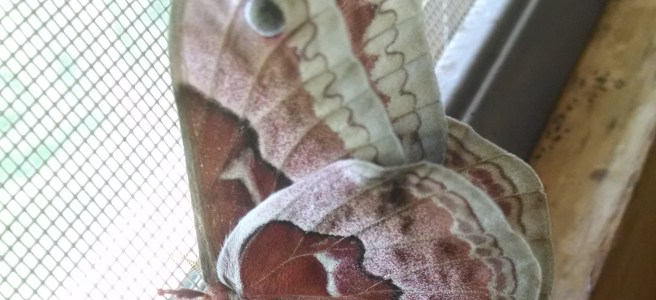
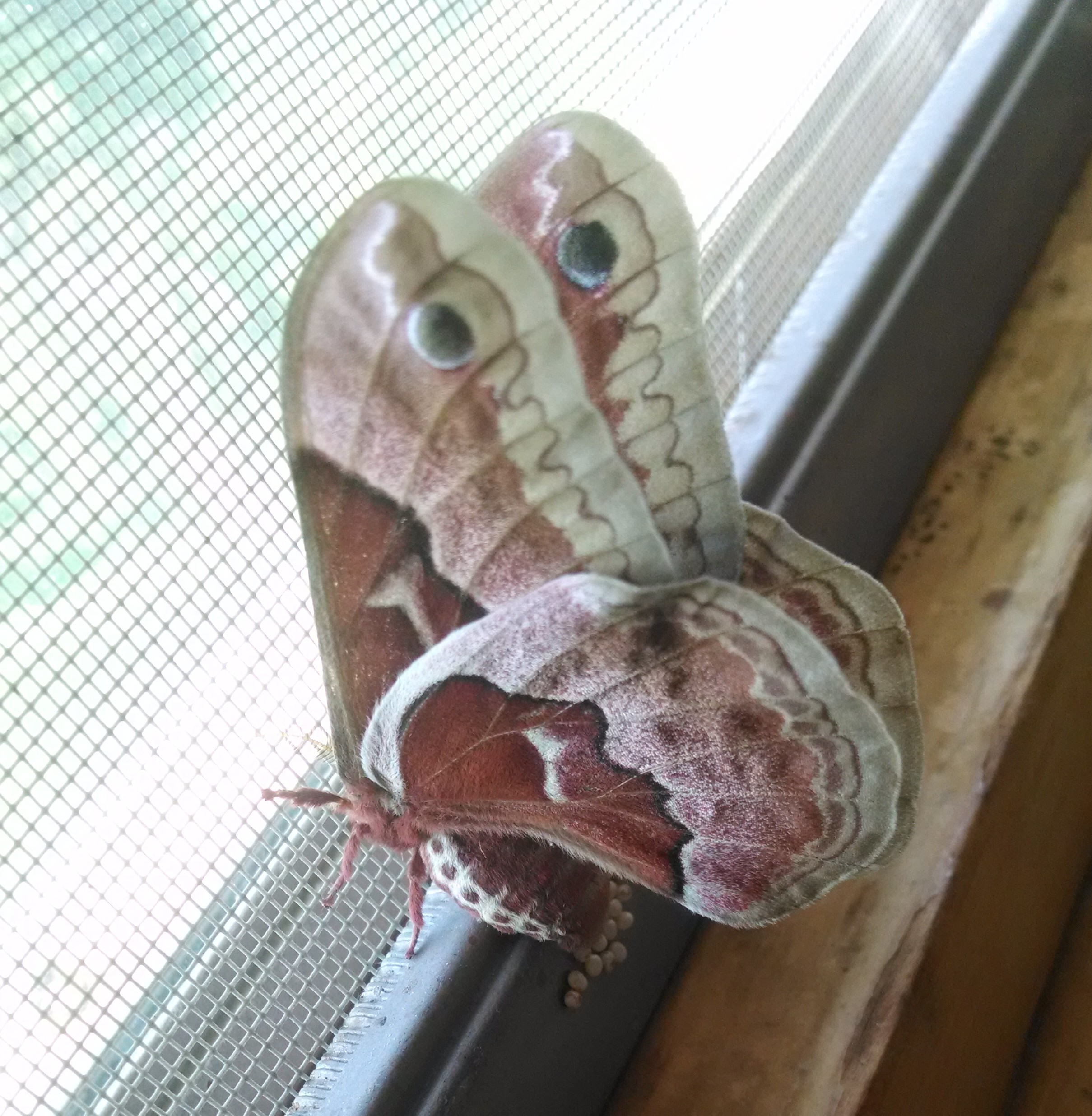
Prometheus moth, female

…I got moths. This prometheus moth promptly crawled out of the paper sack I had her “secured” in and started laying her eggs on the window screen. The great thing about the prometheus moth as a pet is that as adults, they don’t need to feed. It was a marvelous opportunity to study the tiny feathers and bright colors up close. I’d never even seen one before, because, lets face it, I do not spend a lot of time in the tops of cherry trees at night. Black cherry leaves are what the caterpillars feed on, and night time is when the adults fly.

IMG_20150610_131039179
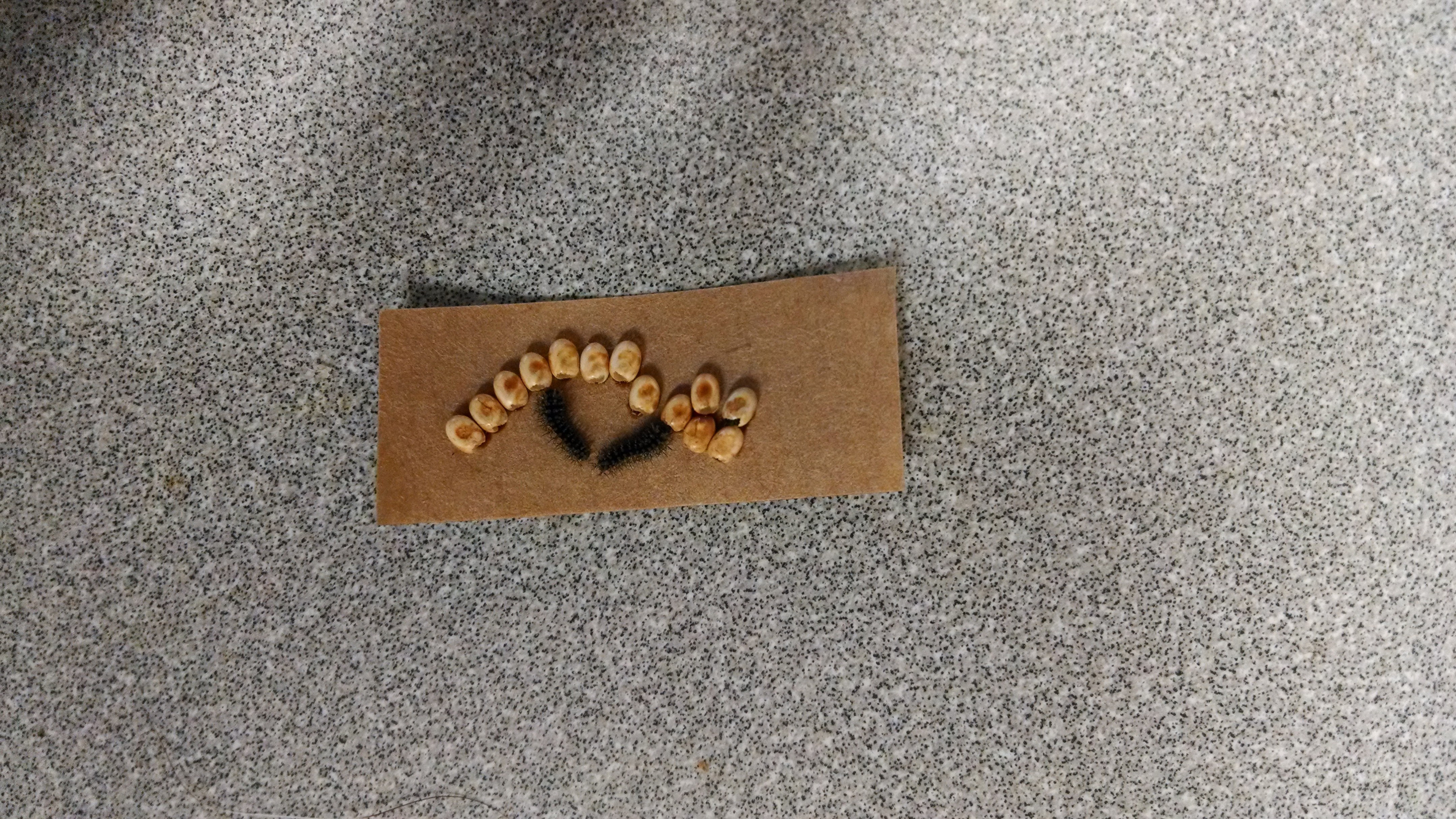
Polyphemus moth caterpillars, only 3/16 of an inch long

Today, these little ones arrived in the mail. Eggs and freshly hatched Cecropia and Polyphemus. Unlike the adults, they are voracious eaters, so I went on a nice foraging mission on their behalf for red oak leaves (Polyphemus) and Black Cherry leaves (Cecropia).


Cecropia moth caterpillars, hatching
Cecropia moth caterpillars, hatching. They actually refused the black cherry leaves, but have started munching on crabapple leaves.


Right now, they are the size of a grain of rice. But the silk cocoons I’m watching from an earlier laying are not small! The cacoons range in size from a tube of lip balm to a mouse, which means I have a lot of leaf collecting in my near future…

If you’re in the area, stop by Indian Creek Nature Center to see a variety of caterpillars (in the sunroom) and adult moths and butterflies (in the hoop house).

TWT 30 Days Wild_countdown_15


On the Wild Menu

As part of the wild foods foraging program today at Indian Creek Nature Center, we were able to bring together a  very local, very fresh, gourmet menu.

Appetizer: serviceberries

Salad: purslane leaves, lambsquarter leaves, dandelion leaves, yarrow leaves, red clover blossoms

Salad dressing: orange champagne vinegar and basil infused olive oil

Main course: milkweed blossoms sauteed in butter with catnip and mulberries on the side

Common milkweed buds are edible when cooked. If you arent sure about what youre picking, develop a relationship withyour local nature center or other outdoor enthusiasts so you dont eat something poisonous
Common milkweed buds are edible when cooked. If you aren’t sure about what you’re picking, develop a relationship with your local nature center or other outdoor enthusiasts so you don’t accidentally eat something poisonous.

Drink: sumaconade (staghorn sumac drupes, honey, cinnamon stick)

Staghorn sumac drupes are edible and high in antioxidants. Posion sumac has white drupes, not red.
Staghorn sumac drupes are high in antioxidants.* Posion sumac has white drupes, not red.

Dessert: paw paws and aronia berries (frozen last year), and elderberry jelly and wild plum jelly (preserved last year)

After dinner tea: chamomile leaves and buds, stinging nettle leaves, red clover blossoms, wild ginger root, wild rose blossoms, mountain mint leaves

chamomile
Chamomile isn’t native, but it is also not a problem for restoration. It prefers dry, sandy soil and no competition.

* Sumaconade Recipe*

Gather 9-12 staghorn sumac drupes in late summer. Hang them and cover with a paper sack to keep them clean and dry-they will keep until the following summer.

Soak them in 1 gallon of cold water, 2-12 hours

Wring or muddle the drupes with your hands into the water.

Pour the mixture through  clean t-shirt material 3 times to filter it.

Add 1/2-1 cup honey (may be mixed with a bit of warm water to dissolve)

Add 1 stick of cinnamon

Chill before serving

TWT 30 Days Wild_countdown_13


A woodland treasure hunt

Random acts of wildness are not something I’m really good at. Oh, I’m all about being in the wild, and my attention is easily diverted by any random thing when outside. Mushroom! Snake! Bat! But my forays beyond my yard tend to be…planned. Dog. Leash. Water for me. Water for dog. Destination selection. Coordinating friends, who all love the idea of wilding away, but, but, but something else is almost always going on. Meanwhile, nature carries on, heedless of my attention or lack thereof. Which is good…

The bloodroot leaves are bigger than my hand.

…because their are treasures to be found. The bloodroot leaves have grown bigger than my hand, and the verdant green provides a backdrop for some of Iowa’s rare treasures.

When I was a kid, I loved the smooth, perfect swells of the orchid blossoms, the way they could grow in the air, and the way they needed perpetual heat and humidity year round. Despite sweltering Midwestern summers, the frigid winters made the landscape inhospitable. I would repeatedly buy ones that “could” live indoors, and I would take them home, where they would never flower and gradually die.

But I was oh-so-wrong about one thing. There are actually 32 species of orchid that live in Iowa, and a woodland treasure hunt this month at the Indian Creek Nature Center revealed two.

Showy orchis
Showy orchis
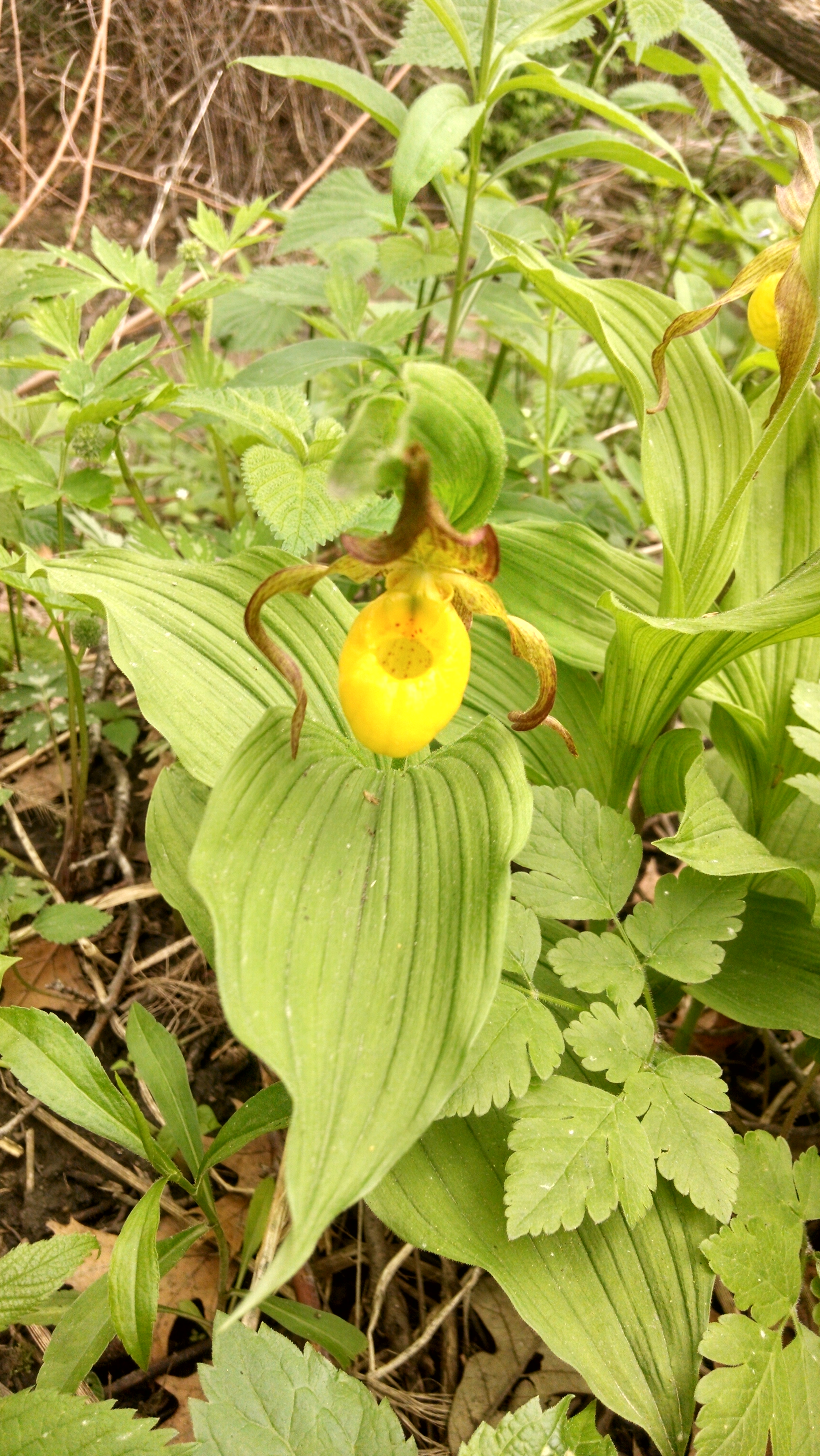
This is the more rare yellow lady slipper. Because of its beauty, people are tempted to dig them and take them home. Because of their strong underground mycorrhizal associations, they seldom survive transplant-leaving a hole in the woods they came from, as well as a hole in the receiving garden.
Yellow lady slipper

The yellow lady slipper is far more rare than the showy orchis. Because of their beauty, people are tempted to dig them and take them home. Because of their strong underground mycorrhizal associations, they seldom survive transplant-leaving a hole in the woods they came from, as well as a hole in the receiving garden. Not quite The Orchid Thief, but I only found one lady slipper on my walk.  The beautiful rare delicacy of these flowers reminds me that if I just go outside, nature will provide the random wildness.

TWT 30 Days Wild_countdown_02
30 Days Wild


30 Days Wild

Being in Iowa in the springtime is being immersed in a million shades of green unfurling around you.

IMG_20150430_193710510

IMG_20150525_172726274_HDR

IMG_20150430_193649236_HDR

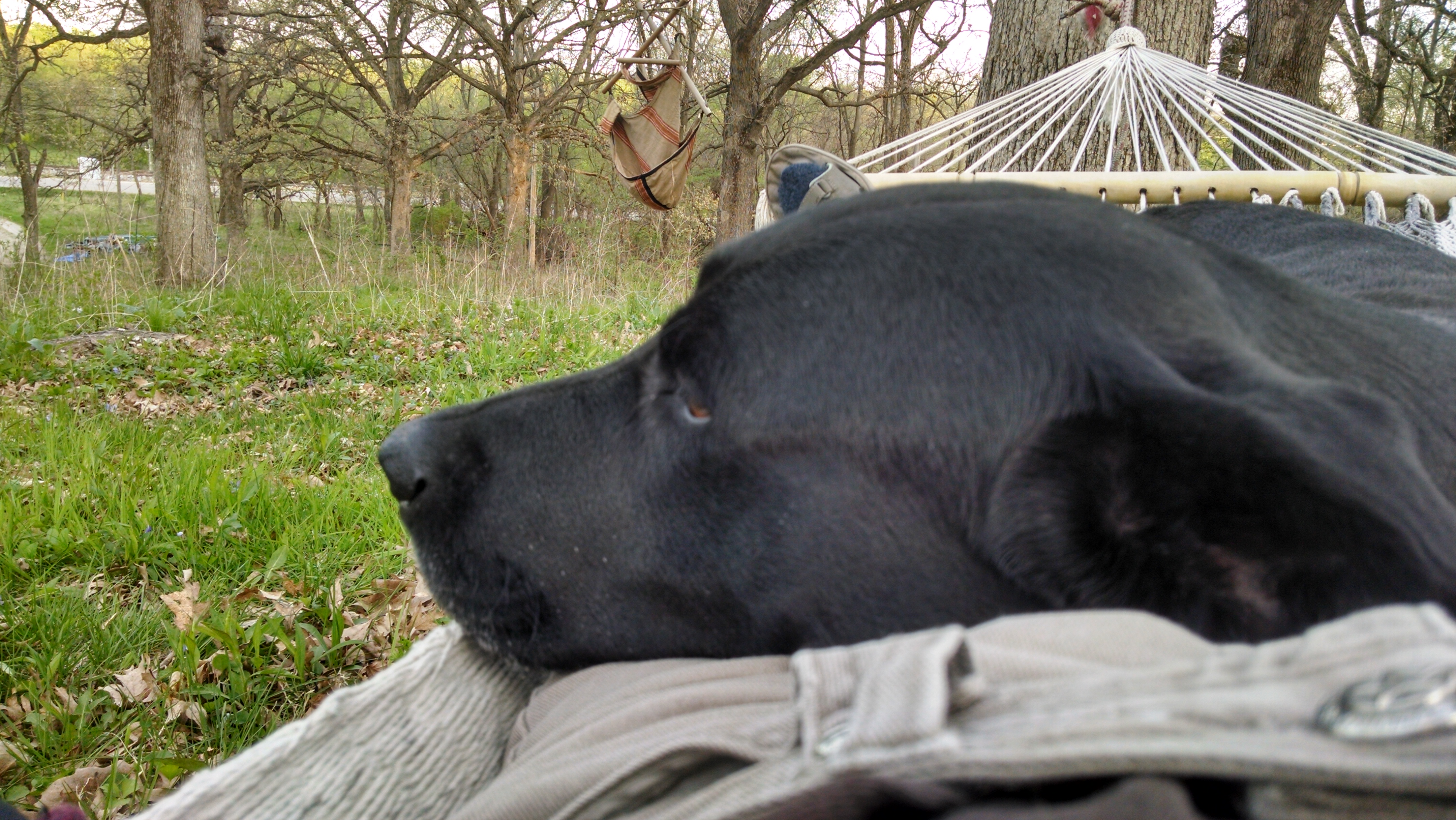
Nitro and I started and ended the 30×30 Nature Challenge in the hammock-it has gotten us pumped up about 30 Days Wild.

For 30 Days Wild, engage in a random act of wildness every day with us-you’re only limited by your imagination.


Take a walk in the woods, and discover what's blooming in your backyard.
We are starting the 30 Days Wild with a full moon walk, as the fireflies are beginning to dance in the evening.


Crus-galli Grove

Forests in the not-too distant-past once provided primary sustenance for people, not just the other mammals and the birds. Today, agriculture and urbanization have made that relationship more challenging. The felling of many trees has reduced both the size and species composition of the woods. Forests are increasingly unhealthy, and lack many of the sustenance-providing species they once held. Among the foods we do eat regularly, it is a crop’s harvestability and transportability that have become valued over many other traits. Foods are increasingly single-sourced, and bear little resemblance-including nutritional value-to the myriad of plants on which we once depended.

IMG_20150504_095317599_HDR

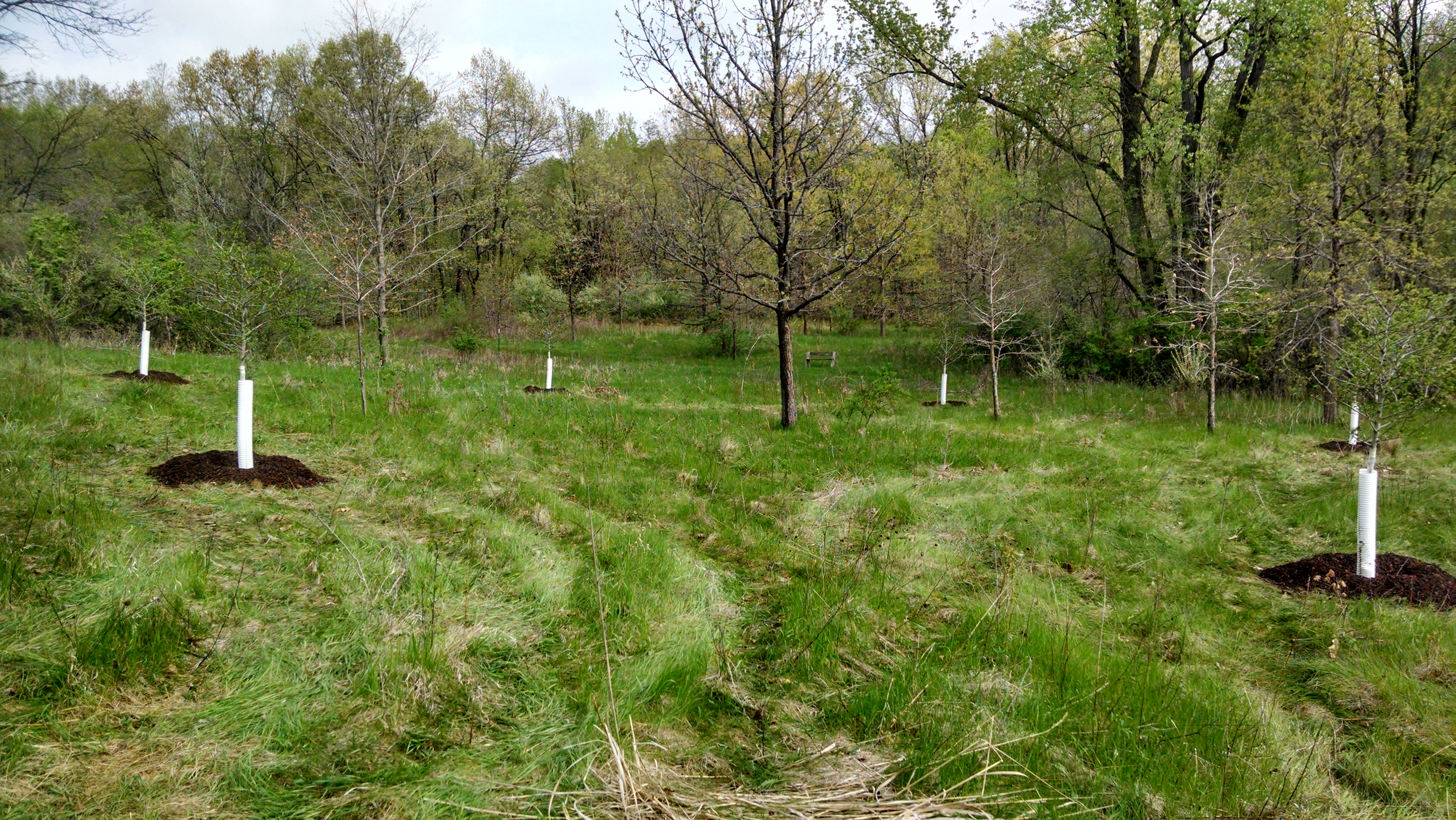
This spring, we planted six cockspur hawthorn¹ (Crataegus crus-galli) trees at Indian Creek Nature Center, as part of a woodland restoration project. For restoration purposes, the hawthorns are native trees that only grow about 25 feet tall, easy to overlook when we discuss the grandeur of the mighty oaks and hickories. Yet they provide a lot of ecological benefits, with their thicket-like tendencies that protect young nestlings, blossoms for pollinators, and edible berries for wildlife.

For human guests, the hawthorns² are the latest addition to the native edible forest at the Nature Center. Both the blossoms and berries are good to eat. The trees were planted in a wide circle, forming a grove around one of the maturing oaks. In the not-too-distant future, guests will be able to come, spread a picnic blanket in the semiprivate shade of the grove, listen to the birds all around them, and harvest a handful of berries³ for tea later that evening.

A few notes:

1. The hawthorns serve as a host plant for Cedar Apple Rust, which is hard on apple trees.

2. To find out if a species is native to your state, visit www.plants.usda.gov

3. Consuming hawthorns can help lower blood pressure. To learn more about the medicinal benefits, check out an herbal book, such as the Woman’s Book of Healing Herbs. If you’re under the care of a doctor for a blood pressure condition, talk to your doctor first.

Indian Creek Nature Center’s Living Building Challenge

When I think about nature, the impact it has on me, and the relationship I have with it, I tend to think about the joy of being in nature, and that all-encompassing sensory experience that we can only barely begin to understand. But I suspect, if nature were to think about me, the relationship is less positive. I drive on paved roads; I put things in the landfill that will never decompose; some of the products I use leach toxins into the water; and, I predominantly burn coal for my electricity. Now, I also work full-time to care for the environment, I am making great improvements in the products I choose, and I am conscientious about my energy use. But that doesn’t change that homo sapiens are by far the most ecologically invasive, permanently destructive species on the planet-and I am part of that problem.

The solutions are often neither obvious or easy.  So I am thrilled to be part of Indian Creek Nature Center’s new construction project that is rising to meet the standards set by the International Living Future Institute’s Living Building Challenge. Not obvious and not easy (and my posts are likely to be far less frequent). But being on the leading edge of the green construction revolution will help us-all of us-live in better harmony with the environment and sustainably care for our natural resources.