Forest Freeplay: How we got started

How I started a Forest Freeplay groupA few months ago, I saw a posting on a local homeschool group about an informational meeting for staring a “Forest Freeplay” group.  We’d been getting outside into nature as family every day as our One Thing.  But I liked the idea of getting together with other families who valued time in nature.

I attended, hoping to meet someone who was excited about starting a group near me that I could join.  The hostess was fabulous — answering questions (What do kids DO?), sharing the experiences of leading a group, and providing lots of links to online organizations which support kids in nature.  Sign me up, I was ready to join a group!

Of course, none of the other moms lived near me.

So it was either feel sorry for myself that no one who lived near me wanted to start a group, or drive to another group.  But, I’m tired of driving.  I drive to the store, the library, weekly SCA practices, the community college, and to take my older ones to work.  And if we want to visit with friends, I have to drive.  I’m just tired of it.

There was, of course, a third option: start a group myself.

And so, with great trepidation, I posted a short announcement to the local homeschool group list.  Two families came out!

Every week I post a short little announcement with the details, including the statement: Plan to get wet & muddy! Every week we’ve had other families join me & my kids for Forest Freeplay — sometimes only one family, sometimes as many as six.  Yes, even on the two weeks it was actually raining!

By planning this weekly, I’ve committed us to two hours in the forest with others — socializing for the children and me (possibly more important!).  By going to the same spot every week, we observe the changing of the seasons and the effects of sun and rain.

For example, when the kids built this structure, the water was low & clear.
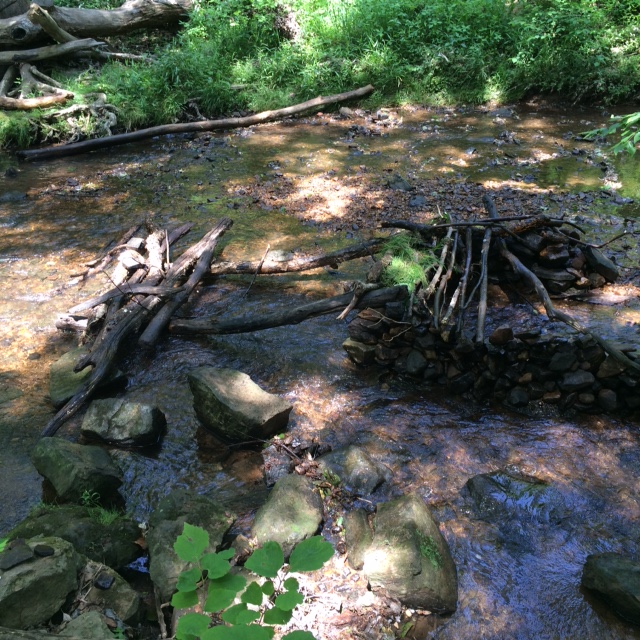
Child directed learning in a nature setting: that's Forest Freeplay!The next week the water was deep and rushing…but the structure held!
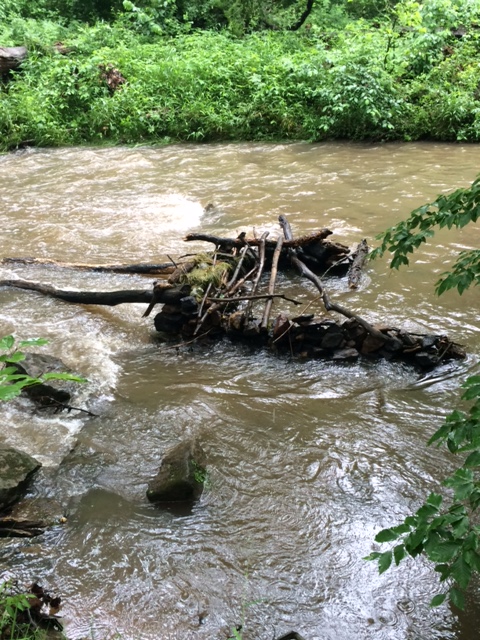
Forest Freeplay means letting the kids buildGot questions?  Ask me in the comments!

Previous posts on Forest Freeplay:

Forest Freeplay: What is it?

About Forest FreeplayForest Freeplay is playing outside freely in the forest.  There is no parental agenda, no nature study planned, no journaling required — nothing but playing in the natural space of the forest.

Think “parkday” without the playground equipment.

But what do kids DOYes, that was my first question.

They play.  They explore. They challenge themselves physically.  The discover.  They create.  And sometimes they read a book.  Or even sit by mom and say “When can we go home? I’m bored (or hungry or hot or cold or tired)?”

Sometimes Forest Freeplay means just reading a bookJust like at the park.  But in the forest.  That’s it: Forest Freeplay!

Later this week, I’ll share how I learned about Forest Freeplay & started meeting with other families on a regular basis!

Forest Freeplay is part of our 30 Days Wild!

Pet sitting, the wild way

I pet sit frequently, because, on a temporary basis, what’s one more fuzzy thing to feed? And because I truly love animals. People usually ask me to tend things like dogs, chickens, rabbits, turtles, kittens that need to be bottle fed. But this time…

IMG_20150527_091335595
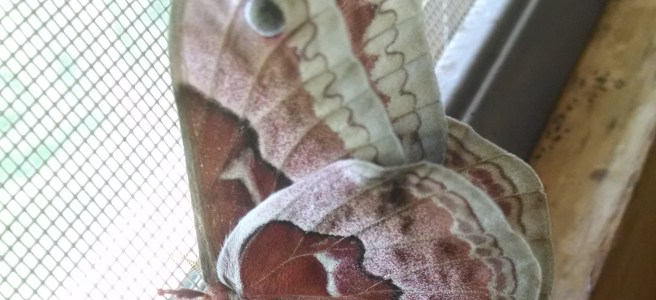
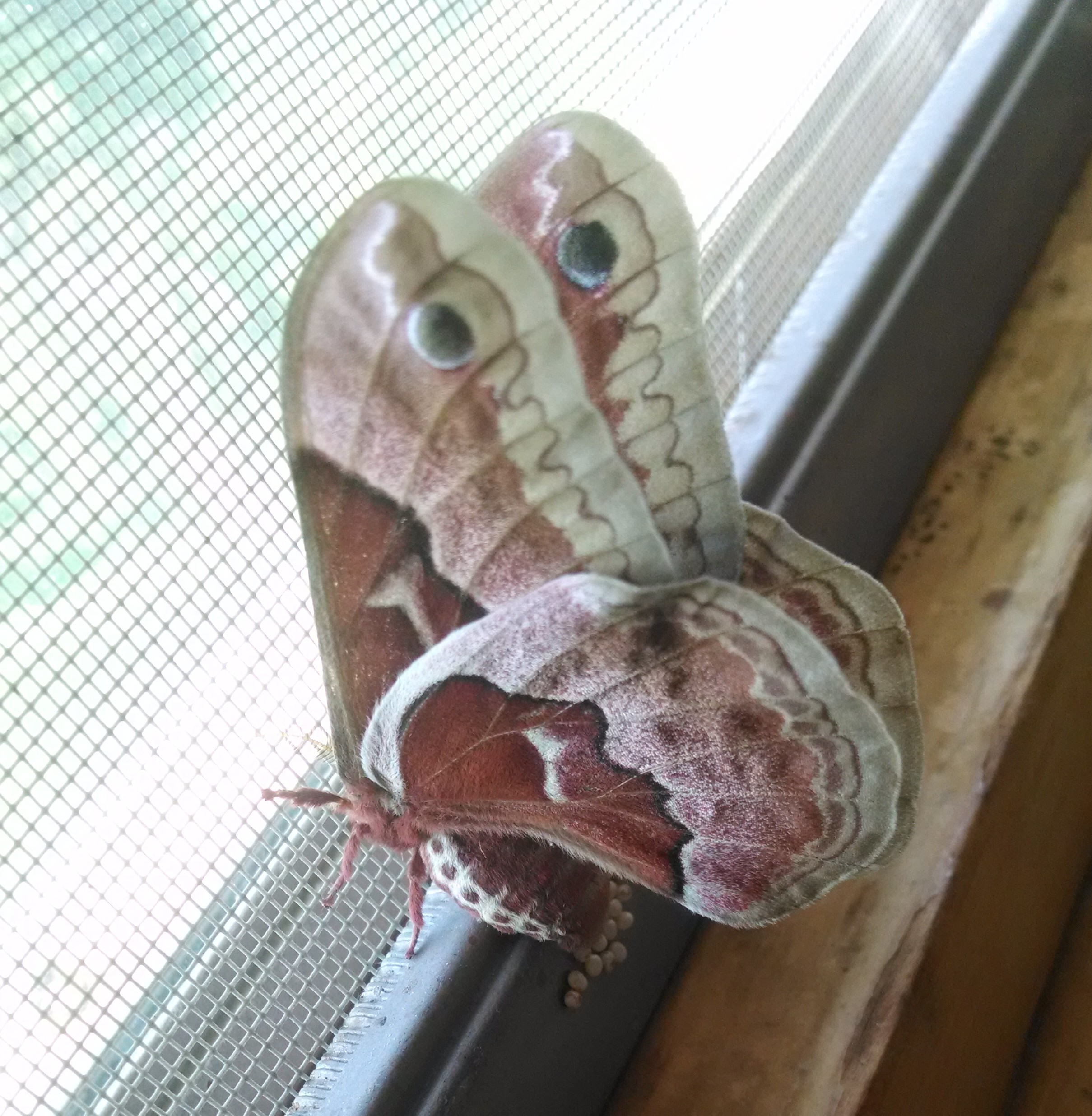
Prometheus moth, female

…I got moths. This prometheus moth promptly crawled out of the paper sack I had her “secured” in and started laying her eggs on the window screen. The great thing about the prometheus moth as a pet is that as adults, they don’t need to feed. It was a marvelous opportunity to study the tiny feathers and bright colors up close. I’d never even seen one before, because, lets face it, I do not spend a lot of time in the tops of cherry trees at night. Black cherry leaves are what the caterpillars feed on, and night time is when the adults fly.

IMG_20150610_131039179
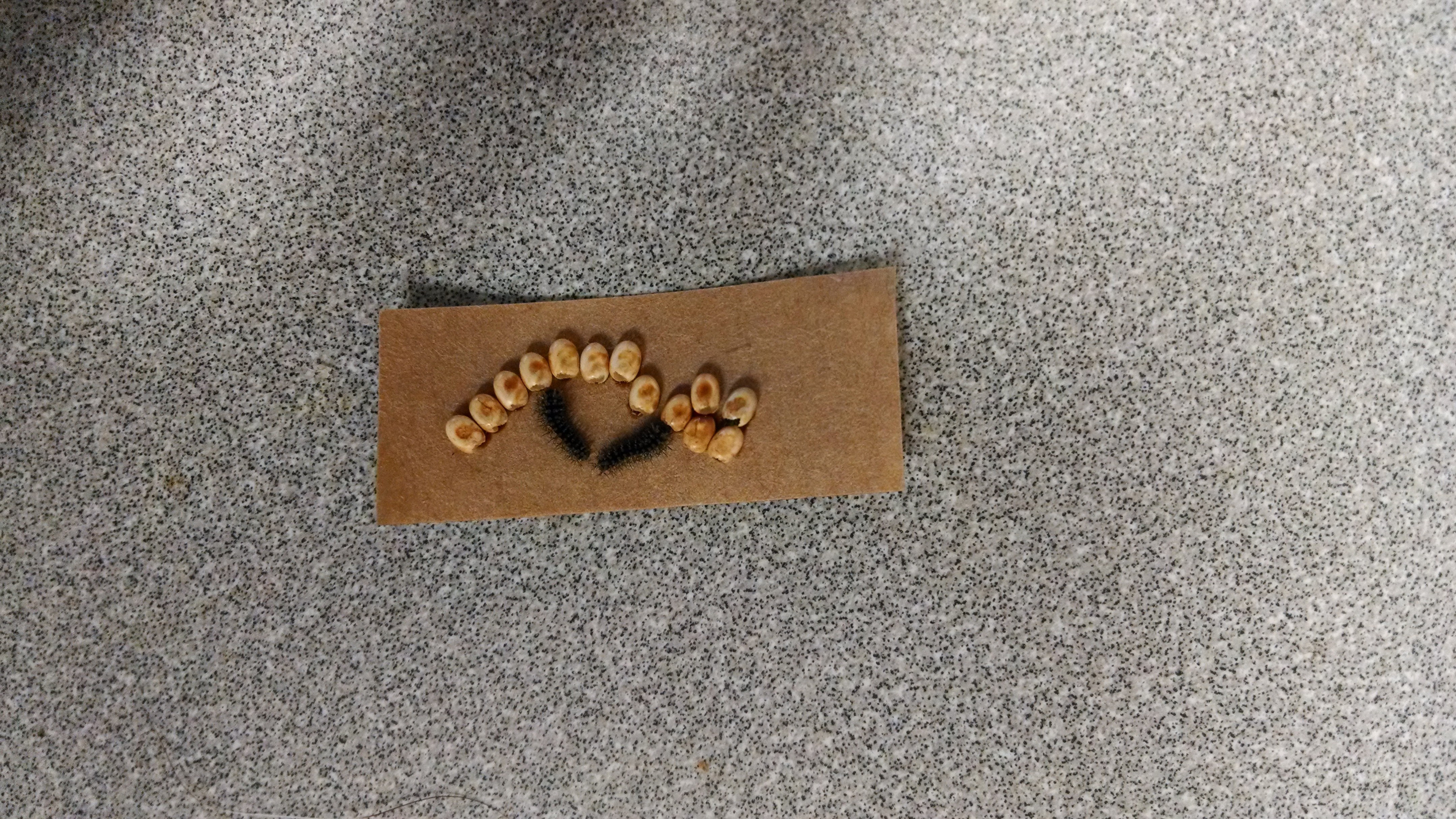
Polyphemus moth caterpillars, only 3/16 of an inch long

Today, these little ones arrived in the mail. Eggs and freshly hatched Cecropia and Polyphemus. Unlike the adults, they are voracious eaters, so I went on a nice foraging mission on their behalf for red oak leaves (Polyphemus) and Black Cherry leaves (Cecropia).


Cecropia moth caterpillars, hatching
Cecropia moth caterpillars, hatching. They actually refused the black cherry leaves, but have started munching on crabapple leaves.


Right now, they are the size of a grain of rice. But the silk cocoons I’m watching from an earlier laying are not small! The cacoons range in size from a tube of lip balm to a mouse, which means I have a lot of leaf collecting in my near future…

If you’re in the area, stop by Indian Creek Nature Center to see a variety of caterpillars (in the sunroom) and adult moths and butterflies (in the hoop house).

TWT 30 Days Wild_countdown_15


On the Wild Menu

As part of the wild foods foraging program today at Indian Creek Nature Center, we were able to bring together a  very local, very fresh, gourmet menu.

Appetizer: serviceberries

Salad: purslane leaves, lambsquarter leaves, dandelion leaves, yarrow leaves, red clover blossoms

Salad dressing: orange champagne vinegar and basil infused olive oil

Main course: milkweed blossoms sauteed in butter with catnip and mulberries on the side

Common milkweed buds are edible when cooked. If you arent sure about what youre picking, develop a relationship withyour local nature center or other outdoor enthusiasts so you dont eat something poisonous
Common milkweed buds are edible when cooked. If you aren’t sure about what you’re picking, develop a relationship with your local nature center or other outdoor enthusiasts so you don’t accidentally eat something poisonous.

Drink: sumaconade (staghorn sumac drupes, honey, cinnamon stick)

Staghorn sumac drupes are edible and high in antioxidants. Posion sumac has white drupes, not red.
Staghorn sumac drupes are high in antioxidants.* Posion sumac has white drupes, not red.

Dessert: paw paws and aronia berries (frozen last year), and elderberry jelly and wild plum jelly (preserved last year)

After dinner tea: chamomile leaves and buds, stinging nettle leaves, red clover blossoms, wild ginger root, wild rose blossoms, mountain mint leaves

chamomile
Chamomile isn’t native, but it is also not a problem for restoration. It prefers dry, sandy soil and no competition.

* Sumaconade Recipe*

Gather 9-12 staghorn sumac drupes in late summer. Hang them and cover with a paper sack to keep them clean and dry-they will keep until the following summer.

Soak them in 1 gallon of cold water, 2-12 hours

Wring or muddle the drupes with your hands into the water.

Pour the mixture through  clean t-shirt material 3 times to filter it.

Add 1/2-1 cup honey (may be mixed with a bit of warm water to dissolve)

Add 1 stick of cinnamon

Chill before serving

TWT 30 Days Wild_countdown_13


30 Days Wild

Being in Iowa in the springtime is being immersed in a million shades of green unfurling around you.

IMG_20150430_193710510

IMG_20150525_172726274_HDR

IMG_20150430_193649236_HDR

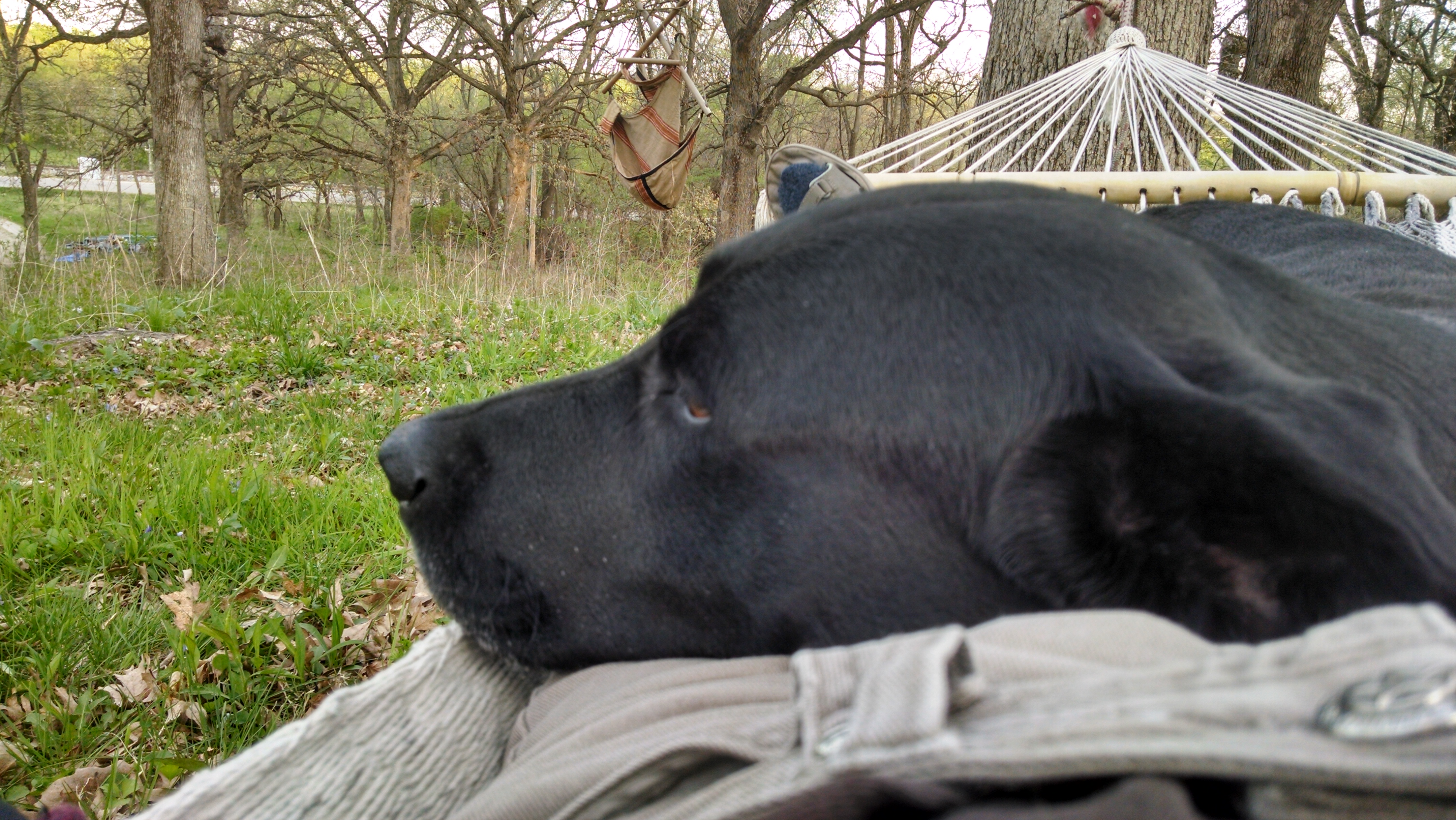
Nitro and I started and ended the 30×30 Nature Challenge in the hammock-it has gotten us pumped up about 30 Days Wild.

For 30 Days Wild, engage in a random act of wildness every day with us-you’re only limited by your imagination.


Take a walk in the woods, and discover what's blooming in your backyard.
We are starting the 30 Days Wild with a full moon walk, as the fireflies are beginning to dance in the evening.


Challenges to Getting Outdoors Daily

Is getting out into nature daily a challenge?

Or do you need a challenge to get out daily into nature?

Getting out into Nature a challenge? {PocketMousePublishing.com}Tomorrow is May 1.  Nothing like a new month to take on a new challenge.  And MAYbe this is your month.  May is spring in the northern hemisphere and autumn in the southern hemisphere — not too hot, not too cold, just right for getting outside and getting a daily dose of nature time!

But…maybe you’re feeling too busy.  Or maybe you’ve had a nature walk go wrong.  Or maybe you can’t seem to remember a single benefit to time outdoors when the kids beg for just 30 more minutes in Minecraft. Or is that only at my house?

Getting outside, every day, can be a challenge — so here are 3 challenges to get you there:

1. Starting May 1, the David Suzuki Foundation has a 30×30 challenge.  That’s 30 minutes outdoors for 30 days.  Do you have 30 minutes?  Just 30 out of 1440 a day — about 2% of your time.

100 Trees, 100 Chances to Get Outside! Free Worksheet Download

2. Want something less time-bound? Wilder Child offers a chart called 100 Trees, 100 Chances in the fantastic article 6 Ways to Get Your Kids Outside (When They Don’t Want to Go).  Color a tree every time you go outdoors and watch your forest grow!

3. Is a purposeful, structured  time more your style?  Back in 2008, the Handbook of Nature Study Outdoor Hour Challenge began — and is still going.  Years of challenges to get you started and keep you outside!

Do you know of another challenge that encourages getting outside regularly? Share it in the comments! Or tweet to @pocketmousepub and let us know!

And after you’ve been outside, check out the Nature Chills Challenge to share what you’ve discovered!

I just read a 2010 study that found kids ages 8-18 spent 7 hours and 38 minutes in front of a screen daily, about 27% of their day.  Has technology use gone up or down at your house in the last 5 years?

Mushroom Trees

For National Arbor Day, I decided to plant some “mushroom trees.” I have healthy, mature oaks. I have young northern pecans, Kentucky coffeetrees, and Ohio buckeyes. I also have, typical of Iowa’s woodlands, forest areas so overgrown that trees need to be removed, not planted. And, while I continue to work on improving the diversity of the woodlands, planting a typical tree for National Arbor Day seemed counter-productive this year.
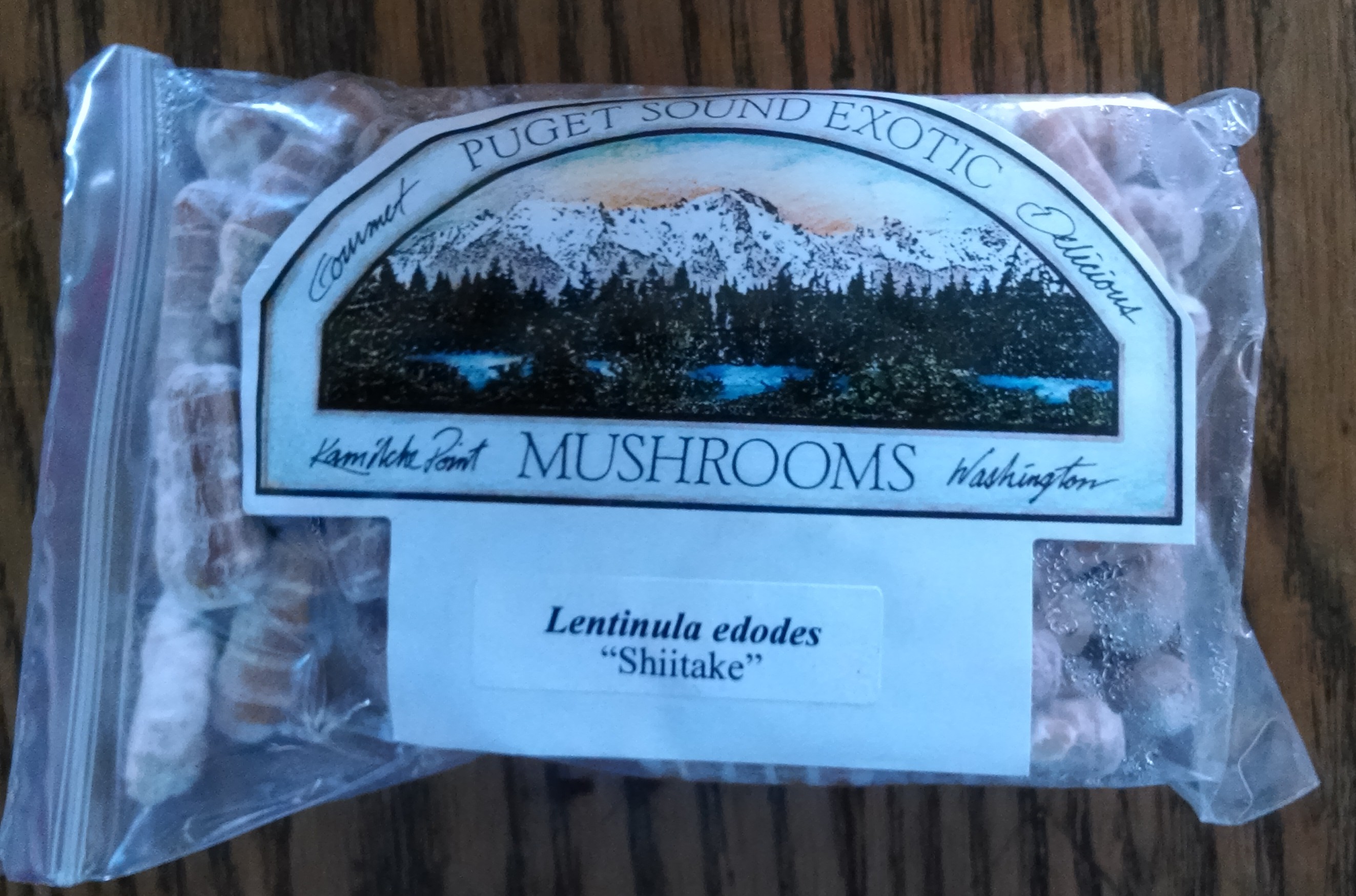
Shiitake “plug spawn”. Dowels inoculated with mycelium

Dying trees are critical for the health of a forest. They provide habitat for cavity nesting birds, screech owls, bluebirds, and wood ducks. They serve as roosts for bats and feeding stations for insect-eating birds. A dead snag hosts a tremendous variety of decomposers, from fungi to ants, which gradually break down the hard wood into soft, rich organic matter in which new life can grow.

Mycelium rapidly expanding around the dowel
I thought deliberately turning a dead log into a mushroom tree would be a fun way to celebrate the spirit of National Arbor Day, without adding a tree where it shouldn’t belong. It will celebrate that the value of a tree extends far beyond the life span of the tree. As a benefit, I will
1) expand my knowledge of mushrooms, and give me a close up, regular look at the decomposition process
2) provide me with something healthy and tasty to eat
3) provide organic material, when the tree is completely broken down.
IMG_20150424_072600281
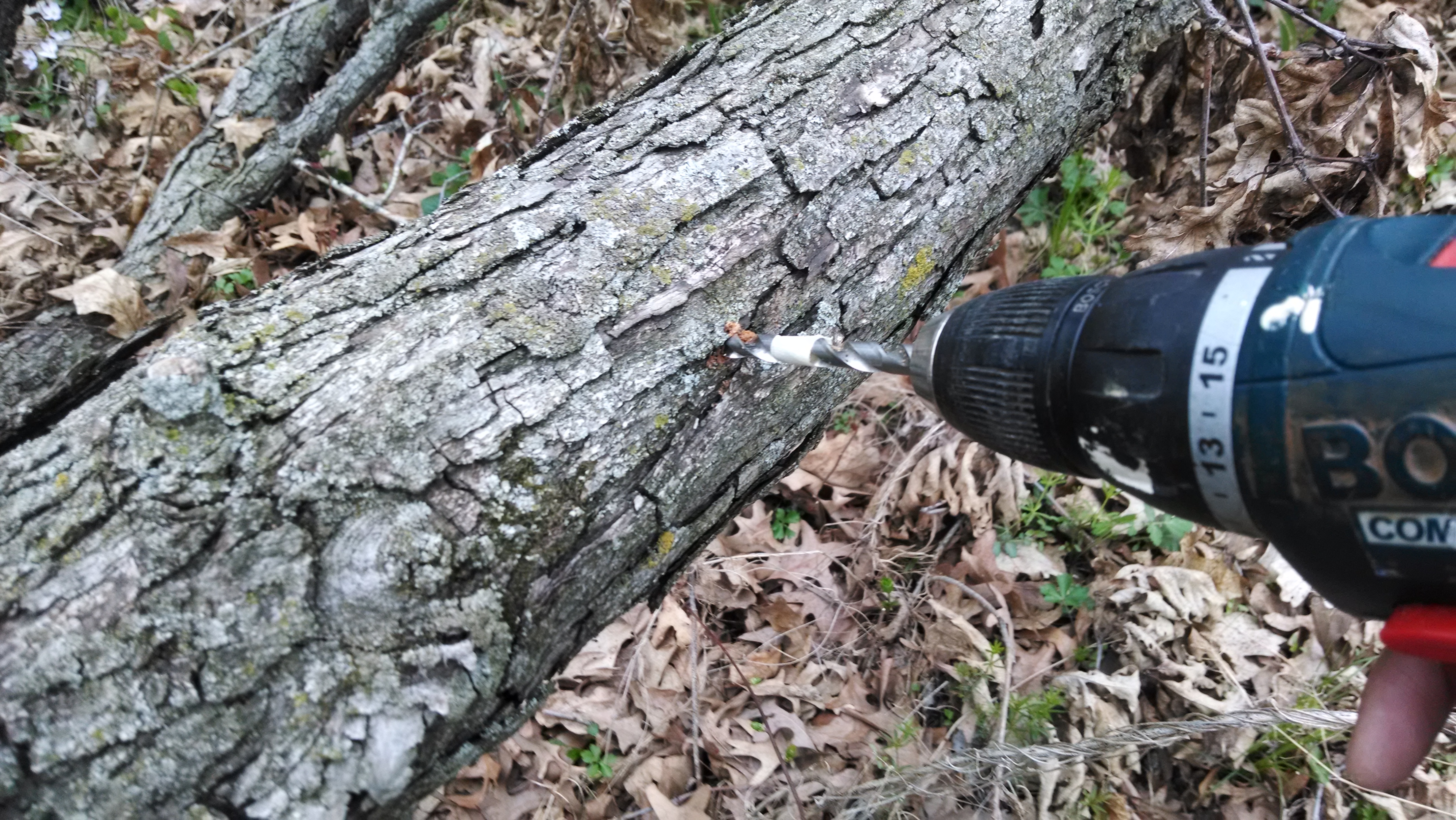
Drilling the holes in the oak limb, a casualty of a recent wind storm

In the past, I’ve grown portabella mushrooms in a box in the house, and thought this would not be too much more difficult. And then, when I got my shiitake, maitake, and reishi mushrooms from Fungi Perfecti…I realized that it may not be more difficult, but it is certainly a bit more specific and detailed.

IMG_20150424_073628008
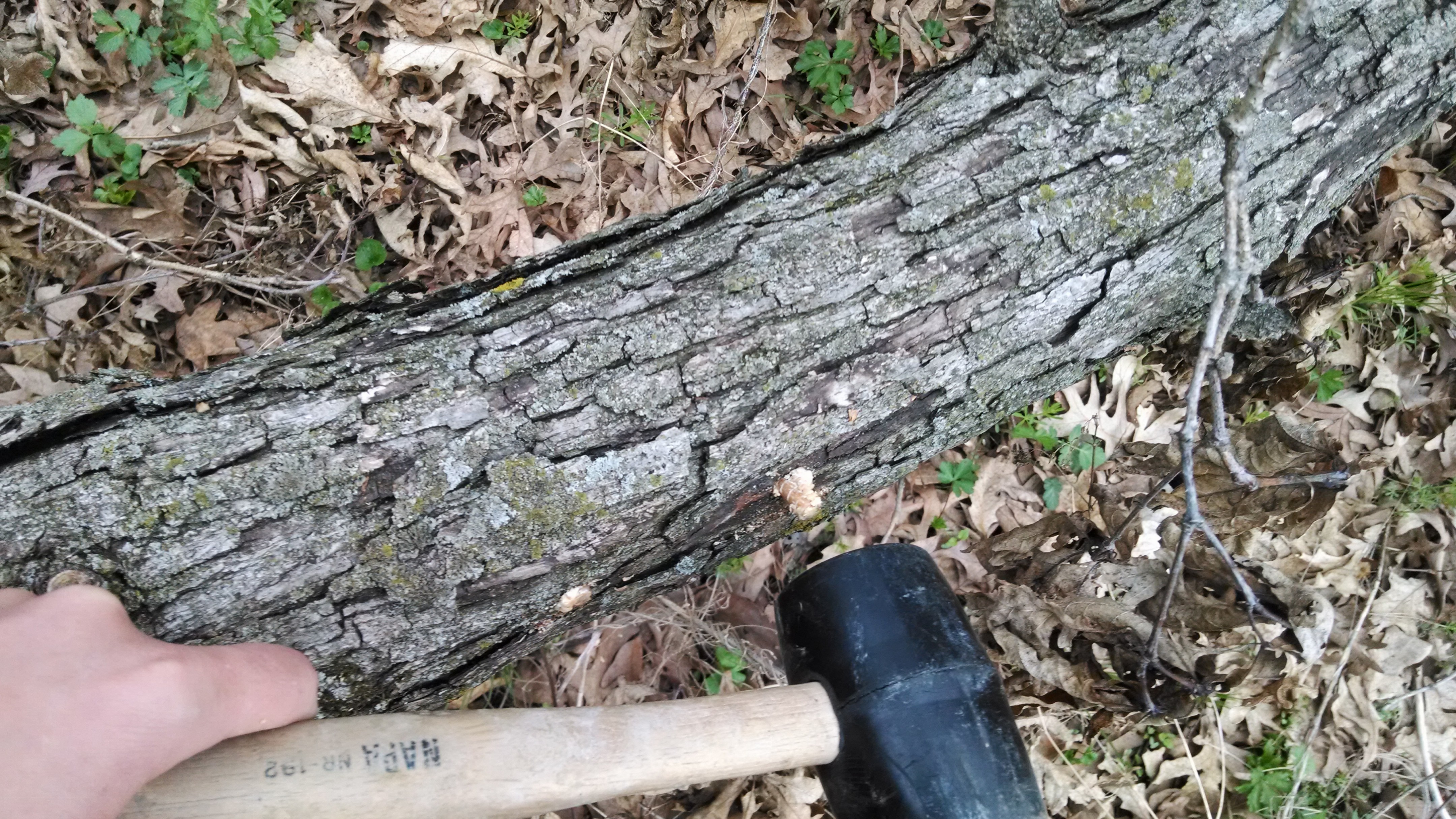
Tapping the plug snugly into the tree.

I’ll be sharing pictures as the mushrooms grow!  Have you ever grown your own mushrooms?

IMG_20150424_074145574
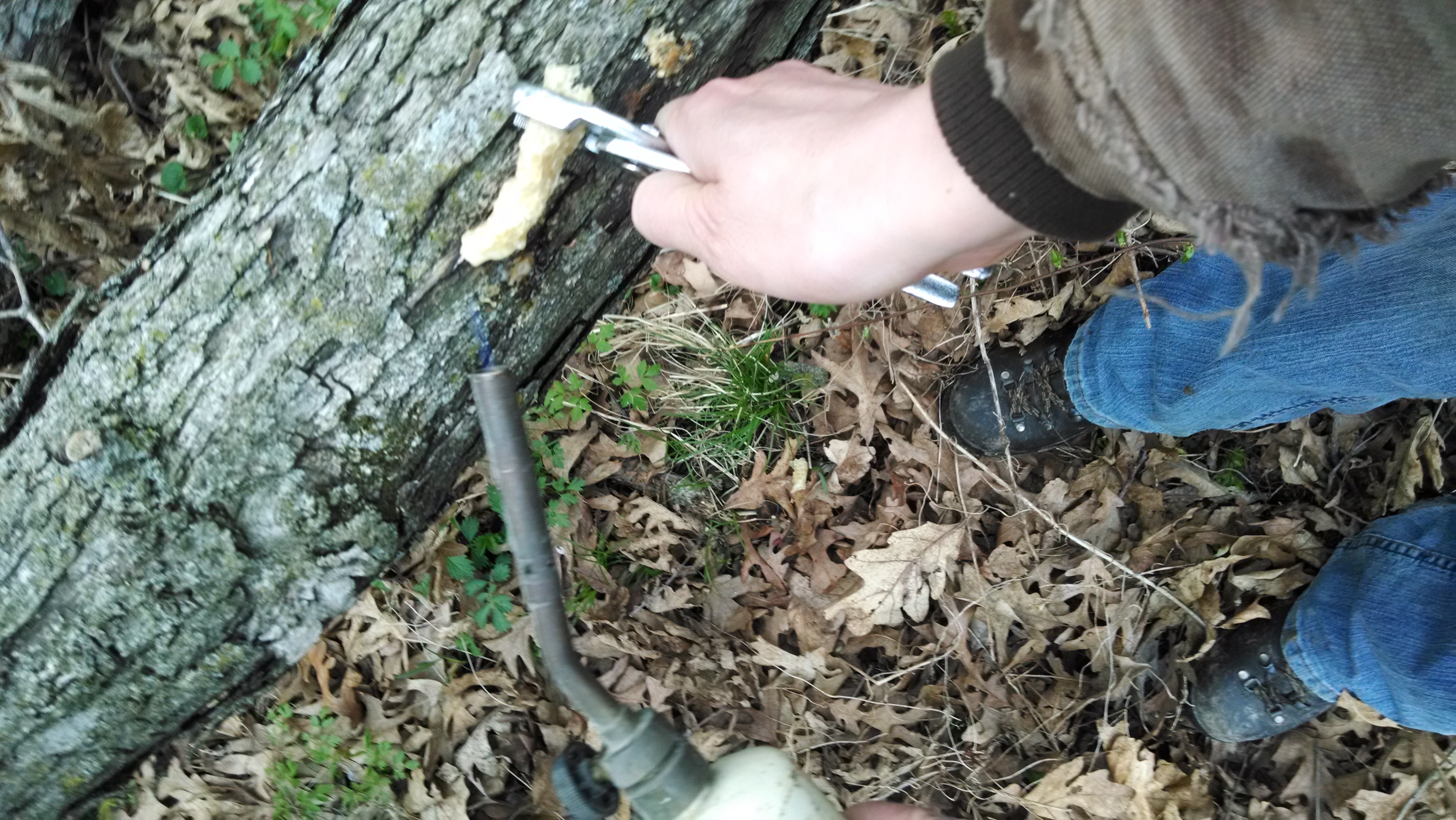
Sealing the plug into the tree with a bit of melted beeswax. There are definitely more efficient means of melting beeswax than a torch (the directions recommend melting the wax in a pot, and painting it on the plug). Now, we wait!

Earth Day Adventures: forage

IMG_20150318_162615210
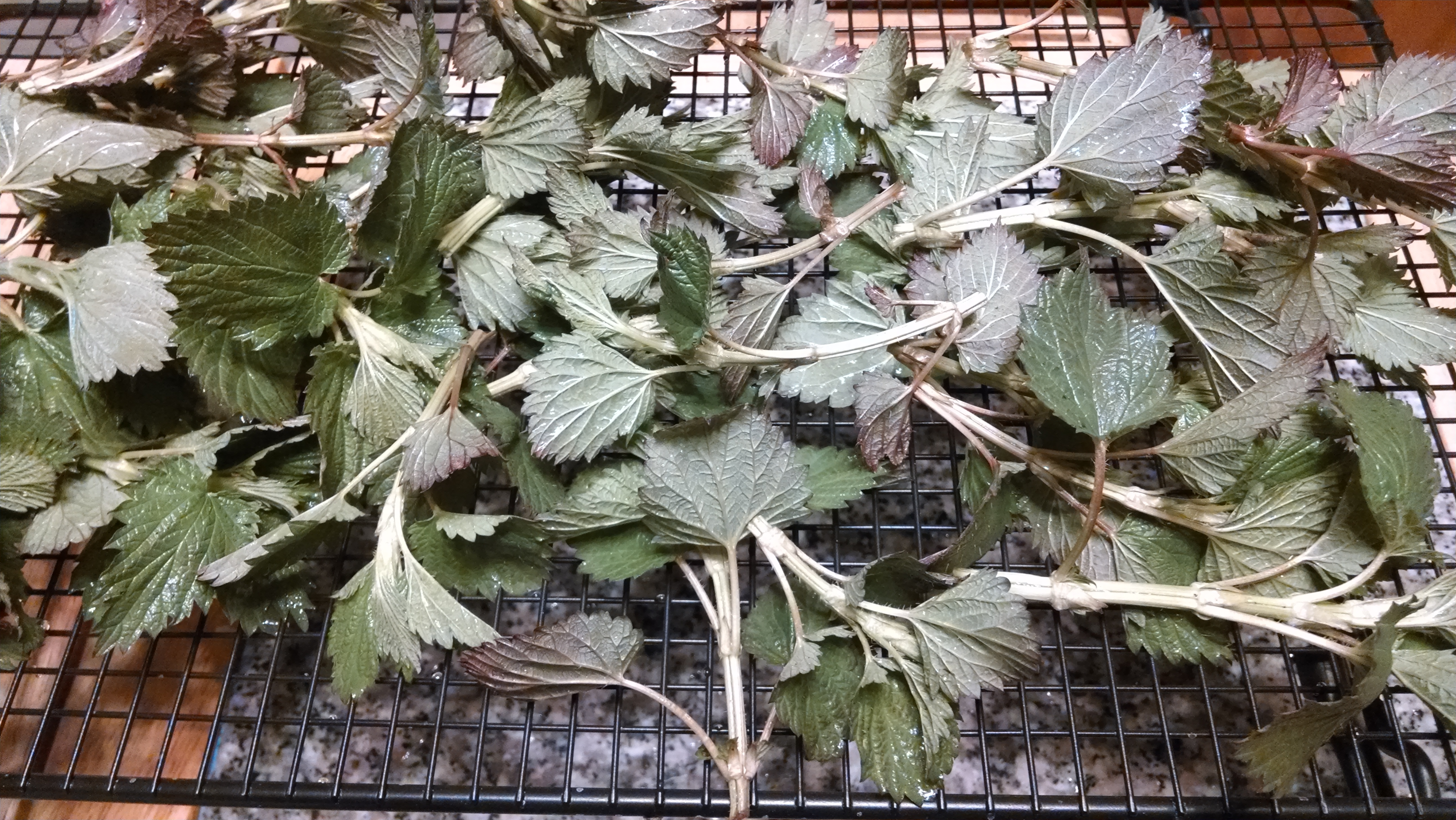
Pick nettles that are approximately 8″ tall, taking the top 6″.

By mid summer, moist woodlands are thick with stinging nettles. Long pants and long sleeve cotton t-shirts are a must, to keep waist-high plants from assaulting skin with trichomes. But right now, the stinging nettles are just beginning to emerge. Celebrate Earth Day by enjoying hunting for, gathering, and eating this delicious plant.


The leaves are tender and full of iron, vitamin A and vitamin C. The tiny hairs are just beginning to produce trichomes, so they aren’t nearly as painful if you break them off into your skin. Grasp the plant gently at the base and break the stem cleanly off. It won’t hurt the plant. If you can’t seem to get the knack of it without getting stung, wear a pair of gardening gloves or use a pair of clippers. As the nettles are a ubiquitous invader throughout the woods, stick a paper sack in your pocket to collect them in.

Once home, rinse them off and boil them for about five minutes. The boiling breaks down the toxins, making them safe to eat. Treat the leaves like spinach, adding a little bit of butter, salt, or lemon juice before serving. IMG_20150409_154827535


Dry the rest. The trichomes also break down as the plant dries. Add a teaspoon of dried nettle leaf to the teapot whenever you make a cup of tea, to take advantage of the nutrients in the plant long after the plants leaves are large and tough, and the trichomes are vigorous about defending it.

This book is older than I am, but the information in it is still a great foundation for foraging  for food in nature.
This book is older than I am, but the information in it is still a great foundation for foraging for food in nature.

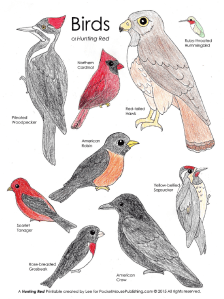
Free Bird Printable Set of Hunting Red

Birds of Hunting Red color page from PocketMousePublishing.com -- free download!
The free Bird Printable Set based on the nine North American birds found in Hunting Red* is ready for downloading! The set contains a full color page of all nine birds, an identical b&w page for coloring, a set of name cards, play ideas, and individual coloring worksheets for each of the following birds:

Red-Tailed Hawk
American Robin
American Crow
Yellow-bellied Sapsucker
Ruby-throated Hummingbird
Rose-breasted Grosbeak
Pileated Woodpecker
Northern Cardinal
Scarlet Tanager

Birds of Hunting Red hawk worksheet from PocketMousePublishing.com
Red-tailed Hawk worksheet

After creating the page featuring all nine birds together, I printed a copy for my 12yo son to color.  He used Hunting Red*, AllAboutBirds.org, and our beloved National Geographic Birds of North America* field guide to accurately color each male bird.  I chose to draw all males, although there is a mix of males and females in Hunting Red*.

He scanned the completed page, and printed it on cardstock to see how it looked.  Beautiful!  I laminated the colored bird page, along with the name cards, and cut them all out.  Then it was off to the park to play Bird Search — which is exactly like hunting for Easter eggs, but the fun is year-round!

The children stayed on the playground while I went to a little stand of trees nearby.  I hid some birds in the branches of the evergreens, some on the ground under those branches, and some I stuck into the bark of a deciduous tree.

Rose-breasted Grosbeak Worksheet from Hunting Red (PocketMousePublishing.com)
Rose-breasted Grosbeak worksheet

I laid out the name cards on the ground so the children could place each bird with its name as they found them. For my 5yo, I added the encouragement of “hot and cold”: “You’re getting warmer, warmer…oh, colder now, warm, burning! You found it!”

After all the birds had been found, we played 2 more times – once with my boys hiding them for their little sister, and once I helped her hide them for her big brothers.  Each time we moved to a new location in the park.

I hope you enjoy the printable set!  It was fun to create and plan to make additional sets based on the other flora and fauna of Hunting Red*. In the meantime, before you hunt for eggs — hunt for birds!

Pileated Woodpeck worksheet from Hunting Red (PocketMousePublishing.com)
Pileated Woodpecker Worksheet

You can download the free set by clicking here, and share this post with those who enjoy it!  Also, a special thanks to Deborah Leigh for use of her snail picture on the Scarlet Tanager worksheet!

As always, books marked with an * are affiliate links, and you can read our full disclosure at the bottom of the About page!

Book Review: Moon Child

Nature Book Review: Moon ChildMarch’s full moon will occur on the 5th of the month.

Taking a family walk under the light of the full moon in a wonderful activity.  Not only does the moon’s presence add a magical quality, it allows you to see so much more!

Moon Child by Nadia Krilanovich is a perfect introduction to the full moon for toddlers and preschoolers.  The adorable raccoon, otter, and owl give a variety of peaceful activities to do with the moon to make bedtime or a nighttime nature walk special.

Take a walk on March 5th and be a Moon Child yourself!

And don’t forget to download your free printable: Full Moon Tracker

(This page may contain affiliate links which help support the site, click here & scroll to the bottom of the page for full disclosure.)