Usually I celebrate full moons, eclipses, solstices, and anything else I can think of outside walking with friends, followed by a little fire.
While the browns and greys of tree bark and leaf litter dominate the woodland winterscape, some of the smaller plants stay green all winter in the woods.
This season has been unusually hectic between Amazing Space (of which I love every moment, it just takes a lot of moments), the construction of the natural amphitheater, preparing the apiary for 2016, and everything else I normally do.
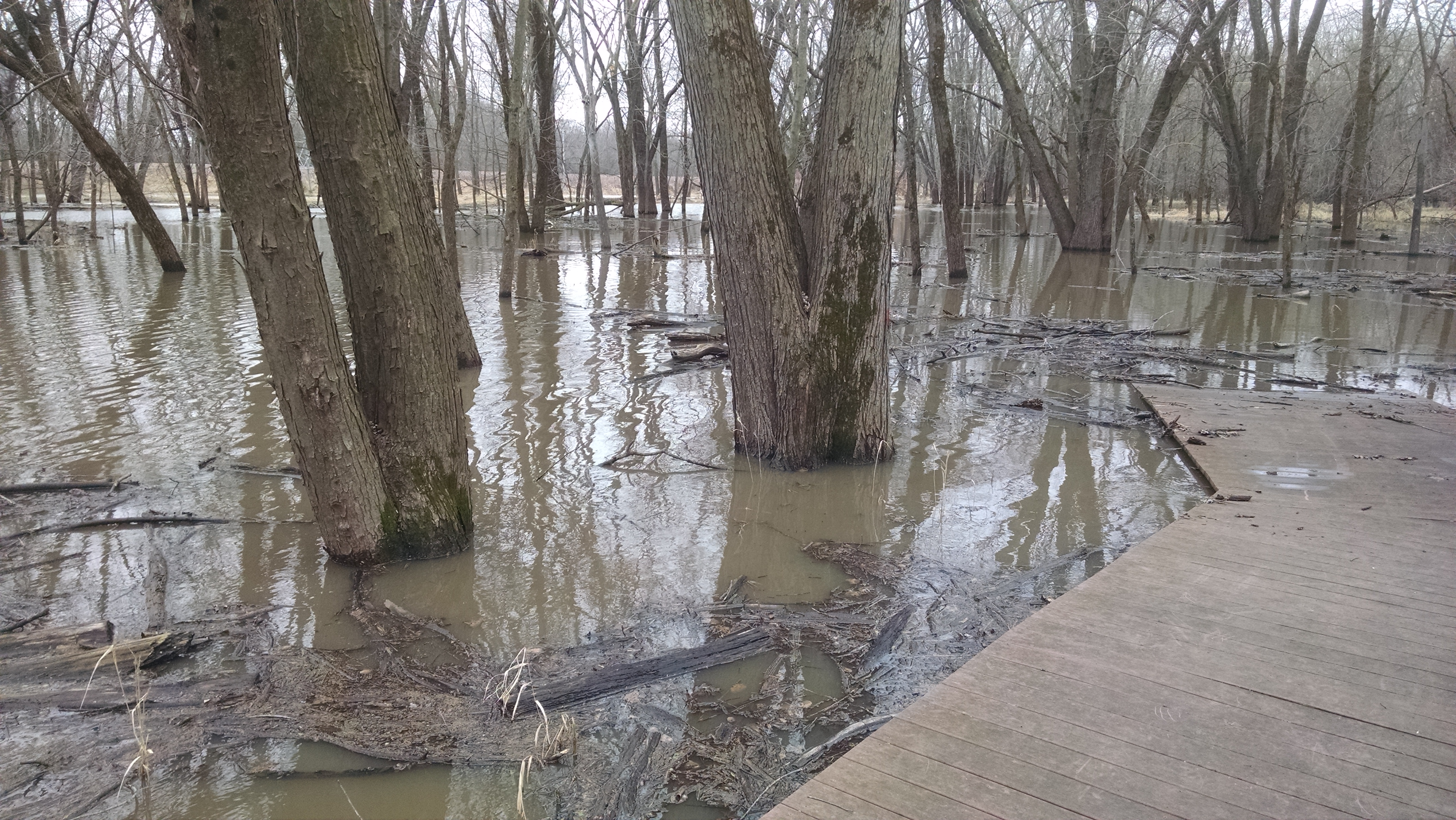
I’ve never known it to flood in December before. It is usually a light precipitation month for us, and the precipitation is usually in the form of snow, not rain. But Wood Duck Way and the silver maples in the floodplain are under water, as the Red Cedar River and Indian Creek spill over their banks.
For this winter solstice, I opted to take a break and enjoy waldeinsamkeit. It literally translates into woodland solitude, and I find it is a beautiful way to connect with myself, and with the natural world around me. I actually had to visit waldeinsamkeit twice, once during the day and once after dark on the solstice. The warm temperatures, moist air, and clouds skittering across the moon were beckoning me back outside. Since English is based on German, why we didn’t we keep that word?
The unseasonably warm winter and frequent rains are supporting a prolonged mushroom season in the woods.
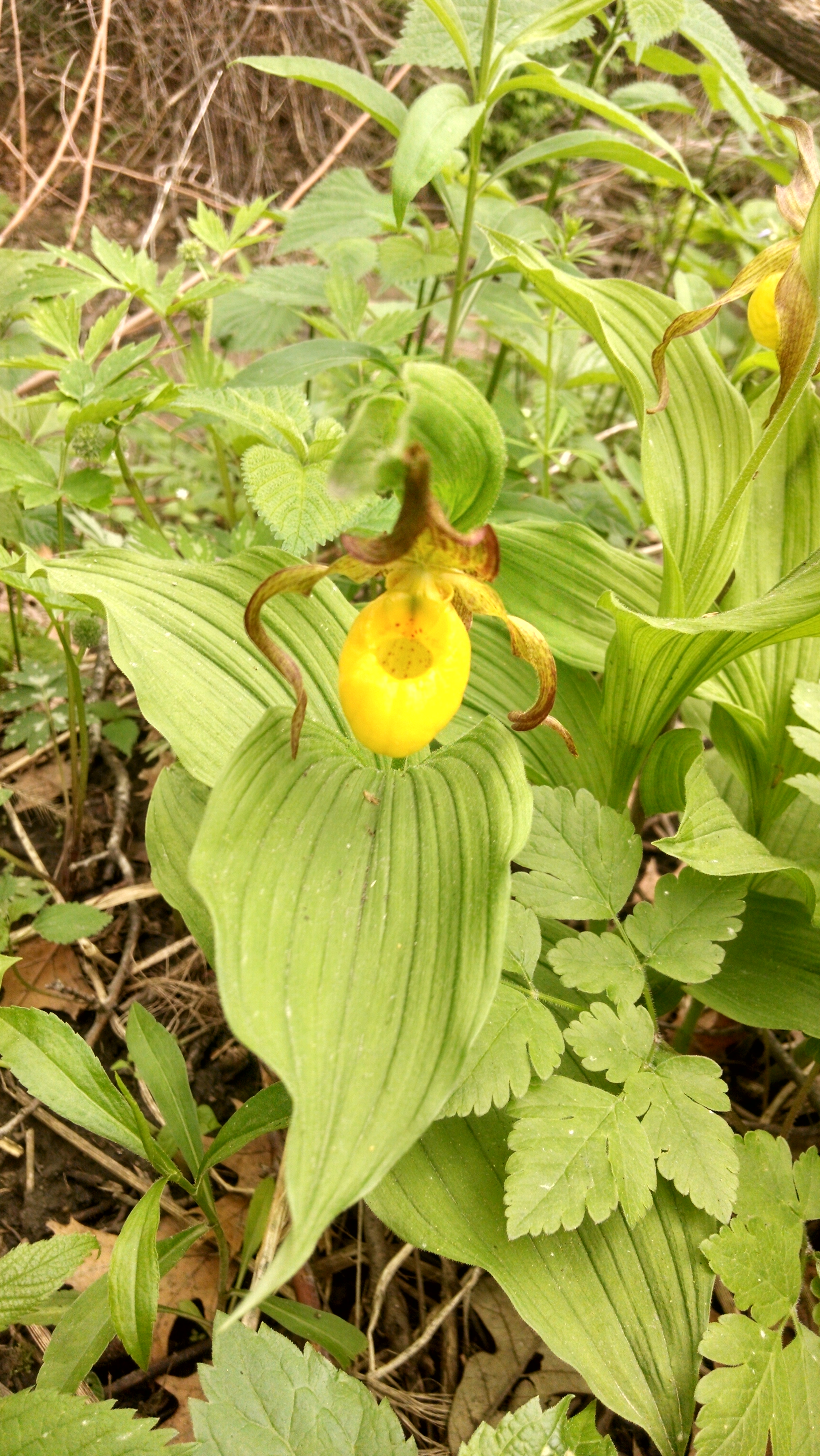
Having spent years roaming these woods, there are some plants I can identify, a lot more plants I recognize but can’t identify, and every once in a while, there is the sheer, delightful beauty of stumbling across a plant I’ve never even seen before.
I took a picture (there was only one, so I wasn’t about to pick the plant). And, in this heat, frequently a “real” specimen is a droopy, crumpled mess by the time I get it home, whereas digital photos can be easily shared, magnified and examined. The flower shape and size looked a bit like the non-native lily of the valley, but the leaves and growth patterns were all wrong. There is a false/wild lily of the valley, but that was definitely not it either.
I shared the picture around the office. Sharing is typically, in my opinion, way more fun than keying plants out (which is always Plan B, and a good skill to have!). A day later, a colleague at Indian Creek Nature Center told me what it was-the shinleaf (Pyrola elliptica). She had seen it before backpacking up north, where it is far more common. Like orchids, the shinleaf has strong micorrhizal associations, making it difficult to transplant or spread. So this little beauty has been hanging on in the woods here for a long time, and hopefully, as we continue to remove invasive species, it will spread on its own.
The shin leaf takes its name from its traditional medicinal value. Historically it was used as a poultice for bruised shins and other small skin problems, or gargled for sore throats. But, as it is rare here, its value is far greater as a keystone species for the woodlands.
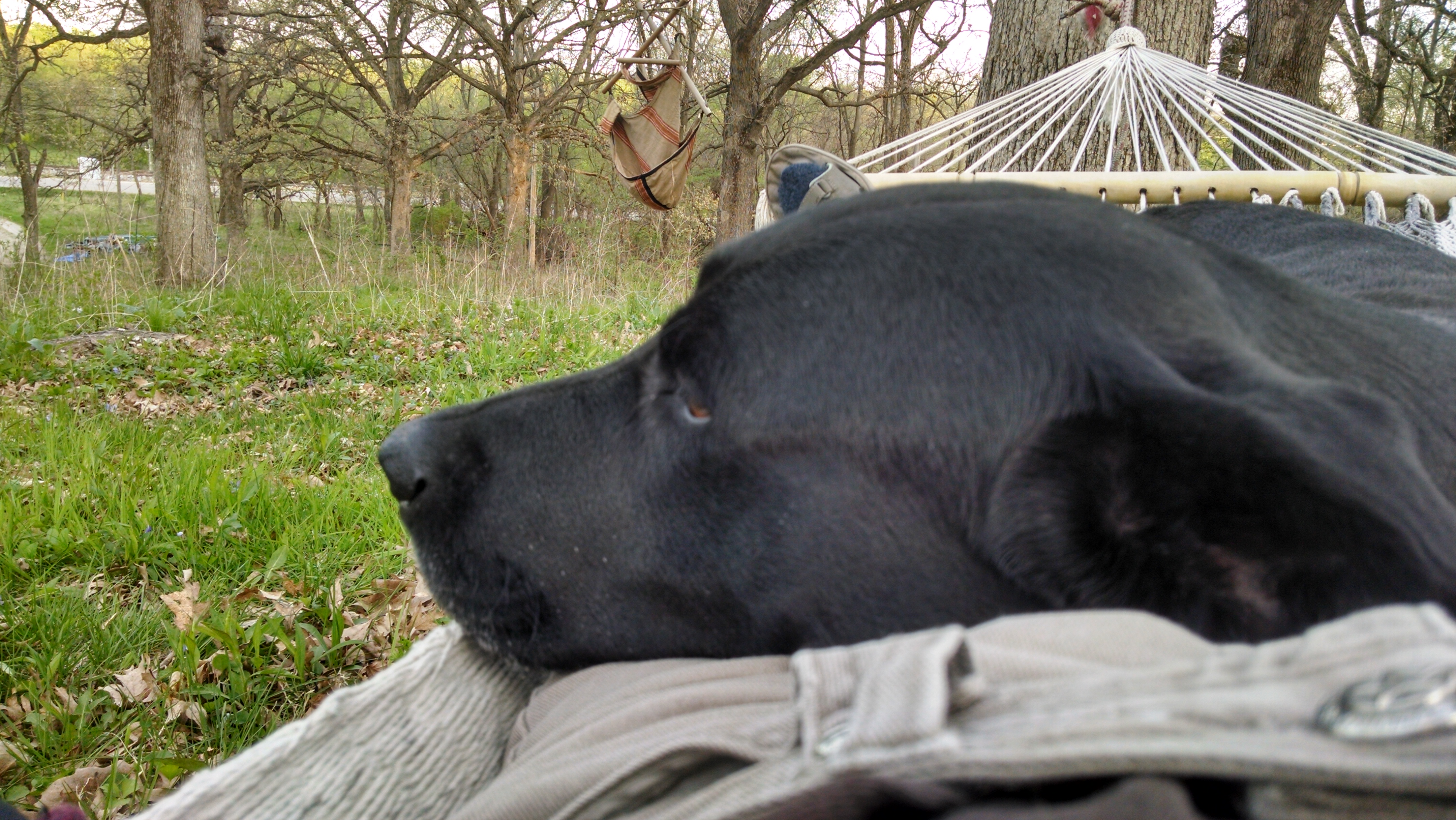
Random acts of wildness are not something I’m really good at. Oh, I’m all about being in the wild, and my attention is easily diverted by any random thing when outside. Mushroom! Snake! Bat! But my forays beyond my yard tend to be…planned. Dog. Leash. Water for me. Water for dog. Destination selection. Coordinating friends, who all love the idea of wilding away, but, but, but something else is almost always going on. Meanwhile, nature carries on, heedless of my attention or lack thereof. Which is good…
…because their are treasures to be found. The bloodroot leaves have grown bigger than my hand, and the verdant green provides a backdrop for some of Iowa’s rare treasures.
When I was a kid, I loved the smooth, perfect swells of the orchid blossoms, the way they could grow in the air, and the way they needed perpetual heat and humidity year round. Despite sweltering Midwestern summers, the frigid winters made the landscape inhospitable. I would repeatedly buy ones that “could” live indoors, and I would take them home, where they would never flower and gradually die.
But I was oh-so-wrong about one thing. There are actually 32 species of orchid that live in Iowa, and a woodland treasure hunt this month at the Indian Creek Nature Center revealed two.
Showy orchisYellow lady slipper
The yellow lady slipper is far more rare than the showy orchis. Because of their beauty, people are tempted to dig them and take them home. Because of their strong underground mycorrhizal associations, they seldom survive transplant-leaving a hole in the woods they came from, as well as a hole in the receiving garden. Not quite The Orchid Thief, but I only found one lady slipper on my walk. The beautiful rare delicacy of these flowers reminds me that if I just go outside, nature will provide the random wildness.
Forests in the not-too distant-past once provided primary sustenance for people, not just the other mammals and the birds. Today, agriculture and urbanization have made that relationship more challenging. The felling of many trees has reduced both the size and species composition of the woods. Forests are increasingly unhealthy, and lack many of the sustenance-providing species they once held. Among the foods we do eat regularly, it is a crop’s harvestability and transportability that have become valued over many other traits. Foods are increasingly single-sourced, and bear little resemblance-including nutritional value-to the myriad of plants on which we once depended.
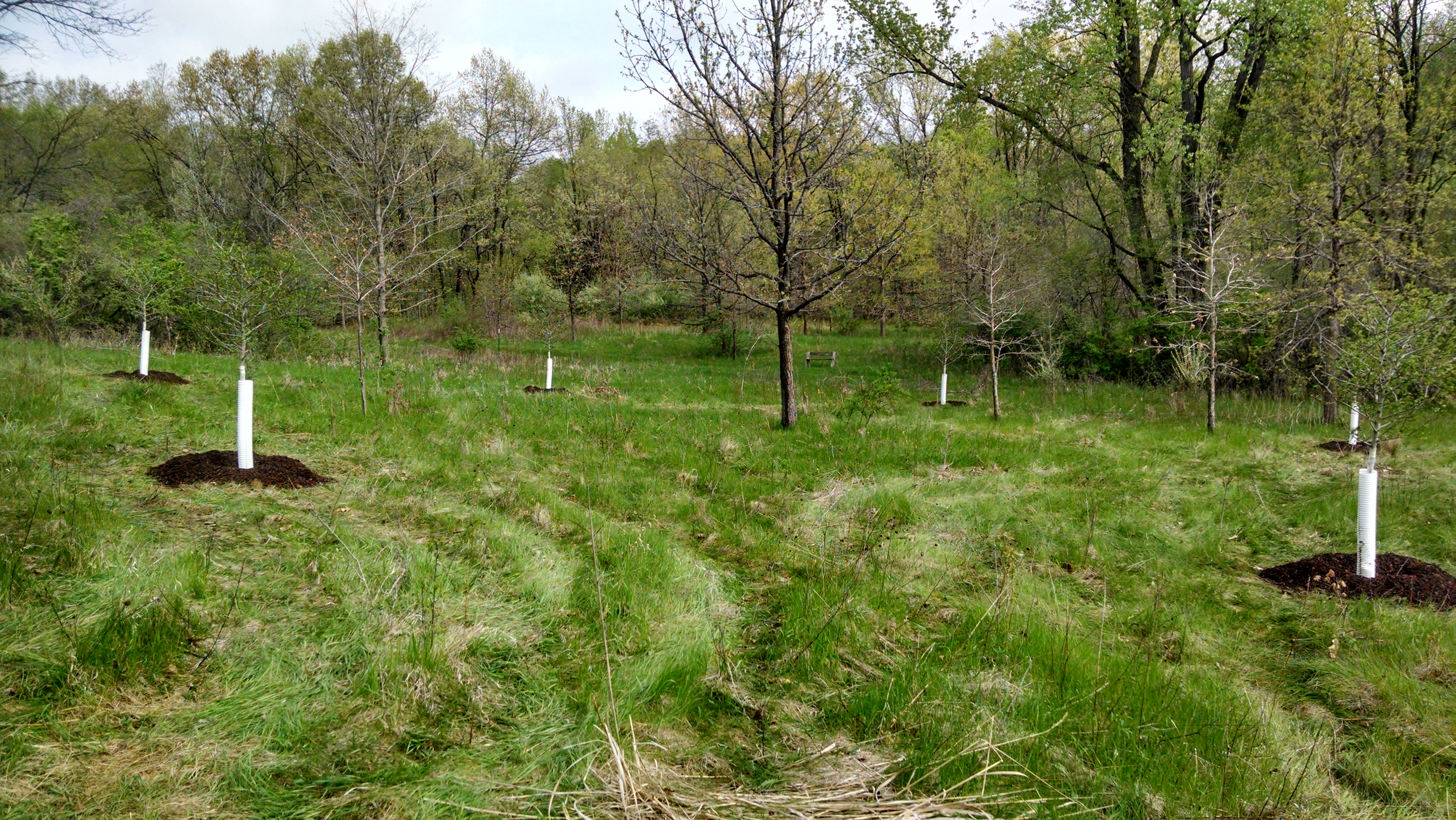
This spring, we planted six cockspur hawthorn¹ (Crataegus crus-galli) trees at Indian Creek Nature Center, as part of a woodland restoration project. For restoration purposes, the hawthorns are native trees that only grow about 25 feet tall, easy to overlook when we discuss the grandeur of the mighty oaks and hickories. Yet they provide a lot of ecological benefits, with their thicket-like tendencies that protect young nestlings, blossoms for pollinators, and edible berries for wildlife.
For human guests, the hawthorns² are the latest addition to the native edible forest at the Nature Center. Both the blossoms and berries are good to eat. The trees were planted in a wide circle, forming a grove around one of the maturing oaks. In the not-too-distant future, guests will be able to come, spread a picnic blanket in the semiprivate shade of the grove, listen to the birds all around them, and harvest a handful of berries³ for tea later that evening.
A few notes:
1. The hawthorns serve as a host plant for Cedar Apple Rust, which is hard on apple trees.
2. To find out if a species is native to your state, visit www.plants.usda.gov
3. Consuming hawthorns can help lower blood pressure. To learn more about the medicinal benefits, check out an herbal book, such as the Woman’s Book of Healing Herbs. If you’re under the care of a doctor for a blood pressure condition, talk to your doctor first.
My challenge in loving nature isn’t usually the “getting outside” part, its avoiding the poison ivy that thrives in the woods. Poison ivy is beautiful, especially in the spring and fall, but the oil causes my skin to break out in open, weeping, ever-expanding, never-healing sores, which causes me to go to the doctor for prednisone, which wreaks havoc on my immune system. Last summer, I avoided the doctor/prednisone, and I am going to do my best again this summer.
Step 1. Identify.
I nearly walked into this poison ivy branch, hanging face-high from a tree.The fine hairs on the main vine gave it away.
Step 2. Avoid.
The young leaves in the spring are a deep red.
Step 3. Wash thoroughly, assuming avoidance wasn’t good enough. Always a good idea after playing outside, because it provides an opportunity for a thorough tick check.
If I was in the general vicinity of poison ivy, I just use soap and water. If I’m fairly sure I actually contacted the plant, I use Goop first, which binds with the oil.
Step 4. At the first sign of breakout, start drinking copious amounts of tea made from reishi mushrooms, stinging nettle leaves, and budding goldenrod flowers. The challenge is on-we’ll see how this season goes!
The stinging nettle leaves that emerged mid-April are getting too big too harvest, but there are young plants still coming up around the edges of the nettle patches.
For National Arbor Day, I decided to plant some “mushroom trees.” I have healthy, mature oaks. I have young northern pecans, Kentucky coffeetrees, and Ohio buckeyes. I also have, typical of Iowa’s woodlands, forest areas so overgrown that trees need to be removed, not planted. And, while I continue to work on improving the diversity of the woodlands, planting a typical tree for National Arbor Day seemed counter-productive this year.
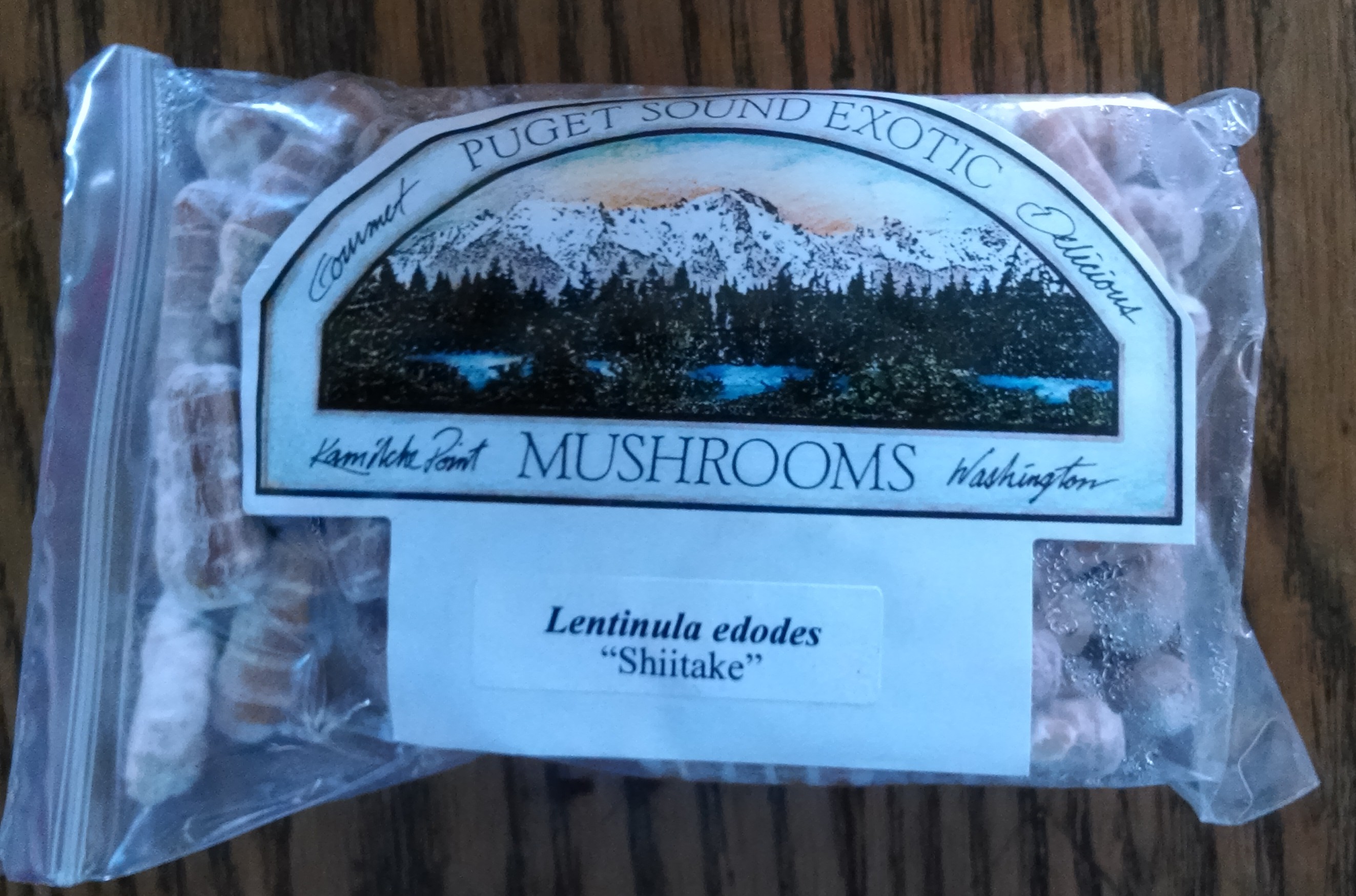
Shiitake “plug spawn”. Dowels inoculated with mycelium
Dying trees are critical for the health of a forest. They provide habitat for cavity nesting birds, screech owls, bluebirds, and wood ducks. They serve as roosts for bats and feeding stations for insect-eating birds. A dead snag hosts a tremendous variety of decomposers, from fungi to ants, which gradually break down the hard wood into soft, rich organic matter in which new life can grow.
Mycelium rapidly expanding around the dowel
I thought deliberately turning a dead log into a mushroom tree would be a fun way to celebrate the spirit of National Arbor Day, without adding a tree where it shouldn’t belong. It will celebrate that the value of a tree extends far beyond the life span of the tree. As a benefit, I will
1) expand my knowledge of mushrooms, and give me a close up, regular look at the decomposition process
2) provide me with something healthy and tasty to eat
3) provide organic material, when the tree is completely broken down.
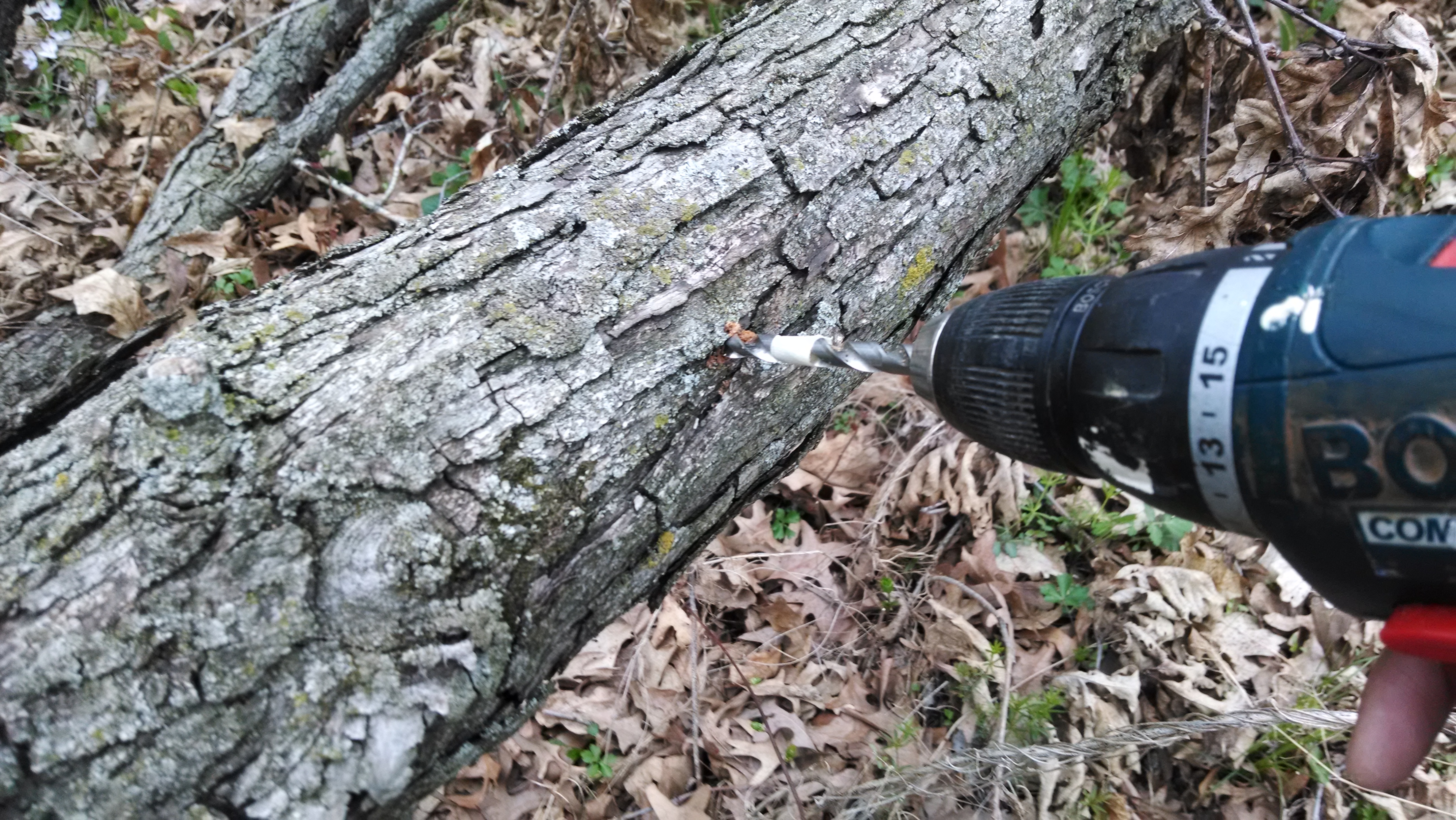
Drilling the holes in the oak limb, a casualty of a recent wind storm
In the past, I’ve grown portabella mushrooms in a box in the house, and thought this would not be too much more difficult. And then, when I got my shiitake, maitake, and reishi mushrooms from Fungi Perfecti…I realized that it may not be more difficult, but it is certainly a bit more specific and detailed.
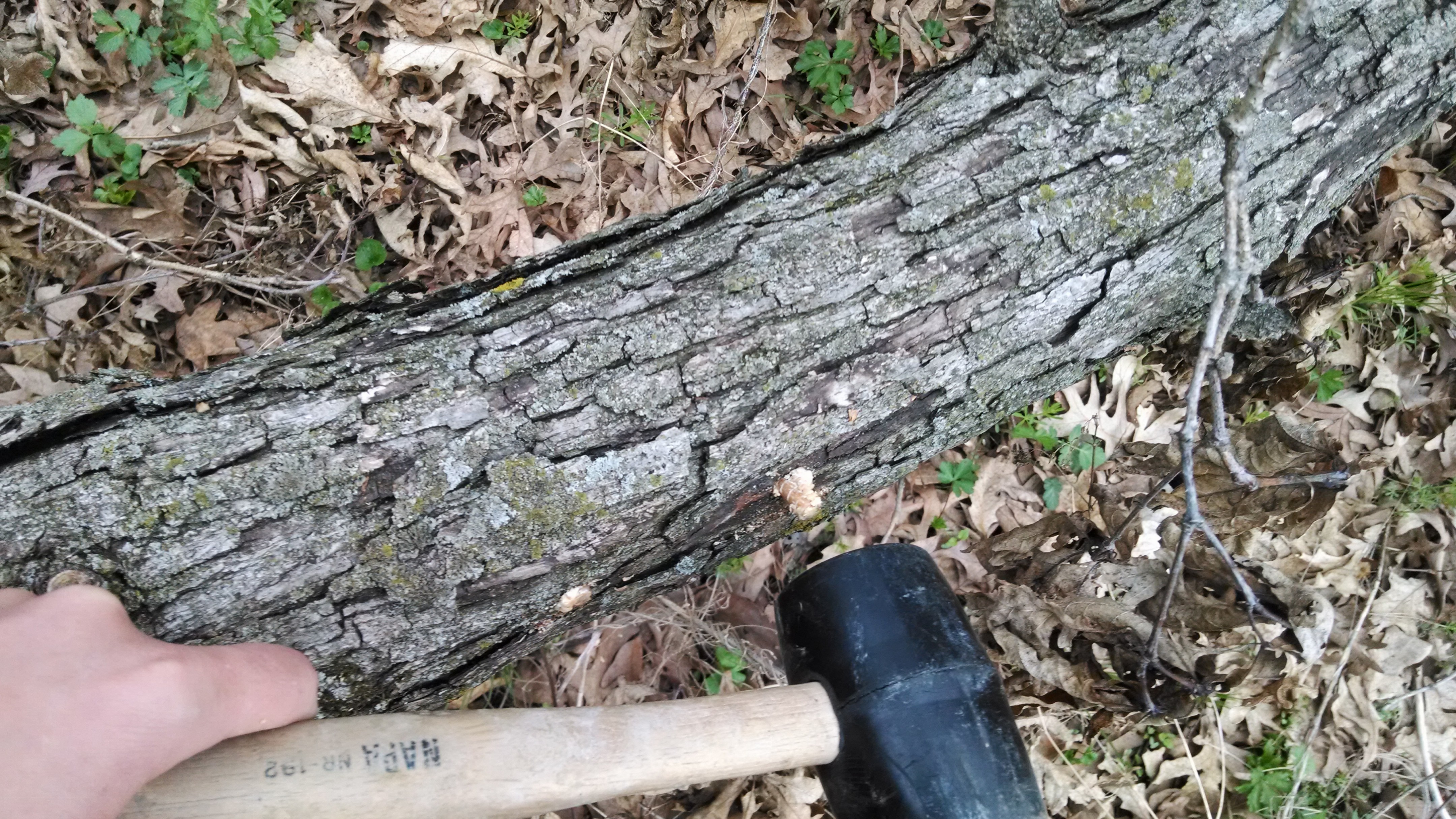
Tapping the plug snugly into the tree.
I’ll be sharing pictures as the mushrooms grow! Have you ever grown your own mushrooms?
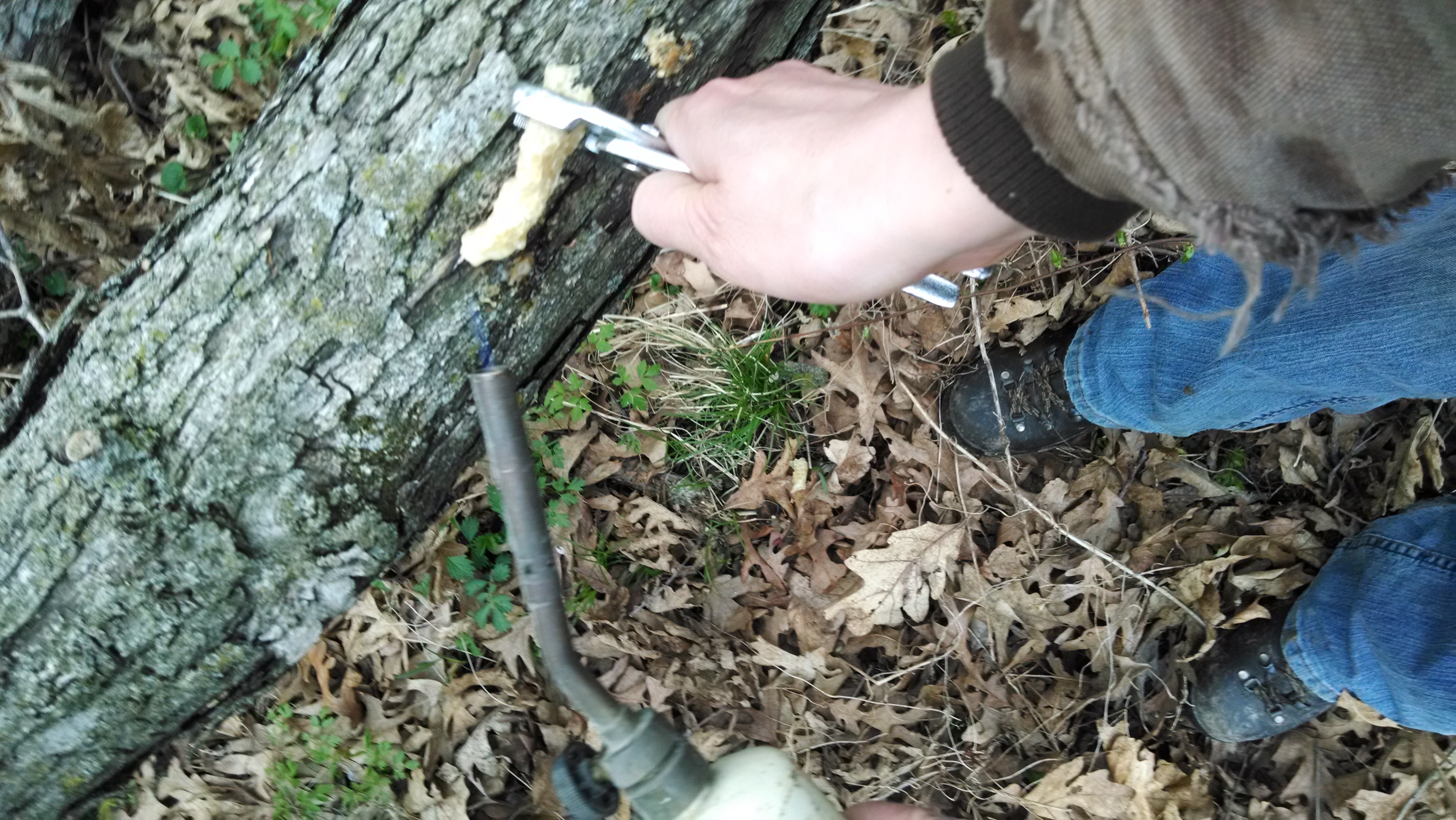
Sealing the plug into the tree with a bit of melted beeswax. There are definitely more efficient means of melting beeswax than a torch (the directions recommend melting the wax in a pot, and painting it on the plug). Now, we wait!
This is a magical season in the forest, as the spring ephemerals are just beginning to bloom. When we think of forest, our minds immediately go to the trees. Right now, with the trees in various stages of budding out, there is not a leaf to be seen. But there is a whole rainbow of color to be found.
Cottonwood tree inflorescence, brought down in a windstorm (Red).OK, I haven’t seen any orange butterflies yet, but these fun chairs are sitting outside Indian Creek Nature Center’s Butterfly Hoop House, beckoning a visit. Or……set 1/2 an orange out on a tray feeder or deck railing to attract the Baltimore Oriole. This one, painted by artist Brenna O’Hara, is a permanent resident along ICNC’s woodland trail (Orange).
Lots of life is beginning to emerge from the ground. Wildflowers of Iowa Woodlands by Sylvan Runkel and Alvin Bull is a great resource to put in your backpack before setting out. If that’s too big, try the laminated Woodland in Your Pocket pamphlet. Finding flowers is fun: knowing what you’re looking at is thrilling.
Bloodroots are one of the first spring ephemerals to explode in the spring (Yellow).
Delicate, small forbs take advantage of all of that sunlight streaming through the bare branches to send up their own leaves, flower, and reproduce.
Wild Ginger is just beginning to peek out, with soft folded leaves (Green). Open your copy of Hunting Red to preview the ginger in bloom.A blue jay was here. As the feathers of most birds are protected, take pictures, not the feathers (Blue).
To help identify feathers you find, visit the U.S. Fish and Wildlife Service’s free online Feather Atlas.
These bluebell flowers have not fully opened, but show some of the great diversity of color within the species (Indigo).The petals of the wild violet are edible, and are a beautiful edition to any salad (Violet).
Spend Earth Day outside, exploring what is happening with the earth as spring surrounds us in a rainbow of color. What colors will you find?
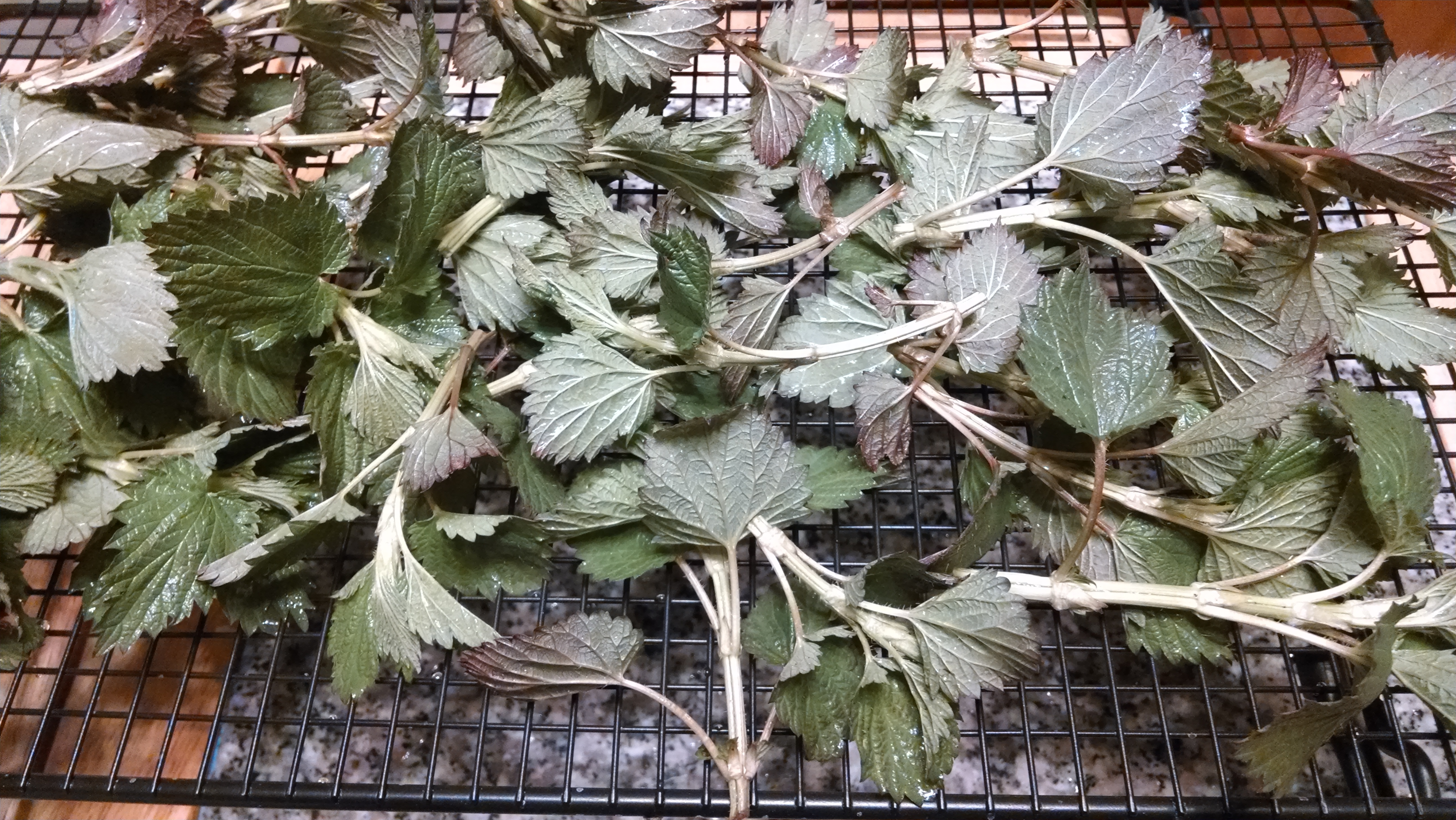
Pick nettles that are approximately 8″ tall, taking the top 6″.
By mid summer, moist woodlands are thick with stinging nettles. Long pants and long sleeve cotton t-shirts are a must, to keep waist-high plants from assaulting skin with trichomes. But right now, the stinging nettles are just beginning to emerge. Celebrate Earth Day by enjoying hunting for, gathering, and eating this delicious plant.
The leaves are tender and full of iron, vitamin A and vitamin C. The tiny hairs are just beginning to produce trichomes, so they aren’t nearly as painful if you break them off into your skin. Grasp the plant gently at the base and break the stem cleanly off. It won’t hurt the plant. If you can’t seem to get the knack of it without getting stung, wear a pair of gardening gloves or use a pair of clippers. As the nettles are a ubiquitous invader throughout the woods, stick a paper sack in your pocket to collect them in.
Once home, rinse them off and boil them for about five minutes. The boiling breaks down the toxins, making them safe to eat. Treat the leaves like spinach, adding a little bit of butter, salt, or lemon juice before serving.
Dry the rest. The trichomes also break down as the plant dries. Add a teaspoon of dried nettle leaf to the teapot whenever you make a cup of tea, to take advantage of the nutrients in the plant long after the plants leaves are large and tough, and the trichomes are vigorous about defending it.
This book is older than I am, but the information in it is still a great foundation for foraging for food in nature.
A great way to be in nature this time of year is maple syruping.
Annie taps a silver maple tree. Silver maples usually grow along creeks and river bottoms.
When winter is still firmly entrenched but the change in the birdsong indicates spring must be playing hide and seek just under the snow, we take our power drills, our 7/16″ drillbits, our sapsacks and spiles, and head into the sugarbush.
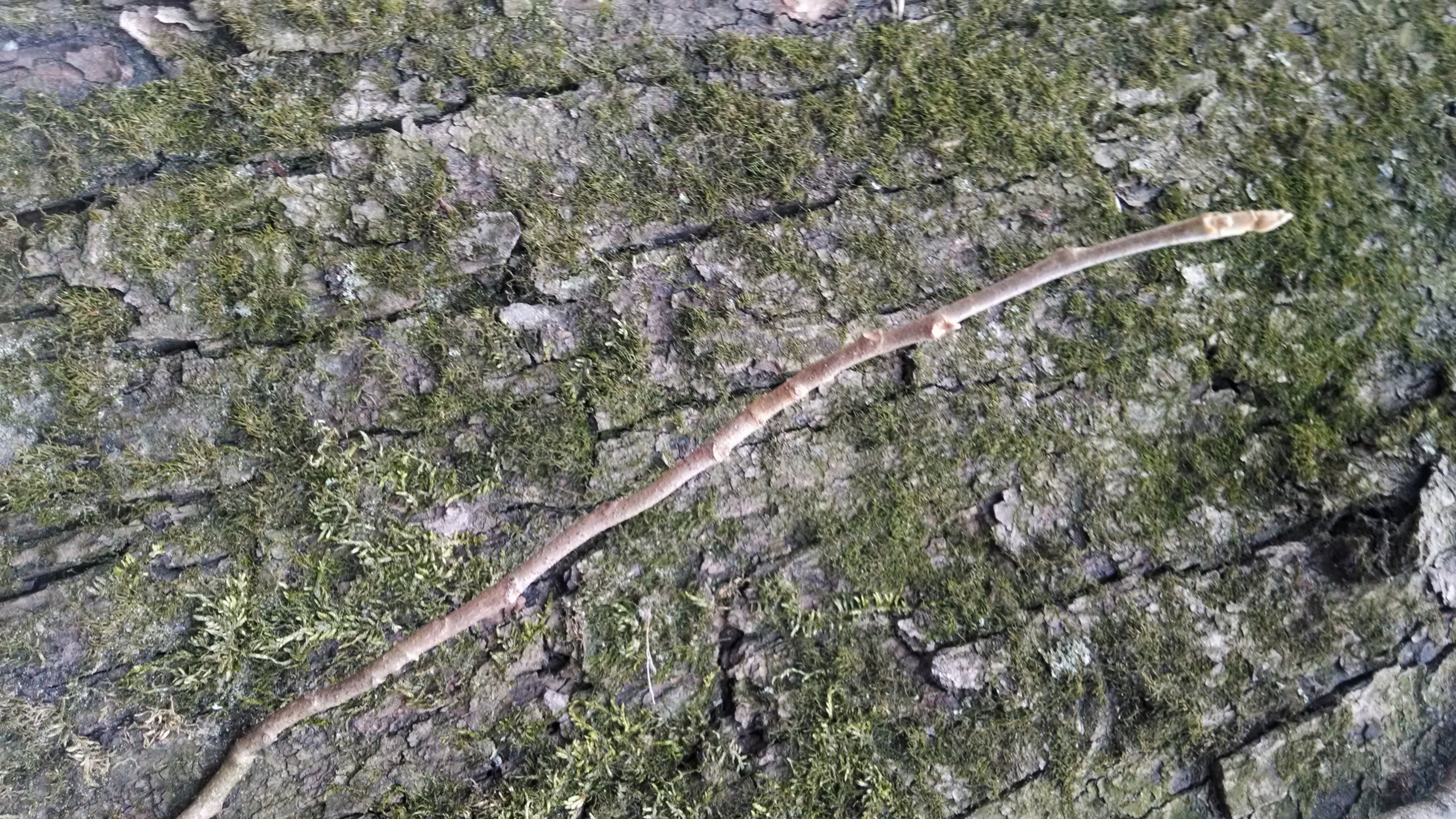
All maples have branches that come out directly opposite each other, in pairs. Look for young twigs to see the branching pattern, as older branches may be broken.
All maple trees, including the sugar maple and the box elder, have opposite branches. Its one good indicator that the tree is a maple tree–the only other large tree in this area that has opposite branches is the ash tree.
Jeff hammers in the spile, which spills the sap out of the tree, and hangs the bag to collect the sap.
If you don’t have a maple tree, plant one! Maples grow quickly, which will allow you–or someone who comes after you–to enjoy harvesting the sap, boiling it into syrup, and living directly off the land.
Hole tapped by a pileated woodpecker, hunting for insects. Unless a dead tree is threatening a path or building, they create rich habitat if left standing.
Being in the Sugarbush is a great way to see who else is spending time in the woods and what they are eating. As soon as it warms up a bit and the sap starts running, we’ll be back every warm day over the next five weeks to gather it. The repeated trips to the forest over the next five weeks will give us opportunities to explore the gradual shift into spring, as well as collect gallons of sweet sap. Visit www.indiancreeknaturecenter.org to learn more about syruping.
Pileated woodpecker by Gabrielle Anderson, from Hunting Red.



















 Pocket Mouse Publishing