Earth Day Adventures: forage

IMG_20150318_162615210
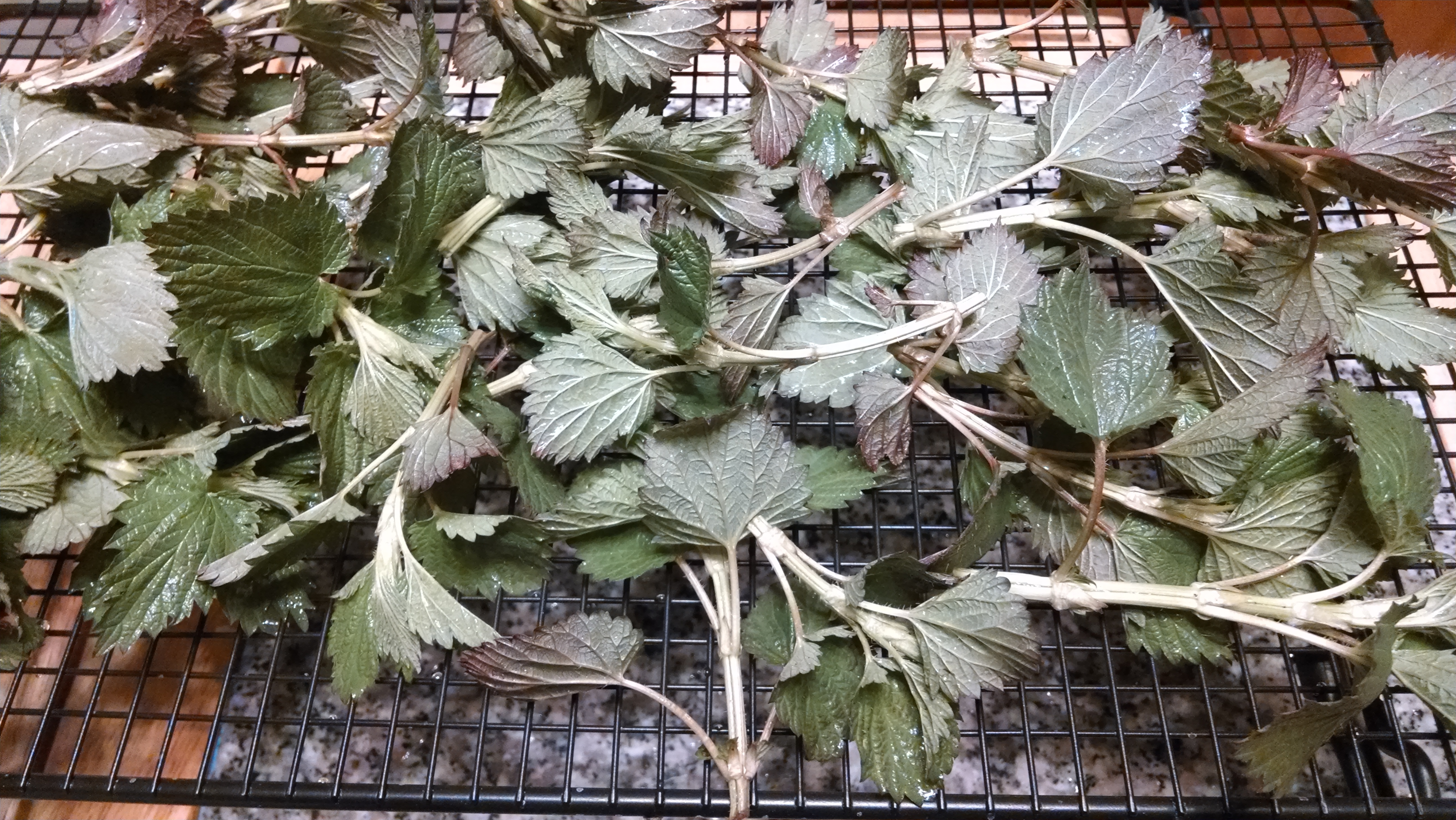
Pick nettles that are approximately 8″ tall, taking the top 6″.

By mid summer, moist woodlands are thick with stinging nettles. Long pants and long sleeve cotton t-shirts are a must, to keep waist-high plants from assaulting skin with trichomes. But right now, the stinging nettles are just beginning to emerge. Celebrate Earth Day by enjoying hunting for, gathering, and eating this delicious plant.


The leaves are tender and full of iron, vitamin A and vitamin C. The tiny hairs are just beginning to produce trichomes, so they aren’t nearly as painful if you break them off into your skin. Grasp the plant gently at the base and break the stem cleanly off. It won’t hurt the plant. If you can’t seem to get the knack of it without getting stung, wear a pair of gardening gloves or use a pair of clippers. As the nettles are a ubiquitous invader throughout the woods, stick a paper sack in your pocket to collect them in.

Once home, rinse them off and boil them for about five minutes. The boiling breaks down the toxins, making them safe to eat. Treat the leaves like spinach, adding a little bit of butter, salt, or lemon juice before serving. IMG_20150409_154827535


Dry the rest. The trichomes also break down as the plant dries. Add a teaspoon of dried nettle leaf to the teapot whenever you make a cup of tea, to take advantage of the nutrients in the plant long after the plants leaves are large and tough, and the trichomes are vigorous about defending it.

This book is older than I am, but the information in it is still a great foundation for foraging  for food in nature.
This book is older than I am, but the information in it is still a great foundation for foraging for food in nature.

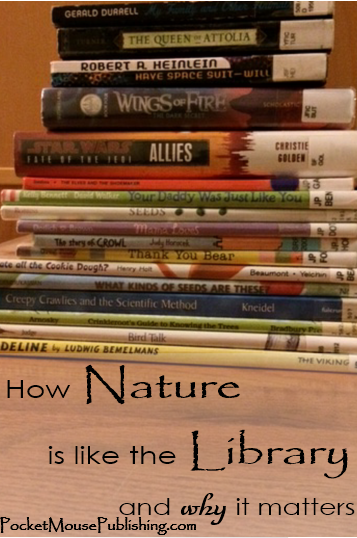
How Nature is like the Library and why it matters

How Nature is like the Library

Sitting in traffic on my way home from the library the other day, I got to thinking:

Nature – the great outdoors – is a lot like the public library.

Nature is space free for all to visit, all to peruse, all to enjoy – paid for by tax dollars, public & private benefactors, and citizen fundraising; maintained by forest rangers and naturalists (the librarians of their wild spaces) and the enthusiasm of volunteers.

We go to the library to learn: a vast collection of non-fiction books on every topic imaginable, waiting to be read and gleaned from. There is always something new to be found on a library shelf.  We can go to nature to learn as well.  Every walk in the woods will reveal something new.

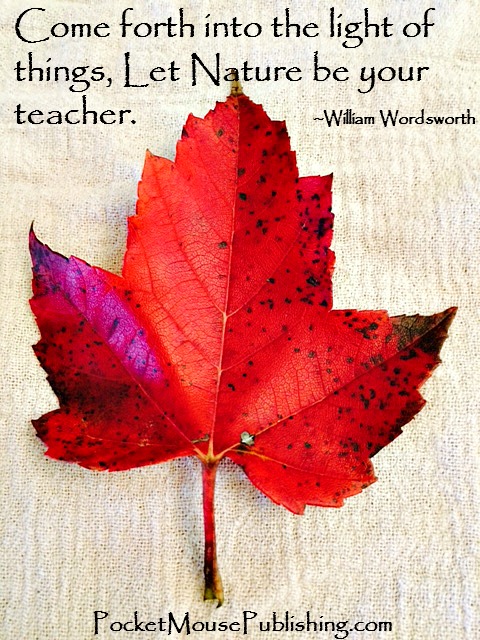
Come forth into the light of things,
Let Nature be your teacher. ~William Wordsworth

Earth and sky, woods and fields, lakes and rivers, the mountain and the sea, are excellent schoolmasters, and teach some of us more than we can ever learn from books. ~John Lubbock

You will find something more in woods than in books. Trees and stones will teach you that which you can never learn from masters. ~St. Bernard

Let Nature be your teacher -PocketMousePublishing.com

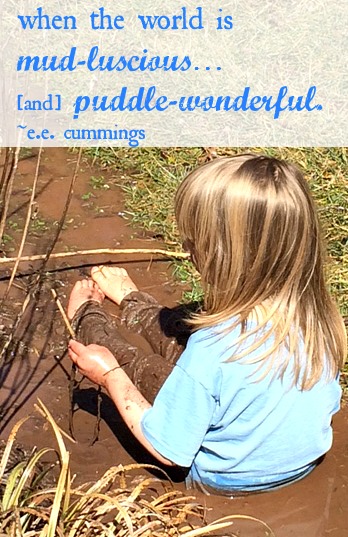
We go to the library for enjoyment: genre upon genre of fiction, poetry, picture books, movies, comics, how-to books. We can go out in nature for enjoyment too.  A mud-puddle and a mountain are always ready to provide a new experience.

when the world is mud-luscious…[and] puddle-wonderful. ~e.e. cummings

Forget not that the earth delights to feel your bare feet and the winds long to play with your hair. ~Khalil Gibran

Climb the mountains and get their good tidings. Nature’s peace will flow into you as sunshine flows into trees. The winds will blow their own freshness into you, and the storms their energy, while cares will drop off like autumn leaves. As age comes on, one source of enjoyment after another is closed, but Nature’s sources never fail. ~John Muir

How Nature is like the Library and why it matters

Just as our minds long for ideas that we can find in a book at the library, so our hearts and eyes long for nature – photos of breath-takingly beautiful nature scenes abound on Pinterest, are shared on Instagram, and hang on the walls of homes & offices around the world.

With innovation and technology, seems we have forgotten to cherish the true beauty the world has to offer. ~A.C. Van Cherub

Yet, unlike the library – still a place of generally hushed reverence (except during toddler story time!), nature is often carelessly used as a dumping ground – tires, empty cans, golf balls, and a large collection of half-filled plastic water bottles litter the creek near my home. Would you ever find these in your local library? Who keeps the library clean? Who keeps the natural spaces around your home clean?

If we all treated nature more like the library, I think the world would be a better place. We borrow. We return. We pay our fines when owed. We preserve. We respect. We enjoy!

May you find yourself out in nature or in a library today — better yet, both!

April 2015 Full Moon Walk & Lunar Eclipse

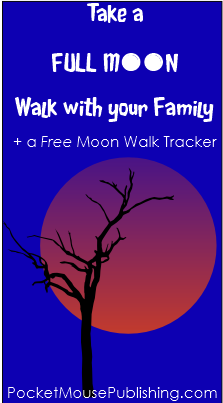
Full Moon Walk April 2015 Lunar Eclipse/Blood MoonAre you planning a Full Moon walk with your family this week?  This month’s Full Moon is on April 4, 2015 — traditionally called the Pink Moon, is also going to include the first total lunar eclipse of 2015!

A lunar eclipse occurs when the moon is in the Earth’s shadow. In some locations, the shadowing can cast a red glow on the moon, and so the moon can also be called a Blood Moon.

Solar and lunar eclipses always arrive in pairs — the lunar eclipse coming 2 weeks after the solar eclipse.  This and other interesting eclipse tidbits can be found at timeanddate.com — the website includes viewing information, video clips, and helpful explanations.

Full Moon Walk 2015 Printable from PocketMousePublishing.comDownload your free Full Moon Walk tracker  and enjoy this special time outside in nature!

Free Bird Printable Set of Hunting Red

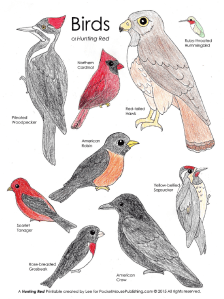
Birds of Hunting Red color page from PocketMousePublishing.com -- free download!
The free Bird Printable Set based on the nine North American birds found in Hunting Red* is ready for downloading! The set contains a full color page of all nine birds, an identical b&w page for coloring, a set of name cards, play ideas, and individual coloring worksheets for each of the following birds:

Red-Tailed Hawk
American Robin
American Crow
Yellow-bellied Sapsucker
Ruby-throated Hummingbird
Rose-breasted Grosbeak
Pileated Woodpecker
Northern Cardinal
Scarlet Tanager

Birds of Hunting Red hawk worksheet from PocketMousePublishing.com
Red-tailed Hawk worksheet

After creating the page featuring all nine birds together, I printed a copy for my 12yo son to color.  He used Hunting Red*, AllAboutBirds.org, and our beloved National Geographic Birds of North America* field guide to accurately color each male bird.  I chose to draw all males, although there is a mix of males and females in Hunting Red*.

He scanned the completed page, and printed it on cardstock to see how it looked.  Beautiful!  I laminated the colored bird page, along with the name cards, and cut them all out.  Then it was off to the park to play Bird Search — which is exactly like hunting for Easter eggs, but the fun is year-round!

The children stayed on the playground while I went to a little stand of trees nearby.  I hid some birds in the branches of the evergreens, some on the ground under those branches, and some I stuck into the bark of a deciduous tree.

Rose-breasted Grosbeak Worksheet from Hunting Red (PocketMousePublishing.com)
Rose-breasted Grosbeak worksheet

I laid out the name cards on the ground so the children could place each bird with its name as they found them. For my 5yo, I added the encouragement of “hot and cold”: “You’re getting warmer, warmer…oh, colder now, warm, burning! You found it!”

After all the birds had been found, we played 2 more times – once with my boys hiding them for their little sister, and once I helped her hide them for her big brothers.  Each time we moved to a new location in the park.

I hope you enjoy the printable set!  It was fun to create and plan to make additional sets based on the other flora and fauna of Hunting Red*. In the meantime, before you hunt for eggs — hunt for birds!

Pileated Woodpeck worksheet from Hunting Red (PocketMousePublishing.com)
Pileated Woodpecker Worksheet

You can download the free set by clicking here, and share this post with those who enjoy it!  Also, a special thanks to Deborah Leigh for use of her snail picture on the Scarlet Tanager worksheet!

As always, books marked with an * are affiliate links, and you can read our full disclosure at the bottom of the About page!

Do You Have a Nature Habit?

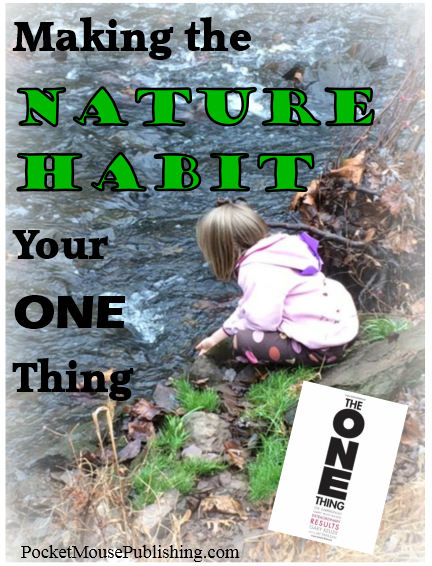
Making the Nature Habit Your ONE ThingDo you have a nature habit? Have you made nature part of your daily or weekly rhythm? Sometimes it is hard to make “getting outside” a priority, even when we know the benefits, including recent studies showing the importance of sunlight to vision!

I’ve just finished skimming the book The ONE Thing* by Gary Keller. The premise of the book (highly recommended!) is that in order to have more of what we want in our life, we need to focus on less. Our focus needs to be on our ONE thing. He acknowledges that we will have many priorities in our lives, but each of us has something that matters most and that is our ONE thing.
Right now, my ONE Thing is getting myself and my children outside every day, as a habit. Just as we eat every day, and we sleep every day — we go outside every day. To notice, to know, to be.

The ONE Thing is full of quotes which inspire me to making going outside a daily habit.

At the end of Chapter 2: The Domino Effect, Gary says:

The key is over time. Success is built sequentially. It’s one thing at a time.

The benefits of time in nature happen over time. Getting out every day — whatever the weather — will get us there.

Making the Nature Habit Your ONE Thing

Chapter 4: Everything Matters Equally opens with a quote by Johann Wolfgang von Goethe:

Things which matter most must never be at the mercy of things which matter least.

This is followed by:

The things which are most important don’t always scream the loudest. –Bob Hawke

Everyone’s “matters most” will be different from their “matters least” – but the thing that screams the loudest for our attention likely isn’t time in nature. And it probably comes via an electronic device of some kind.   At least, that generally is the case in my house.

So how do we make nature time a habit?

Well, in Chapter 6: A Disciplined Life, Gary tells us:

There is this pervasive idea that the successful person is the “disciplined person” who leads a “disciplined life.”

It’s a lie.

He says that we don’t need more discipline; we need more habit. And just enough discipline to form that habit. How long to form a habit? More than the often cited 21 or 28 days, apparently. Gary references a University College of London study which found it takes, on average, 66 days to form a habit. Yesterday was our family’s 34th day of getting outside in a row – we’re halfway to a habit!

A final quote from the book I will share is by F.M. Alexander and comes from Chapter 12: The Path to Great Answers:

People do not decide their futures, they decide their habits and their habits decide their futures.

What habits are deciding your future?  Do you have a nature habit?  Leave a comment or share a link and let us know!

*This page may contain affiliate links which help support the site, click here & scroll to the bottom of the page for full disclosure.

When a Walk in Nature Goes Wrong

When a Walk in Nature Goes Wrong -- pocketmousepublishing.comHow do you handle it when a walk in nature goes wrong? I don’t mean “Drama in Real Life” wrong. Breathe easy — no cougars attacks, rock slides, or poisonous mushrooms will be featured in this account.

This is about the small frustrations that occur when you’re trying to get yourself and your family away from “the electronic paradise” as the S’More Outdoor podcast so succinctly describes it. This is the red crayon in the dryer, the burned dinner, the waiting in line at the library with a whining toddler to pay the (huge) fine – so you can check out your fifty book stack.

We’ve all had these types of frustrations in our daily lives. And they aren’t absent just because we want to take our children out to experience the joys of nature.

Earlier this week we headed out for a walk with the dog to the woods. I was in high spirits because two of my older children were able to come along – between working and their college/highschool classes, they do not get the same quantity of outdoor time the rest of us do! Off we went, the little didn’t even where a jacket because it was such a spring-like day.

First, I slipped on the wooden walkway leading across a drainage ditch. Initially my knee hurt dreadfully. But after standing up and testing it, I realized it didn’t hurt to walk (much). So on we went, with me and my oldest chatting about the importance of soil and the neat collection of monthly soil activities I found (more on this in a future post!).

We finally arrived at the creek. The 9yo had gone on ahead and was out of sight, but I wasn’t worried, we had a meeting place.

With all the melting snow our little creek was running fast and quite cold, so big brother offered to carry 5yo across.

You know what is coming, right?

When a Nature Walk Goes Wrong - Creek

He slipped and into the icy water she went.

Was she hurt? Not at all.

Did she cry? Not at all.

Was she cold and wet and needing to go home right then? YES! I took off my coat and wrapped her in it, picked her up, instructed the other three to locate 9yo and come home. So much for family time out in glories of nature.

Then I headed home with a bum knee, a shivering 5yo in my arms, and a very unhappy dog who didn’t like her family heading in different directions.

Halfway home, coming down a rather steep hill, the dog stopped and looked back. She wouldn’t budge. Then over the hill came the dejected 9yo. My initial (horrified) thought was he had discovered no one was following him and came back to look for us, somehow missing his siblings…who were now wandering the woods looking for him!

But no, they had found him and were not far behind. He was unhappy because he hadn’t gotten his nature walk.

We all finally arrive home. And swore off walking in the woods forever.

No, actually, we didn’t. Think about those small frustrations. After the crayon in the dryer incident, did you take ALL your family’s dirty clothes to the dry cleaners henceforward? After the burned dinner, did you only eat in restaurants? And have you never returned to the library simply because you were embarrassed by a fine? Of course not!

We move on, we overcome, and maybe we can even laugh about such incidents in the years to come. When the immense bruise on my knee fades, I may laugh.

In the meantime, we’re still walking in the woods and on the paths and to the park…anything to get our daily dose of nature, no matter the weather. It has been 33 days since we started. I think we’re on the way to a habit!

Don’t give up on getting out into nature just because it isn’t idyllic every time you venture out!  Check out this encouraging National Wildlife Federations Health Benefits page and get back out there with your kids!

Do you find getting out into nature with your kids frustrating?  Have you ever had a nature walk go wrong?
Syruping Season

IMG_20150309_132422847

As the maple syruping season winds down, Indian Creek Nature Center is sharing the first harvest of the year with the community this weekend. The daytime temperatures have been unseasonably warm, in the 60’s and 70’s, and the night time temperatures have also been unseasonably warm, in the high 30’s and mid 40’s. Without the nights getting below freezing, the trees have produced a modest 280 gallons of sap-only enough to make about 6 gallons of syrup.

IMG_20150317_142215012
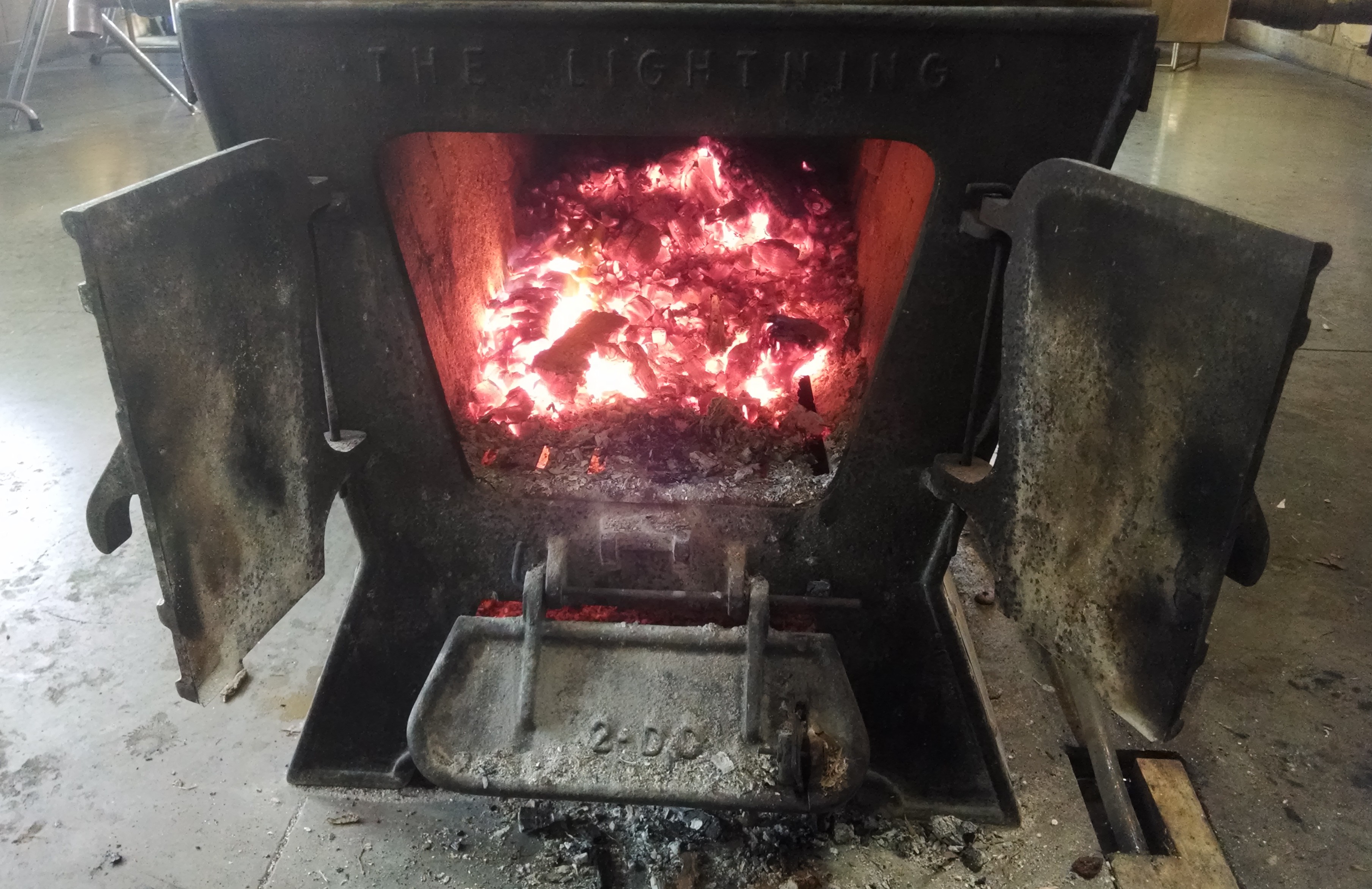
Maple syrup boils at 219 degrees, or 7 degrees above the boiling temperature of water. Wood, sustainably harvested at the Nature Center during restoration projects, provides the fuel for boiling.

If you only have one or two trees to tap or lack a good thermometer, consider drinking the sap or using it to make soups and stews. It has great flavor and is rich in minerals.

 While the temperatures will likely get cold again, the silver maple trees are already budding out, signaling that the sugars (=good syrup) are changing to starches (=bad syrup). Many of the trees have simply stopped producing sap altogether.
Another sign that the seasons are shifting:

IMG_20150318_143543973_HDR
Mallard ducks are beginning to pair up.
The syruping is ending, but the next wild edible to emerge-stinging nettle-is just beginning to poke through the softening ground.
IMG_20150318_162615210
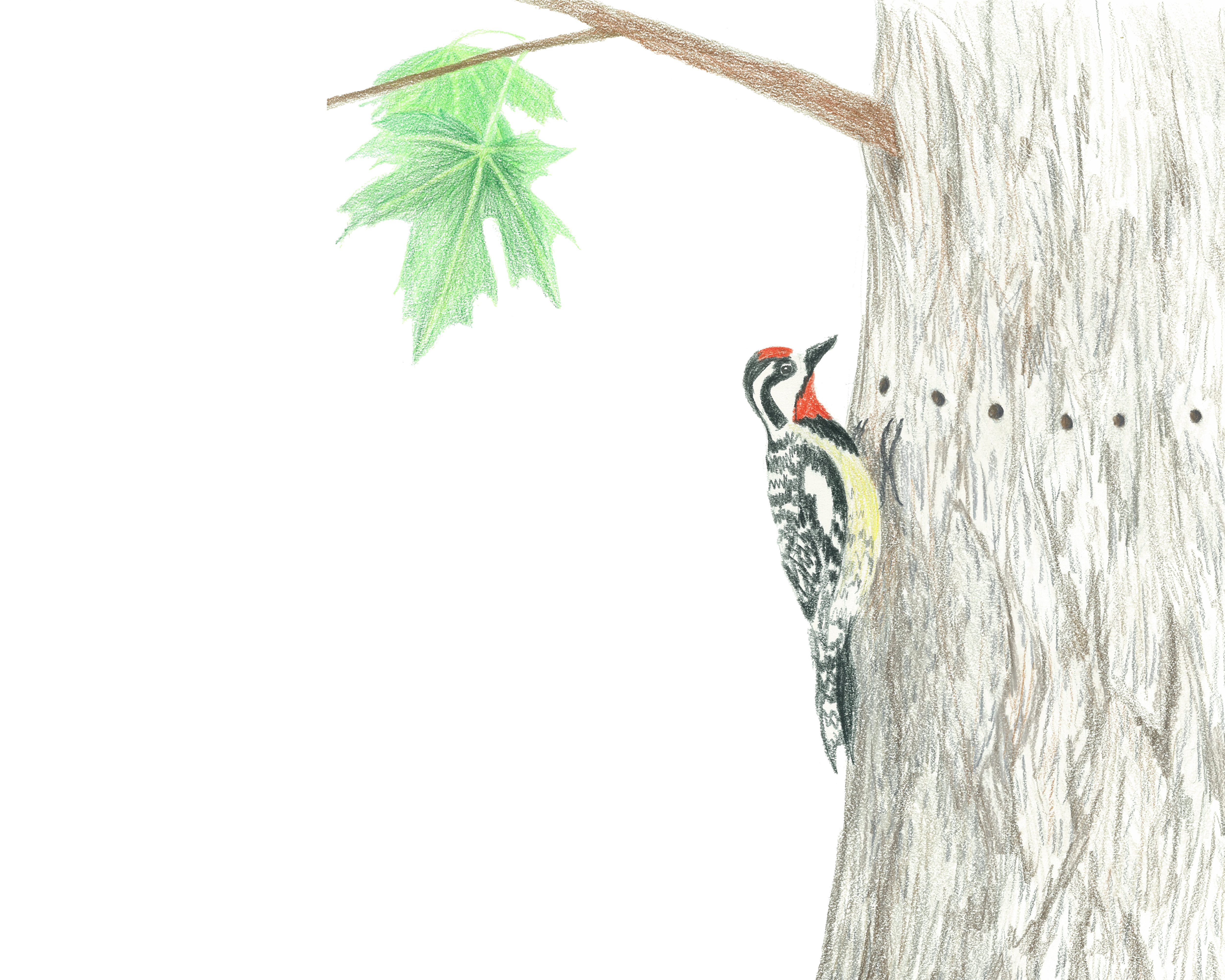
As spring progresses, keep an eye on the maples. Their flowers in March attract bees, and their sap attracts other things all year long.

sapsucker Sept 12 copy
Yellow bellied sapsucker by Gabrielle Anderson from Hunting Red.

This page contain affiliate links which help support the site. Click here for more information.

Book Review: When the Root Children Wake Up

Book Review: When the Root Children Wake Up

When The Root Children Wake Up* is Audrey Wood’s delightful tribute to the changing seasons based on a 1906 German story.  You might recognize Audrey Wood as the author of The Napping House* and King Bidgood’s in the Bathtub* (a family favorite!).

The tale begins and ends with Grandfather Winter, and Mother Earth is present when the Root Children wake up.  She helps them with dressing in their new leaf and flower costumes, painting the bugs, and then leads them out into the world.

The children enjoy adventures in the company of each season — Aunt Spring, Cousin Summer, and Uncle Fall — before Mother Earth plays a lullaby for the Root Children to return to sleep.

Ned Bittinger’s paintings do a remarkable job personifying the jolly exuberance of summer and the biting chill of winter. The plump cherubic innocence of the Root Children captures the joys to be found in nature through the year.

I highly recommend this beautiful book for reading with each change of the seasons.  Celebrate the vernal equinox, the first day of spring, on March 20th with the Root Children!

And if you’re looking for more ideas for welcoming spring, check out 7 Ways to Celebrate the Spring Solstice by Rhythms of Play.

Previous Book Reviews: Moon Child

*This page may contain affiliate links which help support the site, click here & scroll to the bottom of the page for full disclosure.

What changing of the seasons books does your family like?

Kids in Nature Podcasts

3 Awesome Kids in Nature Podcasts {https://pocketmousepublishing.com/

On the rare occasion that I’m walking the dog or driving the car alone, I enjoy listening to podcasts. Here are my 3 favorites about the importance of nature in kids’, and all of our, lives!

1) Nature Kids Radio with Kenny Ballentine

Kenny blogs at A Sense of Wonder and is the founder of The Nature Kids Institute. I started listening with Episode 1 and was hooked. Saving what we love, creating a passion for nature, solve problems forming deep connections with natue, getting outside to learn — all these things are discussed by Kenny and his guests.

So far only 5 episodes have been produced; I’m looking forward to many more!

2) Parenting Adventures Podcast with Michael Stelzner

Michael is the founder of My Kids Adventures website, which encourages families to have fun together – many of suggested activities are outside in nature! The podcast episodes that focus on nature include sticks, dirt, wildlife, and exploring the outdoors. I wish this podcast was still on going, but at least there are 12 to enjoy!

3) S’more Outdoor with Brett Traudt

I love this name, so clever!  Brett’s podcast isn’t focused on kids but rather interviewing business folks who have been positively influenced by their time in nature.  Sometimes seeing the long term effects of nature makes me more inclined to take my kids outside, even when I don’t feel like it.  Brett’s S’more Outdoor website includes nice links to state & national parks in the USA.

I originally started out listening to Brett’s Get S’more Outdoor podcast where he rambled about the “nature effect” and “recovering childlike wonder” – Brett appreciates nature and wants to share it!

Do you have any recommendations for podcasts that encourage getting out in nature?  Please share!

Full Moon Walk in 2015

Take a Full Moon Walk with a FREE printable trackerTake a Full Moon Walk with your family!

Enjoy some fresh air and moonlight this month and every month.

Full Moon Walk Printable Download & hang this printable Full Moon Walk tracker near your calendar and never miss walking by the magical light of the full moon.  Color in the moon each month you take a walk. Miss a month?  No worries, the moon will be full again.

To learn more about the moon check out these useful links:

  • View the current moon at Calendar-365.com
  • Read about the Native American names and meanings of full moons at Almanac.com
  • Discover dates and details of the moon and its phases at Space.com

If you want sweet full moon story to read to your little one, check out my review of Moon Child!