The root of the rose

Being involved with a Nature Center is about creating spaces and opportunities for people and nature to come together. People understand and relate to the glory of being outside on a summer day full of birds, butterflies, and flowers. But the dynamics of what is happening behind the scenes and underground, the natural systems and processes that ultimately create that precious beauty, those stories are harder to see, understand and tell.

IMG_20160331_122332291[1]

To start with, plant roots (for example) are deep, big, and completely underground. Before the invention of the plow, people cut trees and planted crops and gardens in the forest soil because there wasn’t the solid mats of prairie roots to cut though.

IMG_20160331_125520964[1]

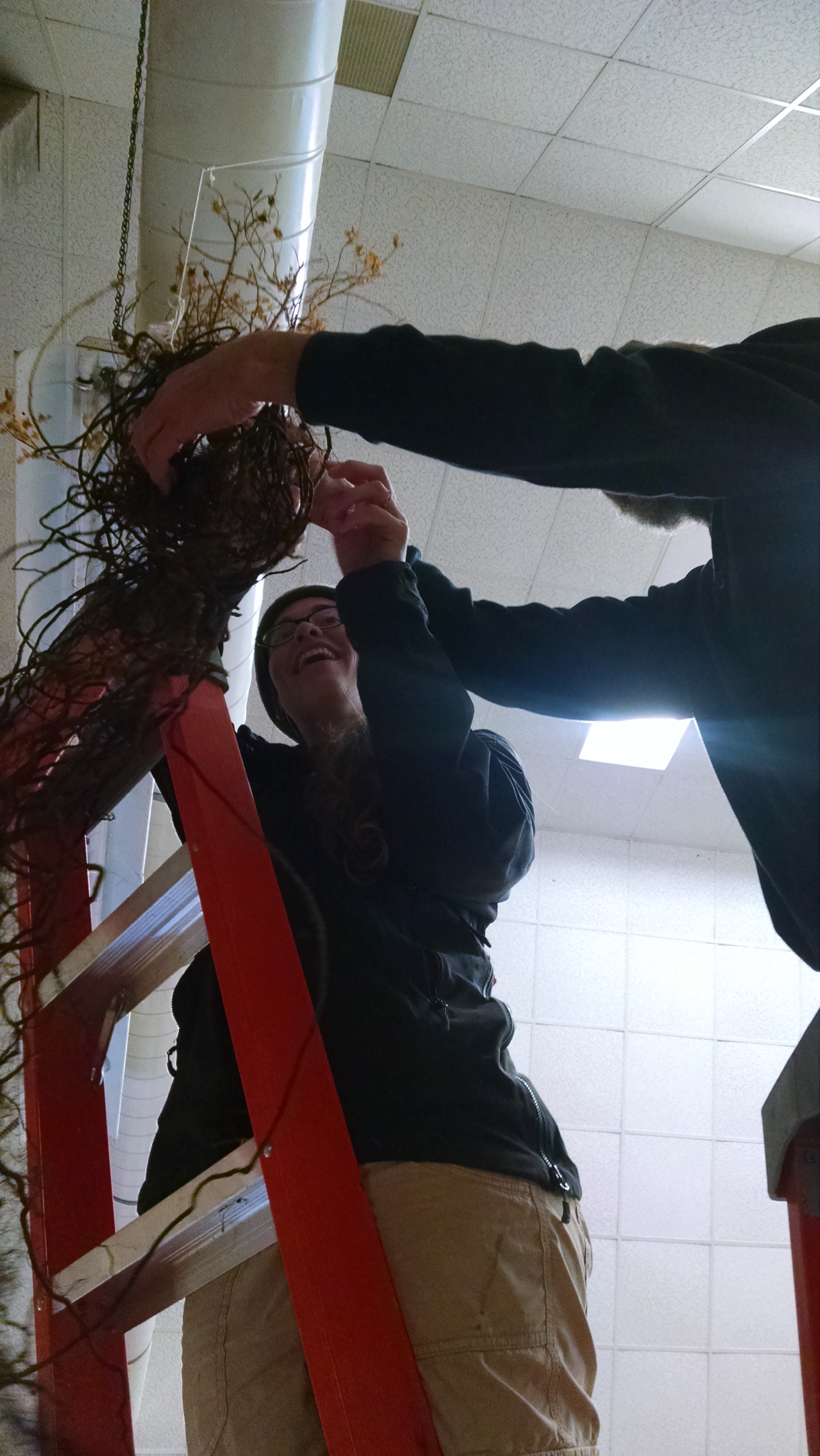
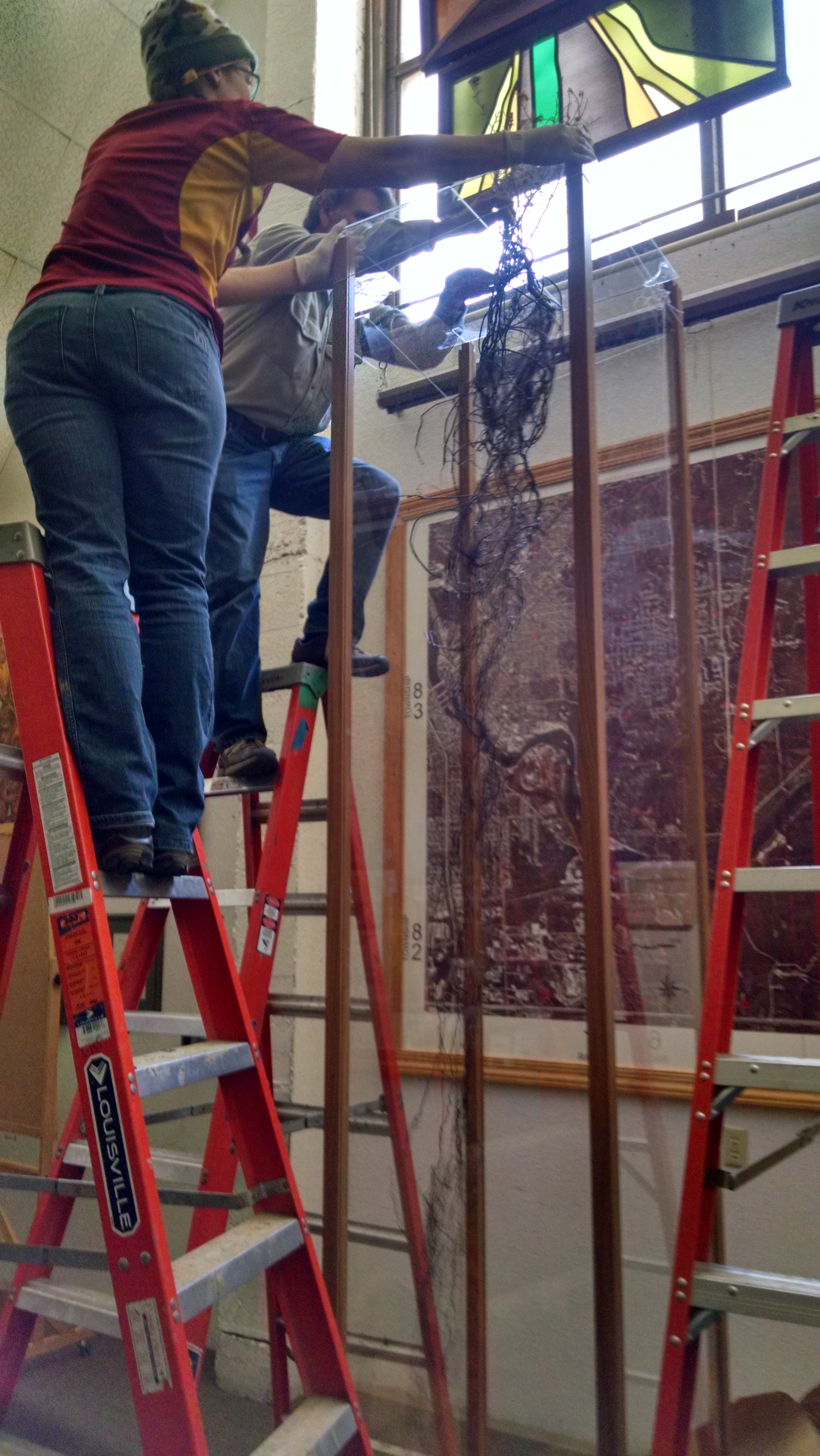
The Tallgrass Prairie Center recently gifted us with a real wild rose root. Displaying it required a 10′ tall case. In the wild, the roots go deeper. Fortunately for display purposes, the Tallgrass Prairie Center grows the native plants for three years in a 10′ tube, giving us a “manageable” root to work with. I only said, “we’re going to need a bigger ladder” twice.
IMG_20160401_162921264

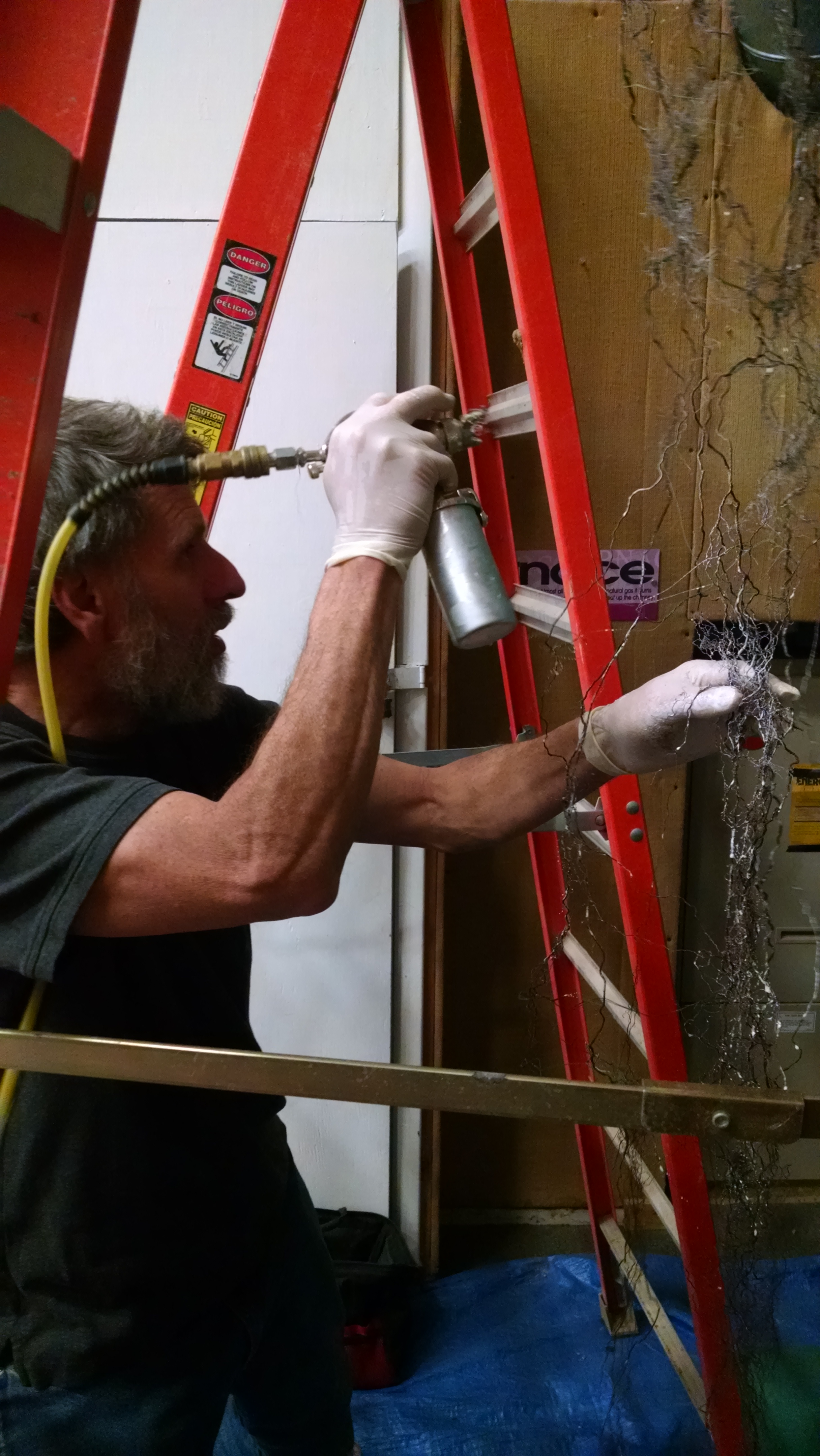
Before giving us the root, the Tallgrass Prairie Center soaked it in a solution of glycerine, acetone, and ethanol to preserve it. The first step in displaying the rose root was to tease apart the root fibers after storage, so they would hang naturally.
IMG_20160401_182634066

While the glycerine solution preserves the root against decomposition, it was still very fragile and bits of the finer hairs would fall off over time. Terry Brown, owner of Museum Professionals, donated a day of his time to preserve the root, forming it into a natural shape and then spraying it with a stabilizing solution. He then helped us install it in the display case.
IMG_20160402_104127392_HDR

In a few short months, the root will be joining us in Amazing Space to form the centerpiece of our tallgrass prairie exhibition. If you want a sneak peak, it is on display in the Nature Center’s existing auditorium.
Maple Syruping Season is here!

Mother Nature provided us with beautiful 60 degree weather in which to tap the maple trees. The sap was already flowing.
IMG_20160219_093638628

We use 7/16″ drill bits, set 275 taps, and produce anywhere from 7 to 40 gallons of syrup a year. It all depends on the weather. Doesn’t everything?

IMG_20160219_093808243

Desert Survival: Prepare & Prevent

As a part of learning to survive, appreciate, and maybe even love our new desert habitat, I took the children to a program called “Desert Survival” at the nature center of a large (3500+ acres) regional park yesterday.

Desert Survival: Prepare & Prevent


We did not learn how to extract water from giant saguaros.  Nor did we learn how to create a bow drill to start a fire.  We didn’t even learn how to fight zombies with cholla cactus spines.

Instead, we learned about the importance of preparation and prevention.  Proper preparation is something every hiker in every climate can do to prevent a survival situation from happening in the first place!  As the fabulous ranger explained in at the beginning of the talk: his information does not make for popular TV shows, but it will keep you off the TV news!

Here are 3 new-to-me ideas for staying safe in the desert (or any hike!):

1-Instead of trying to find water, bring more water than you think you need.  Yes, water is heavy. Yes, it can be awkward to carry. But in the desert, by the time you start to feel thirsty, you’re already becoming dehydrated.  Bring the extra water.

In fact, bring an extra-extra bottle of water: Drink at your car until you feel satiated, then hike, then when you get back to the car, drink the rest of your extra-extra bottle.

2-A cheap emergency blanket has a variety of uses.  The park sells them for $3 each and I plan to buy one for each of us when we go back for a hike.  They look like these (excellent reviews & sold in a 10 pack).  Not only can an emergency blanket keep you warm in the cold and cooler in the heat, it makes a great distress signal!

3-Leave a detailed note about your hiking plans: Where you’re going, where you’re going to park, when you plan to be back.

“Took the kids hiking in the Superstition Mountains” is not the level of detail that is going to get you found!

Leave a detailed note: Desert Survival is about Preparing!

While I feel better about going for a family hike in the desert now, I guess we’re on our own for designing zombie-stopping cholla cactus weapons!

And if you’re ever in Arizona, stop by the Usery Mountain for a fabulous presentation or hike!

*This page may contain affiliate links which help support the site, click here & scroll to the bottom of the page for full disclosure.


Full Moon Walks 2016

Take a Full Moon Walk in 2016 with a FREE printable trackerDid you walk by the light of a full moon last year?

As a family, we tried to get out each full moon to take a walk. It didn’t always happen…it rained, it snowed, someone had to work late, or had a evening class. But we did try! And having a calendar showing when the full moon would be did help us remember to get outside at night.

Take a Full Moon walk with your family in 2016

Download your free printable full moon walk calendar here.

January’s full moon is the Wolf Moon — leave a comment and share about your walk this month.

Take a walk by the light of the full Wolf Moon this January!

Space.com’s 2016 Full Moon Calendar has more information about the Native American names for the full moons and information on the moon’s phases.

Also, visit EarthSky.org if you’re wondering why there is no blue moon in 2016!

Want even more full moon viewing inspiration? Check out Wilder Child’s Moon Gazing post — hint, she’s got an awesome free color download of all the full moon’s of 2016!

A New Habitat to Explore


As an occasional contributing poster here at Pocket Mouse Publishing, I’ve enjoyed posting about how my children and I got out into nature regularly.  How we had consistently enjoyed forest freeplay and learned through the book Hunting Red.

Our Former Habitat

Then, we moved.  A job-relocation across the country.

Our habitat is no longer the lush green forest and small creeks of the temperate East Coast pictured above but rather the Sonoran desert of the Southwest: a place of dry sands, endless sunshine, and prickly cactus.   See below.

Our New Habitat

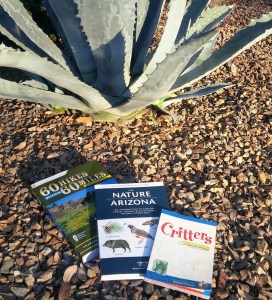
We’re adjusting.  Adapting. We’re ready to explore our new habitat. We’re reading about desert life in books like 60 Hikes within 60 Miles: Phoenix, The Nature of Arizona, and Critters of Arizona Pocket Guide.

Desert Book recommendations

We’ve even ventured to take a couple walks in the desert and are planning some more. It’s not the forest freeplay we had grown to love. In fact, one child refers to it as “desert doomplay” due to the sheer number of opportunities to interact with cactus spines.

One thing remains the same, despite this new habitat: the night sky.  The stars are the same. The constellation Orion is still the only one we all recognize.  I wrote about that nearly a year ago in Walking the Nature Talk. And the moon!  The moon is still the same. Did you know that we all see the same side of the moon, all the time?

In a few days it will be the first full moon of 2016!  I’ll be making a calendar to share the dates of each full moon — check back soon.

And enjoy your habitat, whatever it may be!

*This page may contain affiliate links which help support the site, click here & scroll to the bottom of the page for full disclosure.

Welcoming 2016

Snow has finally arrived. It has transformed the woods into a magical place full of wonder, and on a more practical note, I haven’t seen a tick in a few days. We’ll ring in the New Year quietly in the forest, celebrating the beautiful natural world around us.

IMG_20151223_162343940_HDR
The clouds are forming.
Bena Brook starts to freeze over.
Windblown snow creates delicate patterns on downed trees.


Waldeinsamkeit

Usually I celebrate full moons, eclipses, solstices, and anything else I can think of outside walking with friends, followed by a little fire.

While the browns and greys of tree bark and leaf litter dominate the woodland winterscape, some of the smaller plants stay green all winter in the woods.

This season has been unusually hectic between Amazing Space (of which I love every moment, it just takes a lot of moments), the construction of the natural amphitheater, preparing the apiary for 2016, and everything else I normally do.

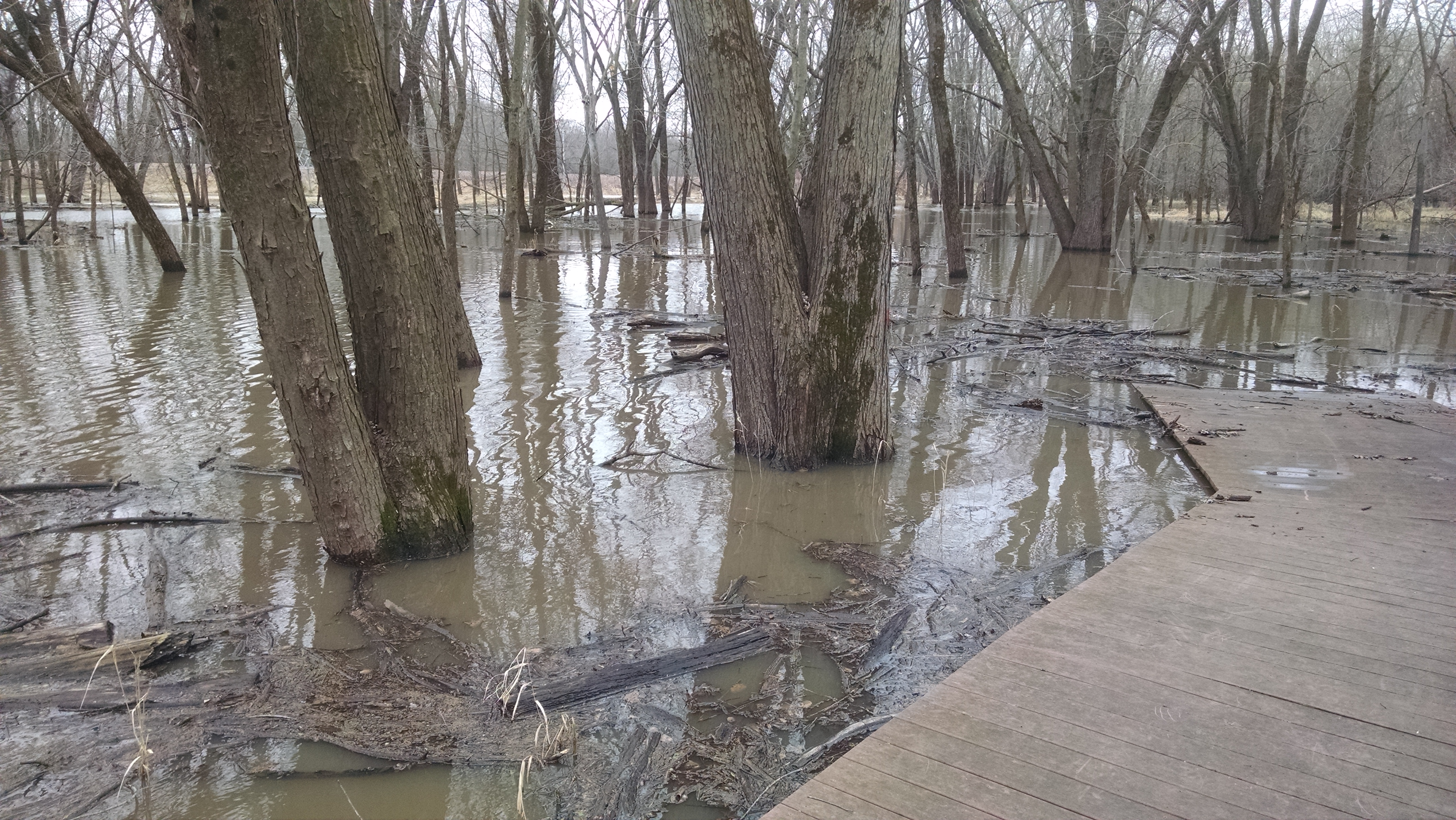
I've never known it to flood in December before. It is usually a light precipitation month for us, and the precipitation is usually in the form of snow, not rain. But Wood Duck Way and the silver maples in the floodplain are under water, as the Red Cedar River and Indian Creek spill over their banks.
I’ve never known it to flood in December before. It is usually a light precipitation month for us, and the precipitation is usually in the form of snow, not rain. But Wood Duck Way and the silver maples in the floodplain are under water, as the Red Cedar River and Indian Creek spill over their banks.

For this winter solstice, I opted to take a break and enjoy waldeinsamkeit. It literally translates into woodland solitude, and I find it is a beautiful way to connect with myself, and with the natural world around me. I actually had to visit waldeinsamkeit twice, once during the day and once after dark on the solstice. The warm temperatures, moist air, and clouds skittering across the moon were beckoning me back outside. Since English is based on German, why we didn’t we keep that word?

IMG_20151127_090703223
The unseasonably warm winter and frequent rains are supporting a prolonged mushroom season in the woods.


Art in Nature

IMG_20151114_203954273

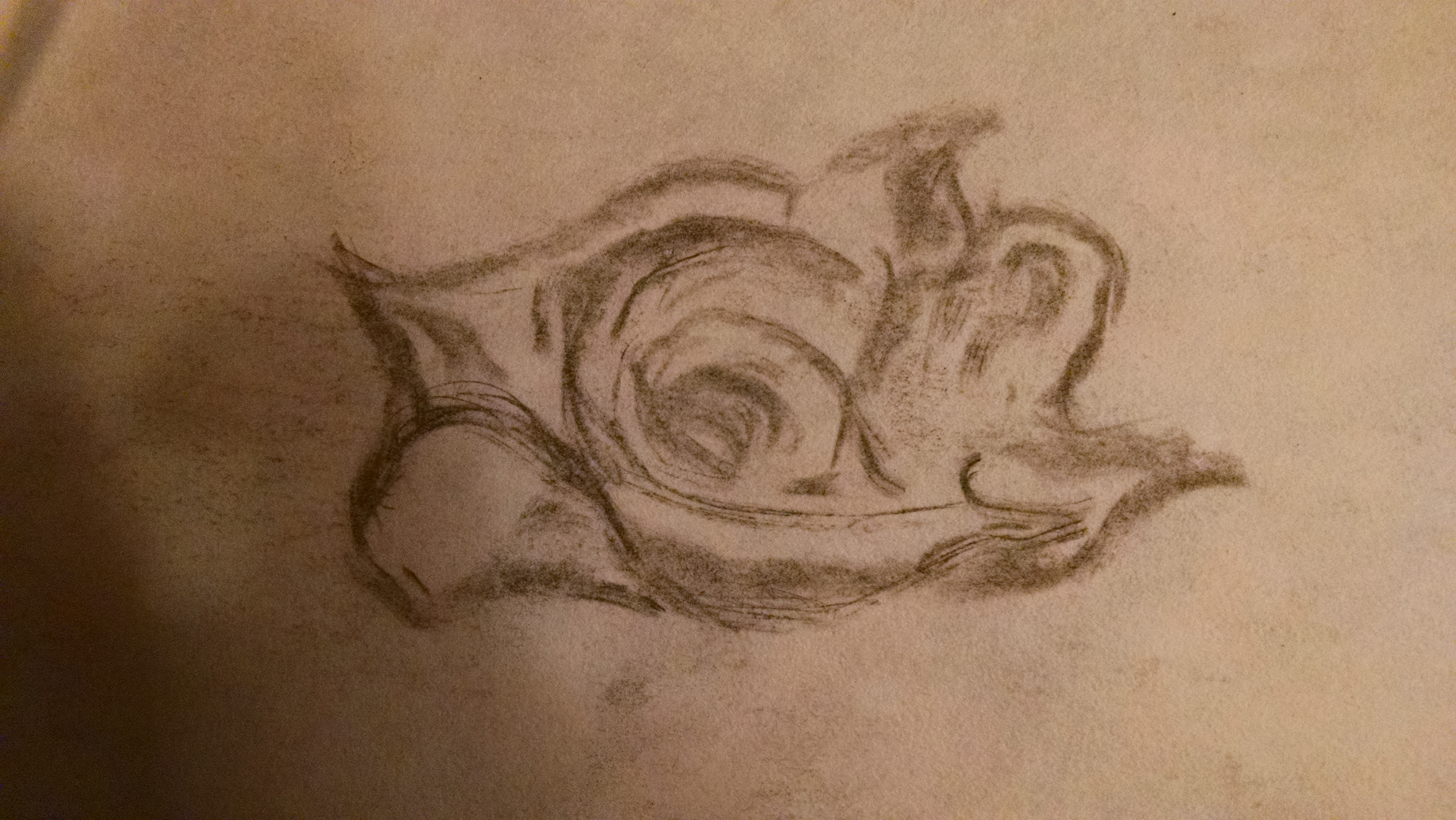
At our last fire, we decided to make some drawing charcoal. We took dried willow twigs and stripped the bark (stripping the bark should really be done when the willow is green, because it peels very easily then) to make a soft charcoal, and we split some thin strips of cedar to make hard charcoal. Each stick was about 8 inches long.

IMG_20151127_074146537

We wrapped them tightly in tinfoil. This allows the gas to escape, but prevents oxygen from getting into the sticks and actually combusting them. We tucked them down in the coals, let them sit for an hour and a half, and then fished them back out. 

IMG_20151126_183721392
A groundnut blossom
IMG_20151127_074040066_HDR
A yellow lady slipper orchid blossom

With everything outside reduced to greys and browns, and the darkness setting in so early, drawing is a great way to experience  and study the wildflowers. Often, the brilliant colors of summer overwhelm me, and I don’t notice the more subtle structure of the flowers themselves. Meanwhile, mother nature has been creating her own artwork.

IMG_20151121_145442583
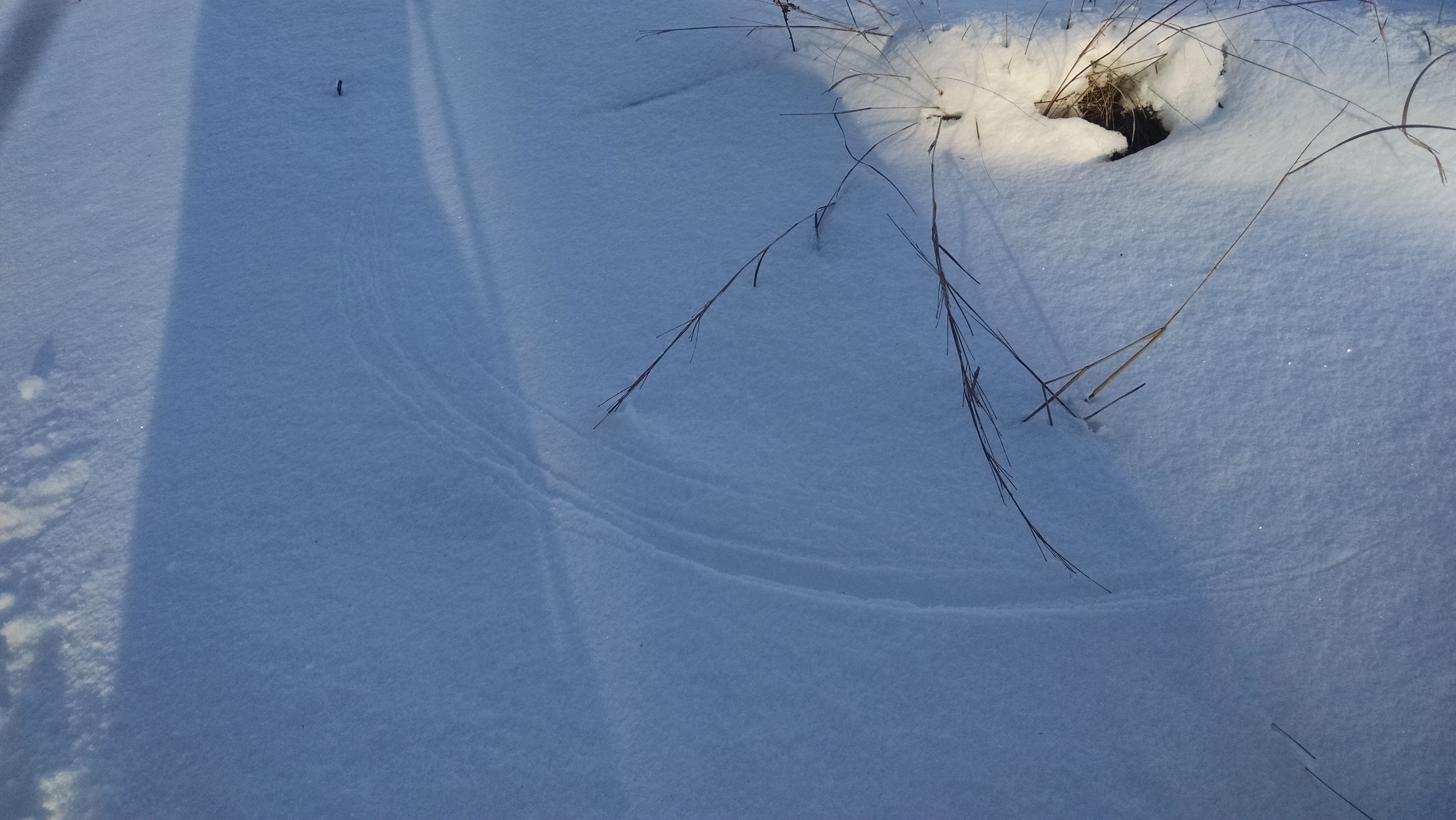
The wind draws in the snow with little bluestem
The snow melted, the ground is not yet frozen, and the temperatures are vacillating between warm and chilly. We witnessed a rare phenomenon on some goldenrod stalks. Though the stalk is dead, it is wicking moisture out of the ground. The moisture then freezes in the air, creating an iceflower at the base of the plant.

Hunting Red in October

Every fall, two things happen that mark the shift from summer into the fall. The first is when someone calls to ask when to stop feeding the hummingbirds. The answer is whenever the hummingbirds stop eating the sugar water. They know when they need to fly south, and no amount of enticement on our part will convince them to stick around for winter.

The second is when someone brings me a beautiful red leaf to identify.

This is poison ivy. Stunning, and still full of oil. Off of its vine, there are no "leaves of three." The characteristic "mitten tips" curl under almost immeidately making it a tough one to identify.
This is poison ivy. Stunning, and still full of toxic oil. Off of its vine, there are no “leaves of three.” The characteristic “mitten tips” curl under almost immediately making it a tough one to identify.

There is, of course, plenty of non-hazardous beauty out there.

Oak leaves after a rainstorm.
White oak leaves after a rainstorm.
IMG_20151012_094635328
Sugar maple leaves. Both the oaks and the maples produce golden leaves as well this time of year.
Sumac leaves only turn red before falling off.
Sumac leaves, on the other hand, only turn red before falling off.
IMG_20151023_150624105
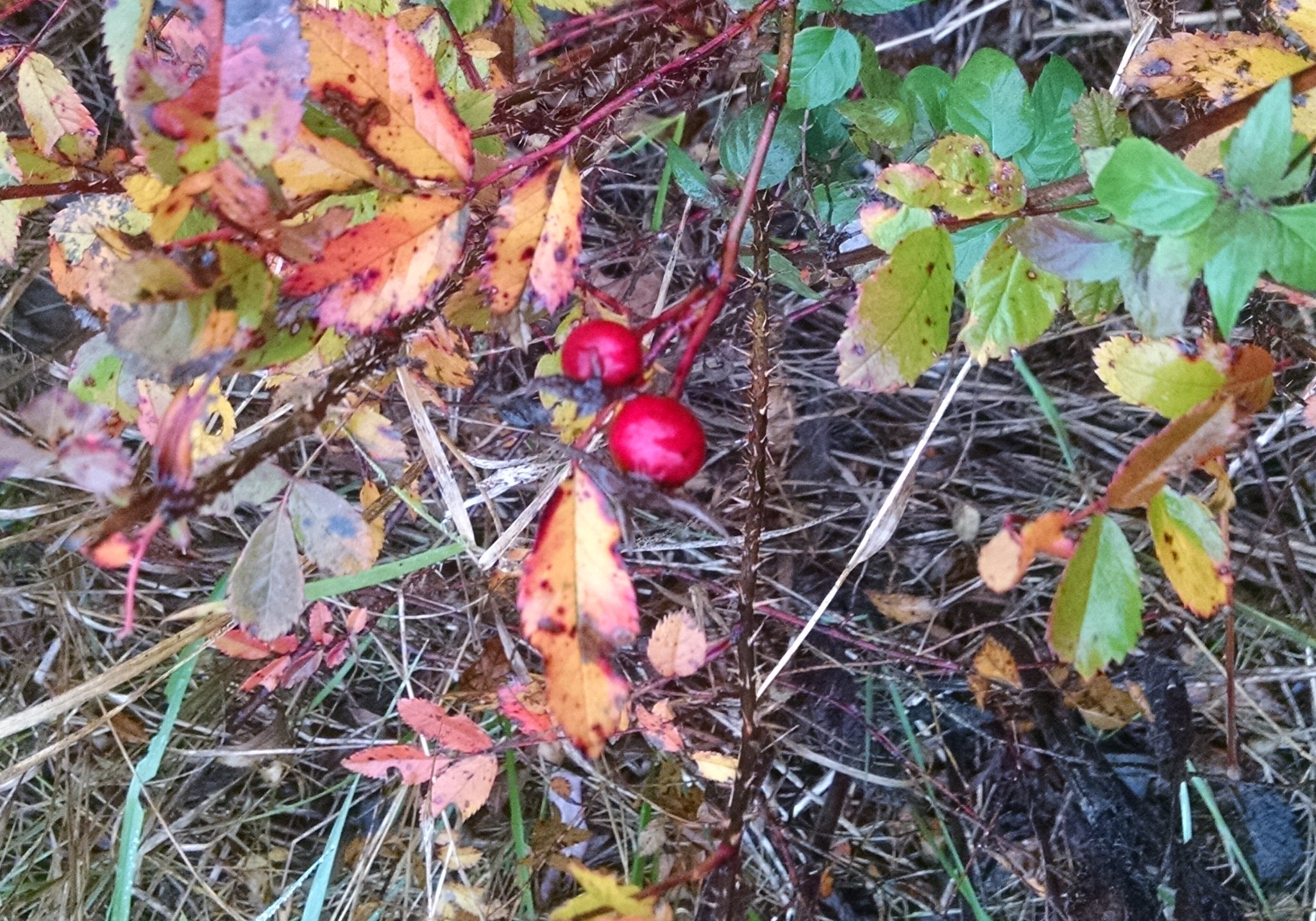
The red I was most excited about discovering on my last walk was a lovely patch of rose hips. Not only are the hips edible, I was able to cut them in half and save the seeds for future plantings, while drying the rose hips for turning into tea.

Planting a bioswale, part 1

Walls are going up.
Walls are going up.
Septic system is nearly complete.

Amazing Space is progressing quickly, both above ground and underground. Three of the bioswales are complete. Finishing them early allows us to protect them with silt fence immediately and re-establish permanent native prairie in the same season they were initially disturbed. We started dormant seeding already to provide the seeds a natural cold, wet stratification and good soil contact for spring germination.

Planting the bioswale with a seed and sand mixture.

In a few days, the more traditional annual oat cover crop will be planted. If these warmer temperatures hold, they should establish roots yet this fall to protect the soil, and they will die back over the winter. The site will also be mulched, to protect the bare soil.

Prairie seed is expensive, and local seed is the best, so we have been busy collecting. Paper bags are better, but we didn't have any on hand when this culver's root presented itself.
Prairie seed is expensive, and local seed is the best, so we have been busy collecting. Paper bags are better than plastic, but we didn’t have any on hand when this Veronicastrum virginicum presented itself.

Because these are bioswales, they are designed to move water through them. While it will be a lot of water, it won’t be standing and puddling. The species we plant need to be able to withstand drought far more than they need to be able to withstand flooding. For this first round of planting, we used: common milkweed (Asclepias syriaca), butterfly weed (Asclepias tuberosa*), white wild indigo (Baptisia alba), river oats (Chasmanthium latifolium), rattlesnake master (Eryngium yuccifolium), cream gentian (Gentiana flavida), sweet pearly everlasting (Pseudognaphalium obtrusifolium), grey coneflower (Ratibida pinnata), wild rose (Rosa arkansana), little bluestem (Schizachyrium scoparium), late horse gentian (Triosteum perfoliatum), culver’s root (Veronicastrum virginicum),  purple prairie clover (Dalea purpurea), and narrow-leaved coneflower (Echinacea augustifolia).

wild coffee
Triosteum perfoliatum

As fall harvesting continues, so will the number of species we plant. For species that we don’t have a lot of already on-site, such as white prairie clover (Dalea candida) and rough blazing star (Liatris aspera),  we will purchase. Due to the support of Rockwell Green Communities, we also have a number of established plants started in the Butterfly Hoop House to transplant.

Butterfly weed ready for transplant.
 Asclepias tuberosa ready for replanting outside.

*It’s worth learning the Latin. I recently had a great conversation with a volunteer interested in helping us establish more pleurisy root on the property. Never having heard of pleurisy root, I had to do a bit of research to determine if pleurisy root was native (it is) and if it fit within our land management plan (critical to the plan, in fact).  I was also initially introduced to Triosteum perfoliatum as wild coffee, no Latin provided. I had to key that out in a guide book to find its Latin name, because what most people call wild coffee isn’t native here…