Conduit has been run and water piping has been laid.
Around the perimeter, both vertical and horizontal insulation (pink) provides a thermal break. During the winter, the insulation prevents cold exterior air from entering the building through the ground. The vapor barrier (yellow) protects the slab from ground moisture.
The rebar provides structural integrity to the concrete, tying it together and adding strength as external forces (tensile strength) pull on it in various directions over time. This will reduce the potential for the concrete to crack in the future.
The floor of the building being created. So much of what has happened to-date has taken place underground and will never be seen. This concrete will be directly experienced every day by guests.
Every fall, two things happen that mark the shift from summer into the fall. The first is when someone calls to ask when to stop feeding the hummingbirds. The answer is whenever the hummingbirds stop eating the sugar water. They know when they need to fly south, and no amount of enticement on our part will convince them to stick around for winter.
The second is when someone brings me a beautiful red leaf to identify.
This is poison ivy. Stunning, and still full of toxic oil. Off of its vine, there are no “leaves of three.” The characteristic “mitten tips” curl under almost immediately making it a tough one to identify.
There is, of course, plenty of non-hazardous beauty out there.
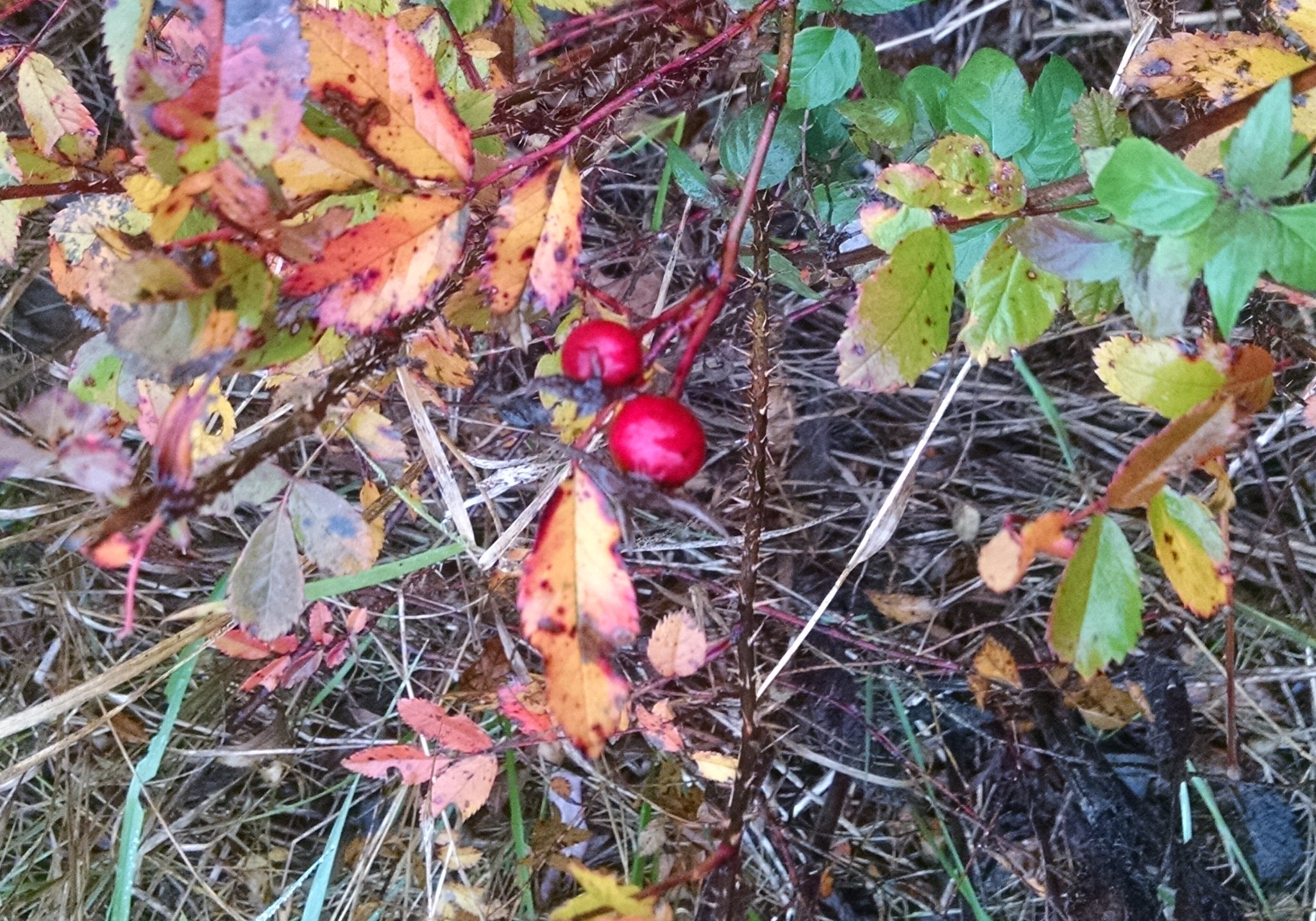
White oak leaves after a rainstorm.Sugar maple leaves. Both the oaks and the maples produce golden leaves as well this time of year.Sumac leaves, on the other hand, only turn red before falling off.The red I was most excited about discovering on my last walk was a lovely patch of rose hips. Not only are the hips edible, I was able to cut them in half and save the seeds for future plantings, while drying the rose hips for turning into tea.
Walls are going up.Septic system is nearly complete.
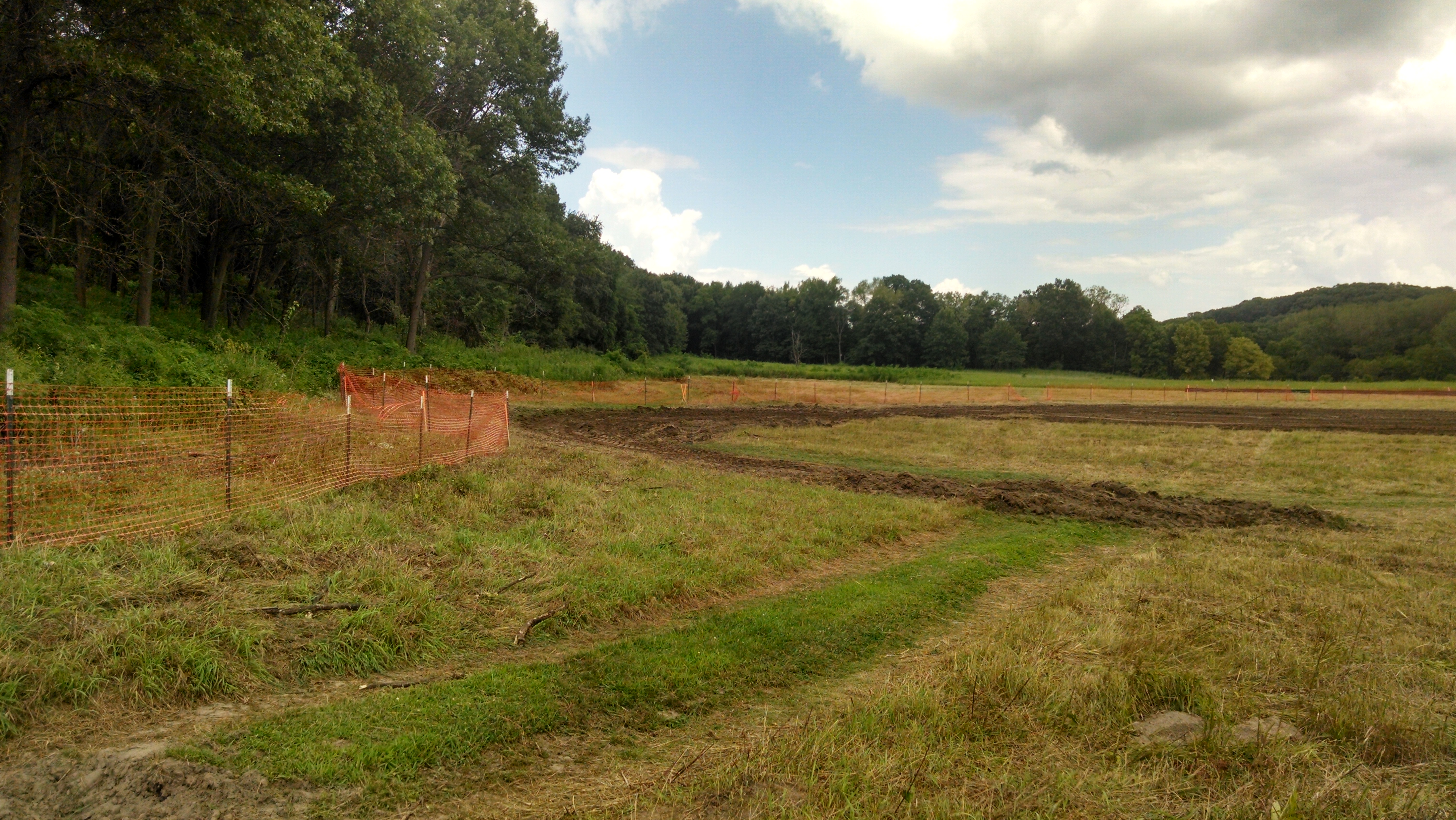
Amazing Space is progressing quickly, both above ground and underground. Three of the bioswales are complete. Finishing them early allows us to protect them with silt fence immediately and re-establish permanent native prairie in the same season they were initially disturbed. We started dormant seeding already to provide the seeds a natural cold, wet stratification and good soil contact for spring germination.
Planting the bioswale with a seed and sand mixture.
In a few days, the more traditional annual oat cover crop will be planted. If these warmer temperatures hold, they should establish roots yet this fall to protect the soil, and they will die back over the winter. The site will also be mulched, to protect the bare soil.
Prairie seed is expensive, and local seed is the best, so we have been busy collecting. Paper bags are better than plastic, but we didn’t have any on hand when this Veronicastrum virginicum presented itself.
Because these are bioswales, they are designed to move water through them. While it will be a lot of water, it won’t be standing and puddling. The species we plant need to be able to withstand drought far more than they need to be able to withstand flooding. For this first round of planting, we used: common milkweed (Asclepias syriaca), butterfly weed (Asclepias tuberosa*), white wild indigo (Baptisia alba), river oats (Chasmanthium latifolium), rattlesnake master (Eryngium yuccifolium), cream gentian (Gentiana flavida), sweet pearly everlasting (Pseudognaphalium obtrusifolium), grey coneflower (Ratibida pinnata), wild rose (Rosa arkansana), little bluestem (Schizachyrium scoparium), late horse gentian (Triosteum perfoliatum), culver’s root (Veronicastrum virginicum), purple prairie clover (Dalea purpurea), and narrow-leaved coneflower (Echinacea augustifolia).
Triosteum perfoliatum
As fall harvesting continues, so will the number of species we plant. For species that we don’t have a lot of already on-site, such as white prairie clover (Dalea candida) and rough blazing star (Liatris aspera), we will purchase. Due to the support of Rockwell Green Communities, we also have a number of established plants started in the Butterfly Hoop House to transplant.
Asclepias tuberosa ready for replanting outside.
*It’s worth learning the Latin. I recently had a great conversation with a volunteer interested in helping us establish more pleurisy root on the property. Never having heard of pleurisy root, I had to do a bit of research to determine if pleurisy root was native (it is) and if it fit within our land management plan (critical to the plan, in fact). I was also initially introduced to Triosteum perfoliatum as wild coffee, no Latin provided. I had to key that out in a guide book to find its Latin name, because what most people call wild coffee isn’t native here…
The autumn skies have been beckoning, so we headed out to investigate a nearby park on the Wapsipinicon River. A helpful fisherman cautioned us when we arrived that the trails weren’t well maintained, which we quickly learned was a euphemism for “non existent” but that didn’t slow us down. Figuratively. Literally, beating your way through tangled masses of vegetation, that even deer were avoiding, over uneven ground…definetely made it an adventure. We weren’t worried, because we had both the river to follow “back” and in this particular part of eastern Iowa, there is typically a road every square mile.
We didn’t know it at the time, but it quickly turned in to a mushroom treasure hunt.
We were also treated to brilliant red of the false Solomon’s seal (Maianthemum racemosum). The real Solomon’s (Polygonatum biflorum) seal has blue berries, and instead of clustering at the top like this, they appear intermittently along the stem.
When we were ready to head home, we pulled out the smart phone with map ap, which let us know exactly where we were. It helped us avoid detouring the long way around an oxbow and a wetland. A magical afternoon in the woods.
A significant part of what goes into a sustainable building will never be seen after it is installed. People use the “good foundation” analogy a lot for everything from business practices to personal relationships. In terms of real structures…a good foundation starts with a trench.
Ultimately, the building will stand on this spread footing. Ryan Construction reuses the wood for the footing on multiple projects, until it eventually disintegrates. All wood from this project that is damaged or cannot be reused will be recycled. As it is not green treated, it can be ground and used for mulch in a variety of applications.
Throughout construction, independent inspectors will be verifying and testing everything. At this stage of the project, those inspections are verifying that the concrete is structurally sound and that the rebar is placed correctly.
The foundation wallforms, laid out here and ready to be placed, are also reused on multiple projects. The orange toppers on the rebar protect workers from hurting themselves on the spikes.
The pump truck, in the background, allows the concrete to efficiently be poured into the relatively narrow wall form, and minimizes spillage and waste.
Infrastructure in general, and parking lots in particular, are notorious for causing water problems. During a rain storm, a variety of factors coalesce to devastate local waterways. The rain water picks up contaminants, such as spilled oil and gasoline, and carries them into the environment, be it neighboring vegetation or rivers.
Rainwater is frequently channeled off of the surface through piping. This creates fast moving, focused torrents of water that erode the surrounding soil, carrying silt into the rivers and creeks. Cloudy water makes it impossible for some fish and other wildlife to live.
The Indian Creek Nature Center is taking a number of steps to decrease those problems on its new site. The goal is to keep 100 percent of any runoff on its own property-even during construction. Areas were excavated to temporarily hold any rainwater during the project. We had five inches of rain last week, and the dirty water stayed where it belonged.
For the parking lot, the “net zero water” started with a complex underground design. The entire parking lot will be filled with large, clean rock that has significant void space. This allows a lot of water to stay directly under the parking lot, and the contaminants-whether its leaking oil or dirt from tires-to settle out before the water moves on.
On top of the rock, the driveway will be concrete and the parking spaces will be permeable pavers that allow the water to drain down, not off. Below are the individual cells, or series of underground ponds that hold and slow the water, taking shape.
Ultimately, any extra water will make its way into bioswales, where it will support native plants and can infiltrate back into the soil as clean, cool water.
Soil provides a foundation for all other life. It determines which wild plants flourish, which animals survive, and which crops grow. That doesn’t change on a construction site. How the soils are treated before, during, and after construction have repercussions long after the backhoes pull out and planted saplings reach maturity. For the Amazing Space project, we implemented a variety of strategies to maintain healthy soils.
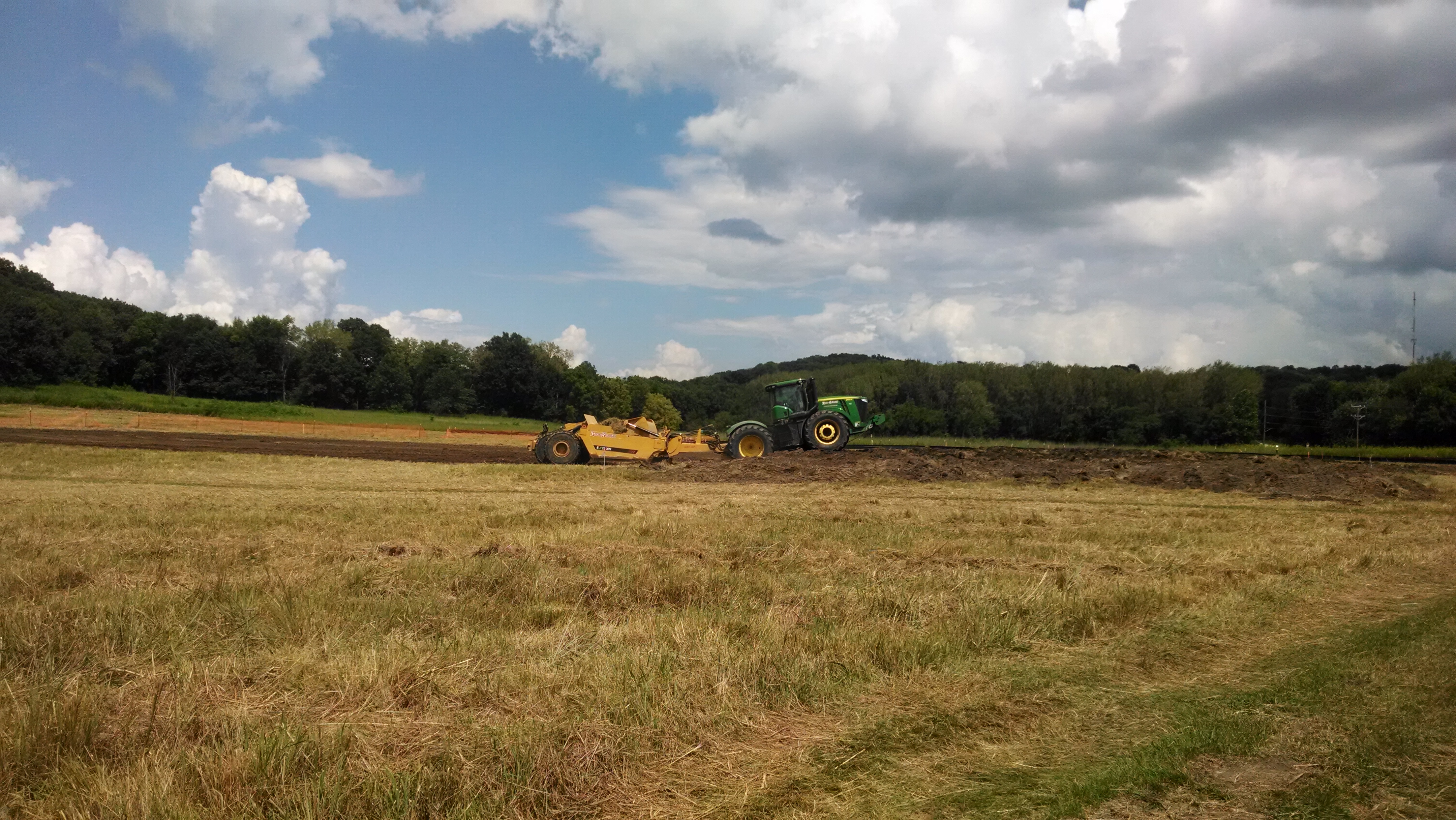
The construction fence keeps machinery within the boundary of the project. Heavy equipment, dumpsters, and stockpiles of rock and supplies destroy the existing vegetation and compact the soil. Keeping that impact confined to a small area protects the surrounding forest and prairie.
The topsoil, full of rich organic material, was scraped off the entire area and stockpiled. At the end of construction, this soil will be respread six inches thick over the area, creating a place for new plants to take root in healthy soil.
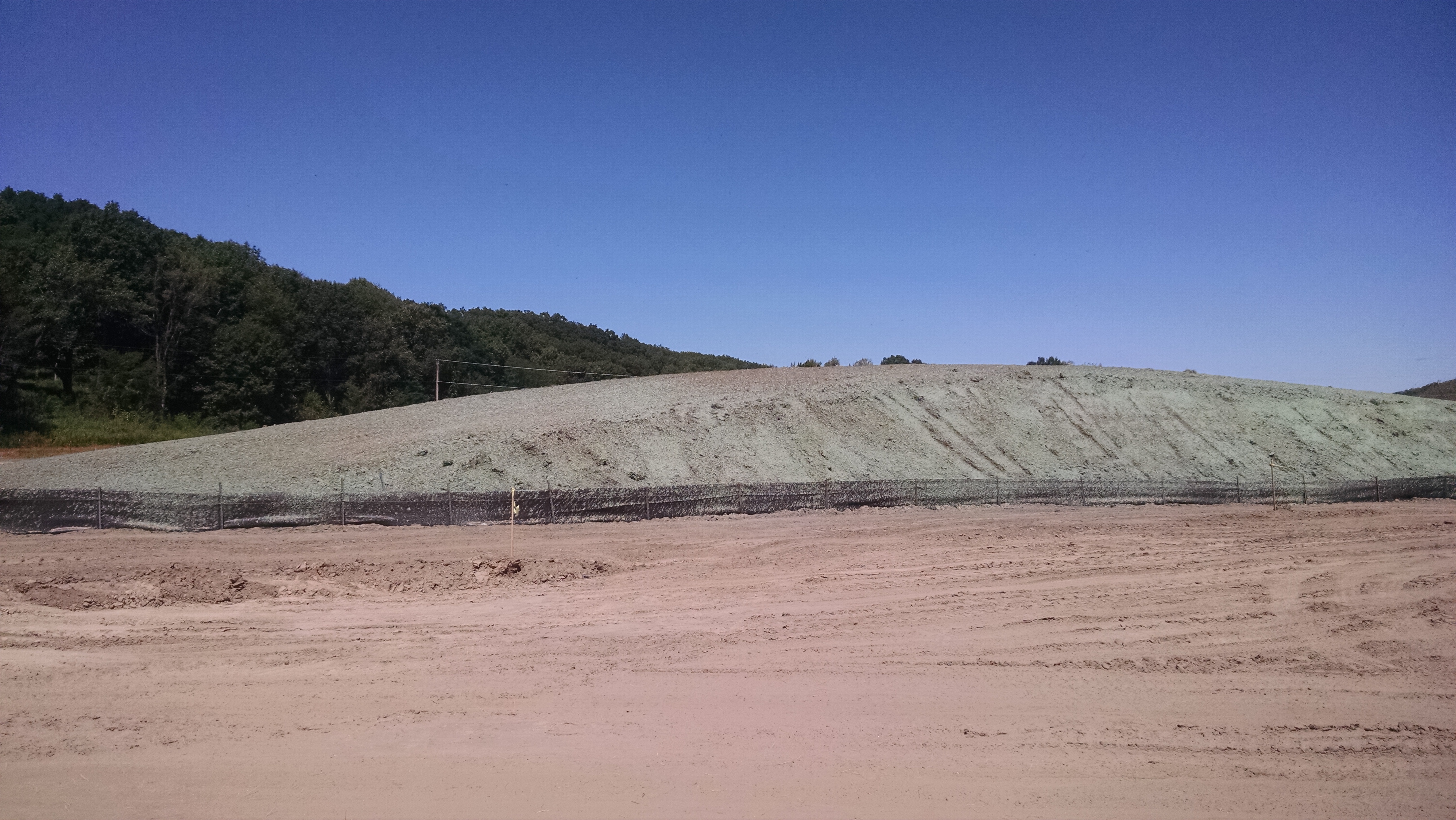
The pile of soil was immediately planted with a cover crop, to protect it from erosion. As work finishes in different areas, those areas will also be planted with a stabilizing crop (a combination of oats, rye and wheat).
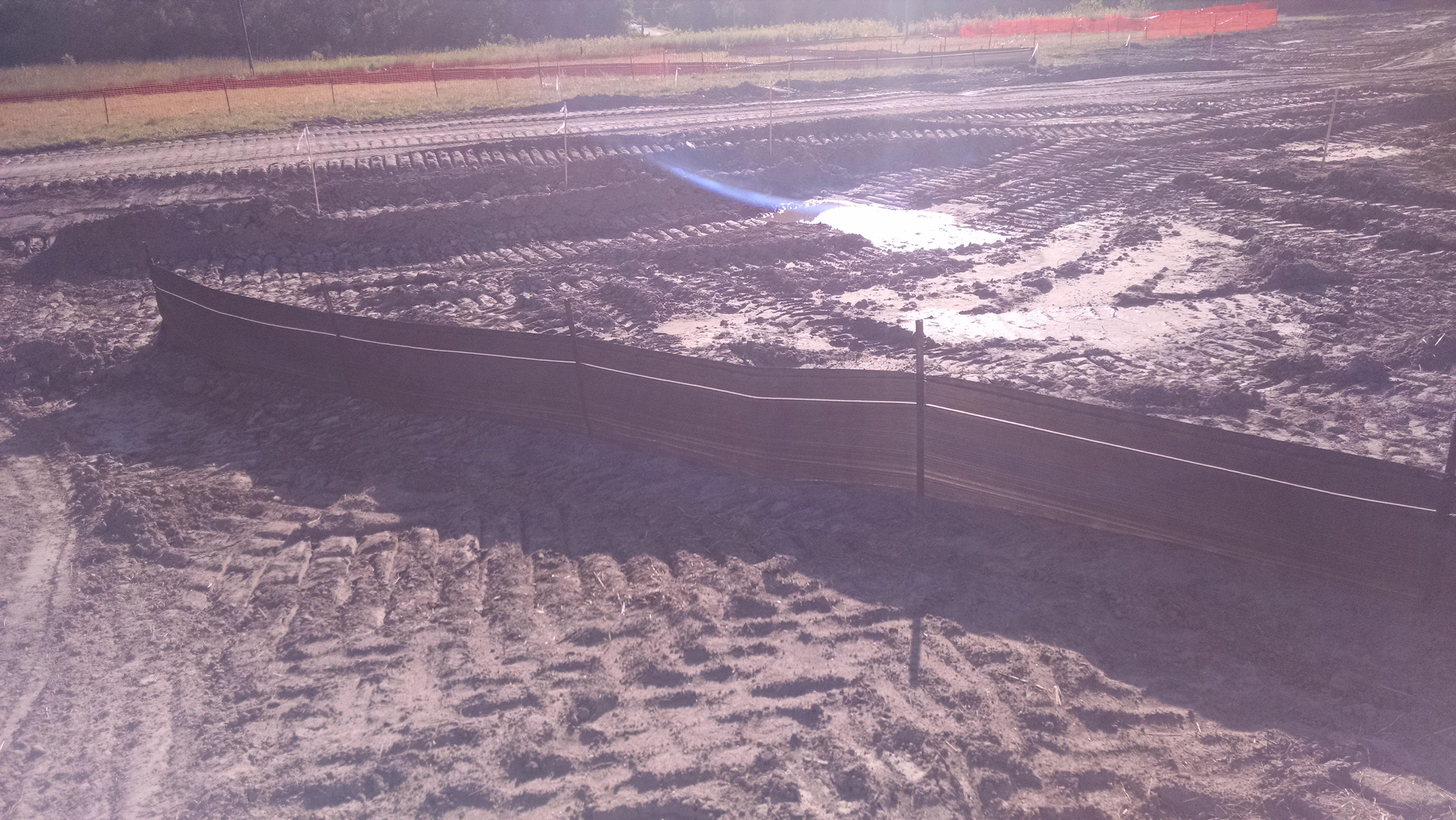
To prevent heavy rains from washing silt and sediment out of the project site and into the neighboring prairies, ditches and creeks, erosion socks and silt fences were established. They are monitored weekly and after rains for any problems that may occur.
These basic steps will ensure the area around the project remain healthy, and that the soils on the site will support everything from the edible forest to the pollinator garden.
Having spent years roaming these woods, there are some plants I can identify, a lot more plants I recognize but can’t identify, and every once in a while, there is the sheer, delightful beauty of stumbling across a plant I’ve never even seen before.
I took a picture (there was only one, so I wasn’t about to pick the plant). And, in this heat, frequently a “real” specimen is a droopy, crumpled mess by the time I get it home, whereas digital photos can be easily shared, magnified and examined. The flower shape and size looked a bit like the non-native lily of the valley, but the leaves and growth patterns were all wrong. There is a false/wild lily of the valley, but that was definitely not it either.
I shared the picture around the office. Sharing is typically, in my opinion, way more fun than keying plants out (which is always Plan B, and a good skill to have!). A day later, a colleague at Indian Creek Nature Center told me what it was-the shinleaf (Pyrola elliptica). She had seen it before backpacking up north, where it is far more common. Like orchids, the shinleaf has strong micorrhizal associations, making it difficult to transplant or spread. So this little beauty has been hanging on in the woods here for a long time, and hopefully, as we continue to remove invasive species, it will spread on its own.
The shin leaf takes its name from its traditional medicinal value. Historically it was used as a poultice for bruised shins and other small skin problems, or gargled for sore throats. But, as it is rare here, its value is far greater as a keystone species for the woodlands.
I pet sit frequently, because, on a temporary basis, what’s one more fuzzy thing to feed? And because I truly love animals. People usually ask me to tend things like dogs, chickens, rabbits, turtles, kittens that need to be bottle fed. But this time…
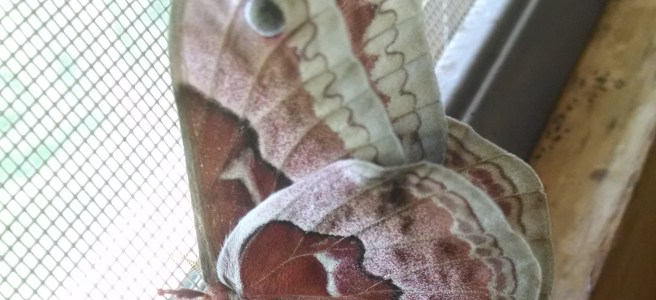
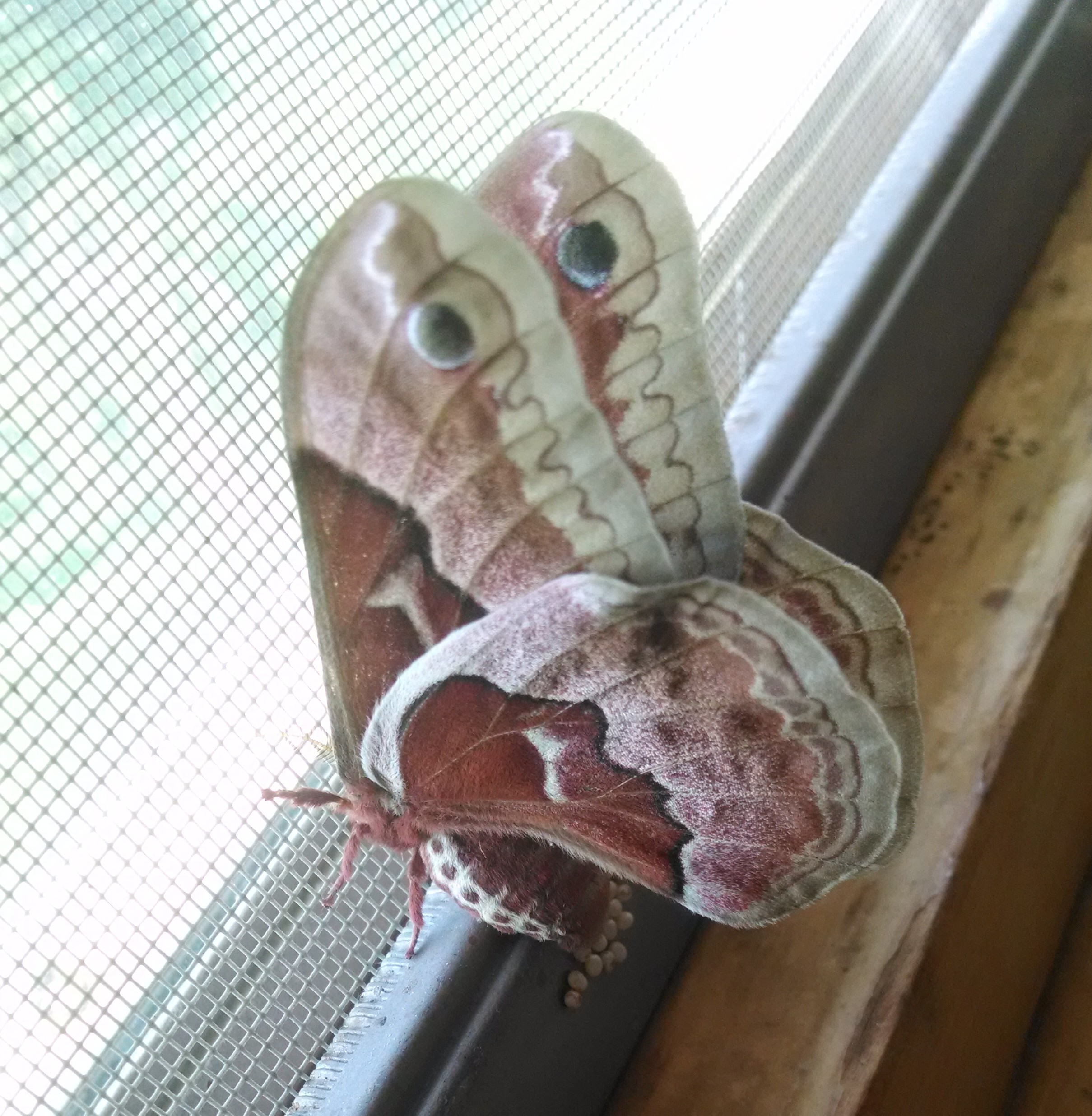
Prometheus moth, female
…I got moths. This prometheus moth promptly crawled out of the paper sack I had her “secured” in and started laying her eggs on the window screen. The great thing about the prometheus moth as a pet is that as adults, they don’t need to feed. It was a marvelous opportunity to study the tiny feathers and bright colors up close. I’d never even seen one before, because, lets face it, I do not spend a lot of time in the tops of cherry trees at night. Black cherry leaves are what the caterpillars feed on, and night time is when the adults fly.
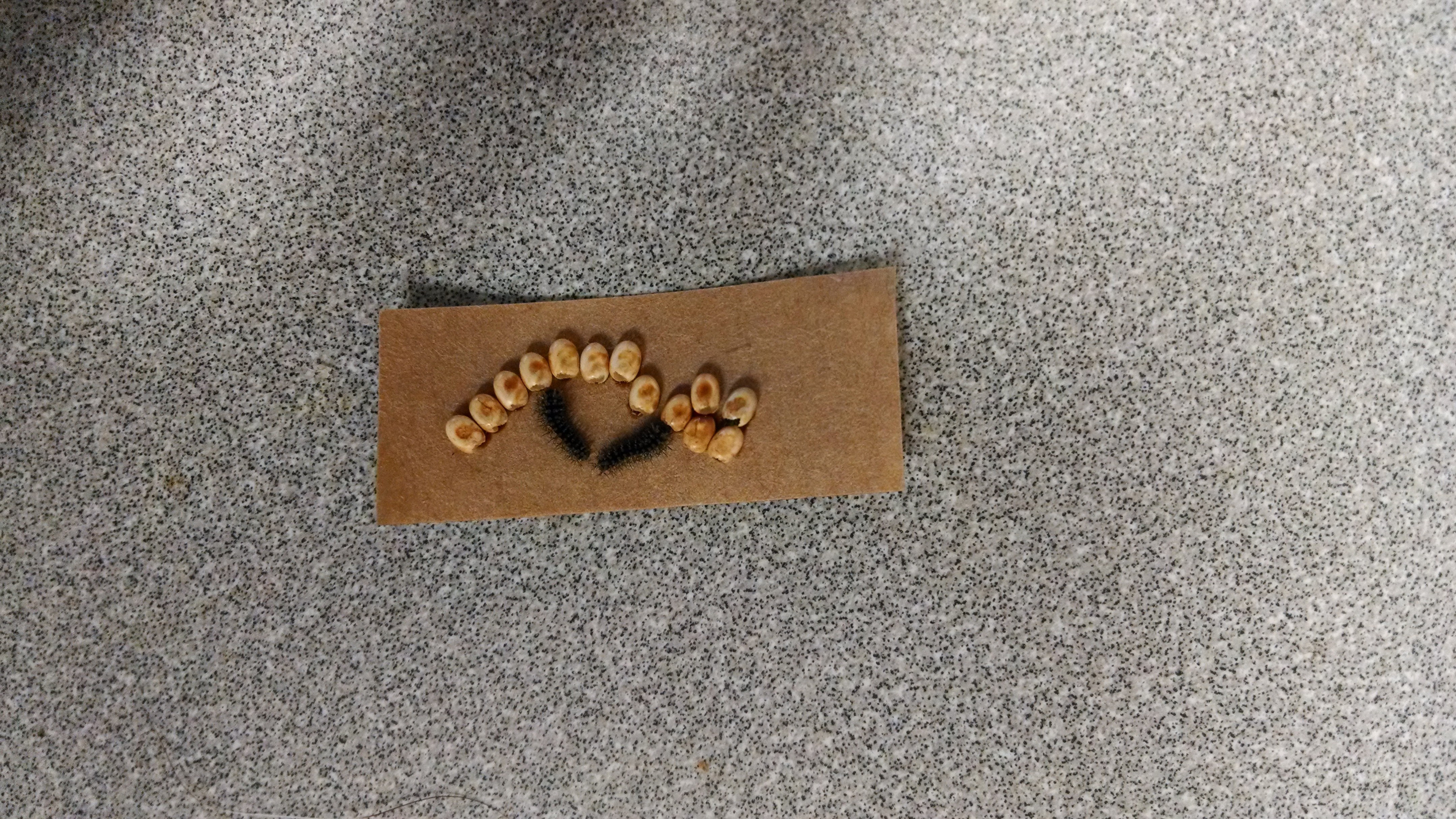
Polyphemus moth caterpillars, only 3/16 of an inch long
Today, these little ones arrived in the mail. Eggs and freshly hatched Cecropia and Polyphemus. Unlike the adults, they are voracious eaters, so I went on a nice foraging mission on their behalf for red oak leaves (Polyphemus) and Black Cherry leaves (Cecropia).
Cecropia moth caterpillars, hatching. They actually refused the black cherry leaves, but have started munching on crabapple leaves.
Right now, they are the size of a grain of rice. But the silk cocoons I’m watching from an earlier laying are not small! The cacoons range in size from a tube of lip balm to a mouse, which means I have a lot of leaf collecting in my near future…
If you’re in the area, stop by Indian Creek Nature Center to see a variety of caterpillars (in the sunroom) and adult moths and butterflies (in the hoop house).
Salad dressing: orange champagne vinegar and basil infused olive oil
Main course: milkweed blossoms sauteed in butter with catnip and mulberries on the side
Common milkweed buds are edible when cooked. If you aren’t sure about what you’re picking, develop a relationship with your local nature center or other outdoor enthusiasts so you don’t accidentally eat something poisonous.
Staghorn sumac drupes are high in antioxidants.* Posion sumac has white drupes, not red.
Dessert: paw paws and aronia berries (frozen last year), and elderberry jelly and wild plum jelly (preserved last year)
After dinner tea: chamomile leaves and buds, stinging nettle leaves, red clover blossoms, wild ginger root, wild rose blossoms, mountain mint leaves
Chamomile isn’t native, but it is also not a problem for restoration. It prefers dry, sandy soil and no competition.
* Sumaconade Recipe*
Gather 9-12 staghorn sumac drupes in late summer. Hang them and cover with a paper sack to keep them clean and dry-they will keep until the following summer.
Soak them in 1 gallon of cold water, 2-12 hours
Wring or muddle the drupes with your hands into the water.
Pour the mixture through clean t-shirt material 3 times to filter it.
Add 1/2-1 cup honey (may be mixed with a bit of warm water to dissolve)

 Conduit has been run and water piping has been laid.
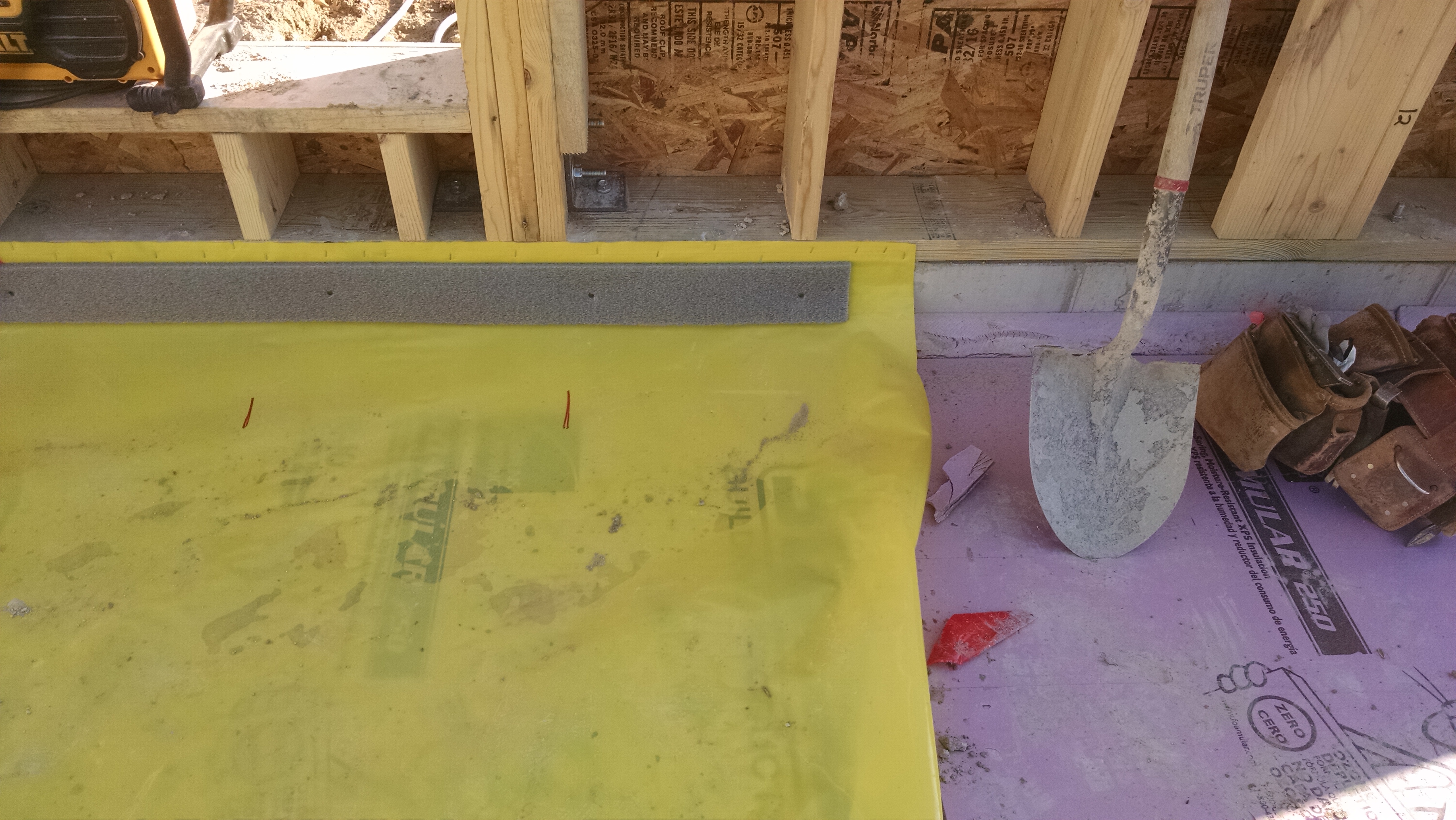 Around the perimeter, both vertical and horizontal insulation (pink) provides a thermal break. During the winter, the insulation prevents cold exterior air from entering the building through the ground. The vapor barrier (yellow) protects the slab from ground moisture.
 The floor of the building being created. So much of what has happened to-date has taken place underground and will never be seen. This concrete will be directly experienced every day by guests.




 The autumn skies have been beckoning, so we headed out to investigate a nearby park on the Wapsipinicon River. A helpful fisherman cautioned us when we arrived that the trails weren’t well maintained, which we quickly learned was a euphemism for “non existent” but that didn’t slow us down. Figuratively. Literally, beating your way through tangled masses of vegetation, that even deer were avoiding, over uneven ground…definetely made it an adventure. We weren’t worried, because we had both the river to follow “back” and in this particular part of eastern Iowa, there is typically a road every square mile.








 Pocket Mouse Publishing
