Do You Have a Nature Habit?

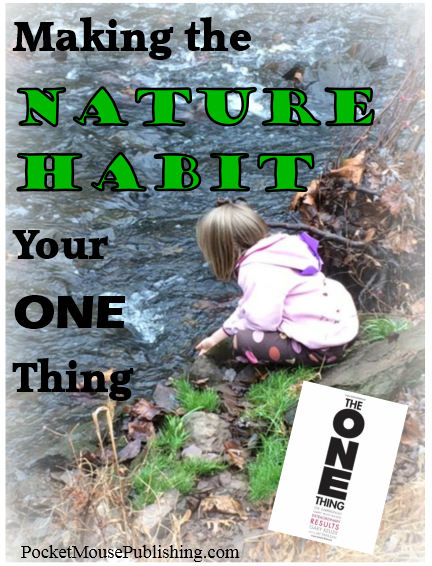
Making the Nature Habit Your ONE ThingDo you have a nature habit? Have you made nature part of your daily or weekly rhythm? Sometimes it is hard to make “getting outside” a priority, even when we know the benefits, including recent studies showing the importance of sunlight to vision!

I’ve just finished skimming the book The ONE Thing* by Gary Keller. The premise of the book (highly recommended!) is that in order to have more of what we want in our life, we need to focus on less. Our focus needs to be on our ONE thing. He acknowledges that we will have many priorities in our lives, but each of us has something that matters most and that is our ONE thing.
Right now, my ONE Thing is getting myself and my children outside every day, as a habit. Just as we eat every day, and we sleep every day — we go outside every day. To notice, to know, to be.

The ONE Thing is full of quotes which inspire me to making going outside a daily habit.

At the end of Chapter 2: The Domino Effect, Gary says:

The key is over time. Success is built sequentially. It’s one thing at a time.

The benefits of time in nature happen over time. Getting out every day — whatever the weather — will get us there.

Making the Nature Habit Your ONE Thing

Chapter 4: Everything Matters Equally opens with a quote by Johann Wolfgang von Goethe:

Things which matter most must never be at the mercy of things which matter least.

This is followed by:

The things which are most important don’t always scream the loudest. –Bob Hawke

Everyone’s “matters most” will be different from their “matters least” – but the thing that screams the loudest for our attention likely isn’t time in nature. And it probably comes via an electronic device of some kind.   At least, that generally is the case in my house.

So how do we make nature time a habit?

Well, in Chapter 6: A Disciplined Life, Gary tells us:

There is this pervasive idea that the successful person is the “disciplined person” who leads a “disciplined life.”

It’s a lie.

He says that we don’t need more discipline; we need more habit. And just enough discipline to form that habit. How long to form a habit? More than the often cited 21 or 28 days, apparently. Gary references a University College of London study which found it takes, on average, 66 days to form a habit. Yesterday was our family’s 34th day of getting outside in a row – we’re halfway to a habit!

A final quote from the book I will share is by F.M. Alexander and comes from Chapter 12: The Path to Great Answers:

People do not decide their futures, they decide their habits and their habits decide their futures.

What habits are deciding your future?  Do you have a nature habit?  Leave a comment or share a link and let us know!

*This page may contain affiliate links which help support the site, click here & scroll to the bottom of the page for full disclosure.
When a Walk in Nature Goes Wrong

When a Walk in Nature Goes Wrong -- pocketmousepublishing.comHow do you handle it when a walk in nature goes wrong? I don’t mean “Drama in Real Life” wrong. Breathe easy — no cougars attacks, rock slides, or poisonous mushrooms will be featured in this account.

This is about the small frustrations that occur when you’re trying to get yourself and your family away from “the electronic paradise” as the S’More Outdoor podcast so succinctly describes it. This is the red crayon in the dryer, the burned dinner, the waiting in line at the library with a whining toddler to pay the (huge) fine – so you can check out your fifty book stack.

We’ve all had these types of frustrations in our daily lives. And they aren’t absent just because we want to take our children out to experience the joys of nature.

Earlier this week we headed out for a walk with the dog to the woods. I was in high spirits because two of my older children were able to come along – between working and their college/highschool classes, they do not get the same quantity of outdoor time the rest of us do! Off we went, the little didn’t even where a jacket because it was such a spring-like day.

First, I slipped on the wooden walkway leading across a drainage ditch. Initially my knee hurt dreadfully. But after standing up and testing it, I realized it didn’t hurt to walk (much). So on we went, with me and my oldest chatting about the importance of soil and the neat collection of monthly soil activities I found (more on this in a future post!).

We finally arrived at the creek. The 9yo had gone on ahead and was out of sight, but I wasn’t worried, we had a meeting place.

With all the melting snow our little creek was running fast and quite cold, so big brother offered to carry 5yo across.

You know what is coming, right?

When a Nature Walk Goes Wrong - Creek

He slipped and into the icy water she went.

Was she hurt? Not at all.

Did she cry? Not at all.

Was she cold and wet and needing to go home right then? YES! I took off my coat and wrapped her in it, picked her up, instructed the other three to locate 9yo and come home. So much for family time out in glories of nature.

Then I headed home with a bum knee, a shivering 5yo in my arms, and a very unhappy dog who didn’t like her family heading in different directions.

Halfway home, coming down a rather steep hill, the dog stopped and looked back. She wouldn’t budge. Then over the hill came the dejected 9yo. My initial (horrified) thought was he had discovered no one was following him and came back to look for us, somehow missing his siblings…who were now wandering the woods looking for him!

But no, they had found him and were not far behind. He was unhappy because he hadn’t gotten his nature walk.

We all finally arrive home. And swore off walking in the woods forever.

No, actually, we didn’t. Think about those small frustrations. After the crayon in the dryer incident, did you take ALL your family’s dirty clothes to the dry cleaners henceforward? After the burned dinner, did you only eat in restaurants? And have you never returned to the library simply because you were embarrassed by a fine? Of course not!

We move on, we overcome, and maybe we can even laugh about such incidents in the years to come. When the immense bruise on my knee fades, I may laugh.

In the meantime, we’re still walking in the woods and on the paths and to the park…anything to get our daily dose of nature, no matter the weather. It has been 33 days since we started. I think we’re on the way to a habit!

Don’t give up on getting out into nature just because it isn’t idyllic every time you venture out!  Check out this encouraging National Wildlife Federations Health Benefits page and get back out there with your kids!

Do you find getting out into nature with your kids frustrating?  Have you ever had a nature walk go wrong?

Syruping Season

IMG_20150309_132422847

As the maple syruping season winds down, Indian Creek Nature Center is sharing the first harvest of the year with the community this weekend. The daytime temperatures have been unseasonably warm, in the 60’s and 70’s, and the night time temperatures have also been unseasonably warm, in the high 30’s and mid 40’s. Without the nights getting below freezing, the trees have produced a modest 280 gallons of sap-only enough to make about 6 gallons of syrup.

IMG_20150317_142215012
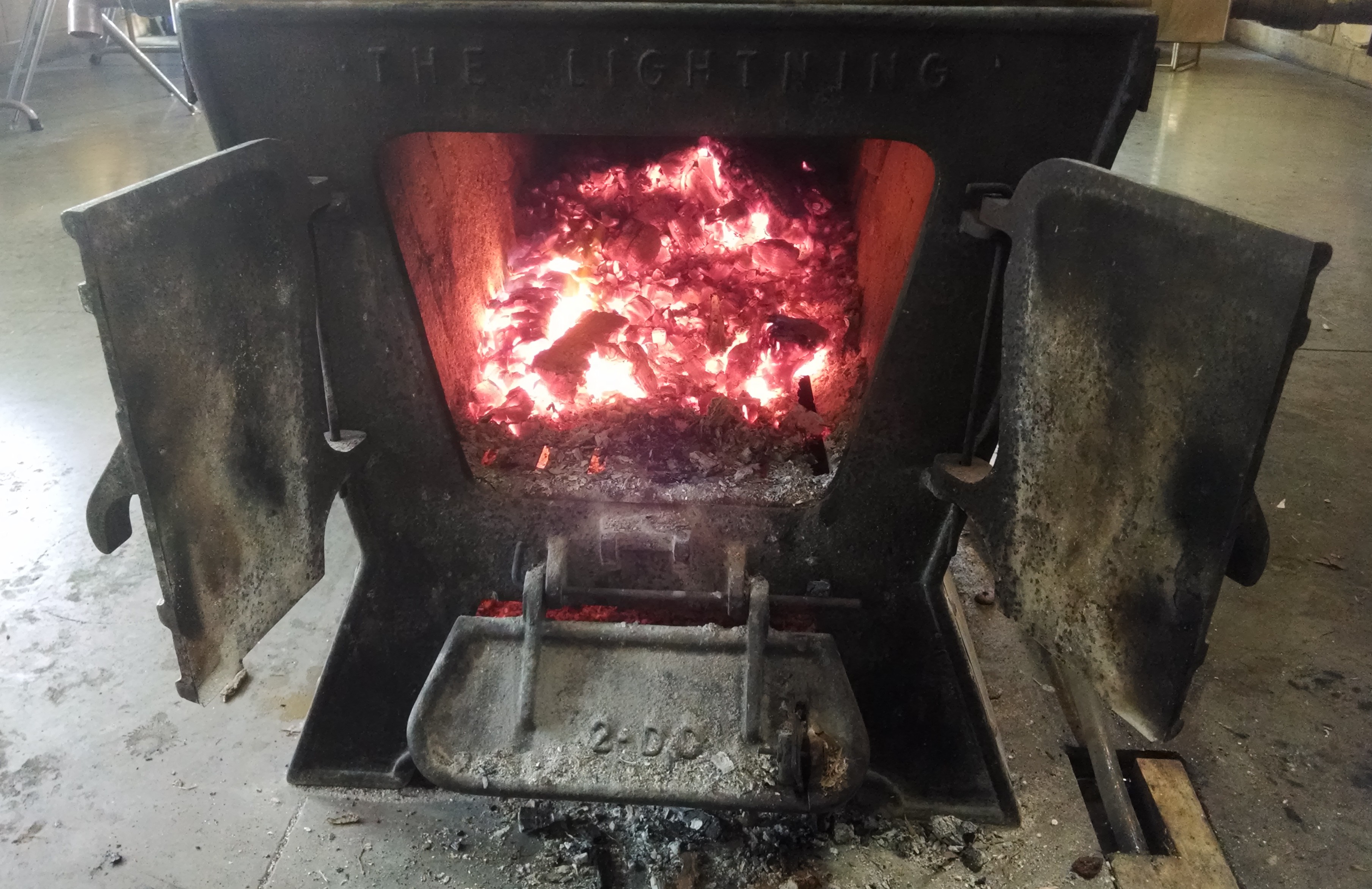
Maple syrup boils at 219 degrees, or 7 degrees above the boiling temperature of water. Wood, sustainably harvested at the Nature Center during restoration projects, provides the fuel for boiling.

If you only have one or two trees to tap or lack a good thermometer, consider drinking the sap or using it to make soups and stews. It has great flavor and is rich in minerals.

 While the temperatures will likely get cold again, the silver maple trees are already budding out, signaling that the sugars (=good syrup) are changing to starches (=bad syrup). Many of the trees have simply stopped producing sap altogether.
Another sign that the seasons are shifting:

IMG_20150318_143543973_HDR
Mallard ducks are beginning to pair up.
The syruping is ending, but the next wild edible to emerge-stinging nettle-is just beginning to poke through the softening ground.
IMG_20150318_162615210
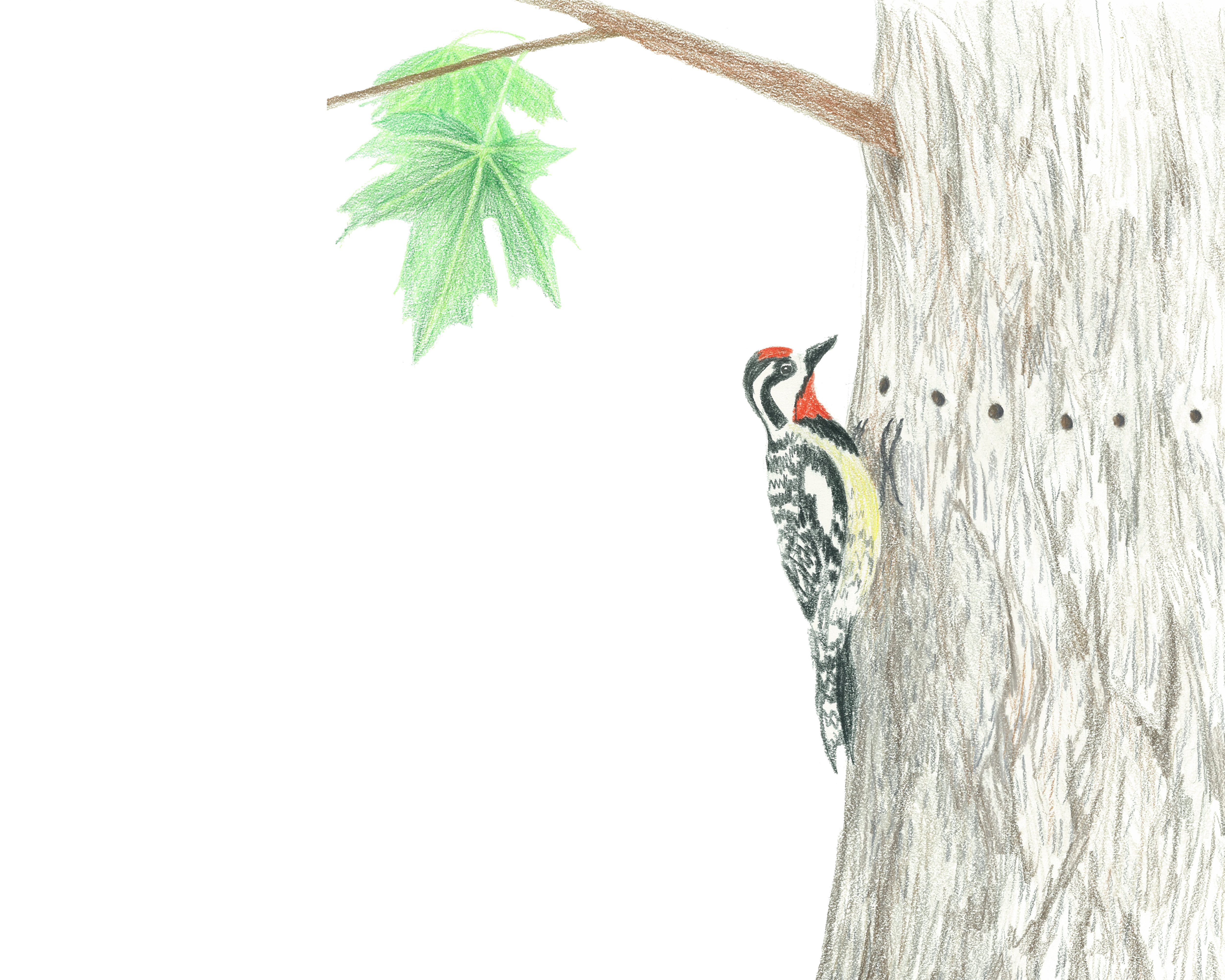
As spring progresses, keep an eye on the maples. Their flowers in March attract bees, and their sap attracts other things all year long.

sapsucker Sept 12 copy
Yellow bellied sapsucker by Gabrielle Anderson from Hunting Red.

This page contain affiliate links which help support the site. Click here for more information.

Kids in Nature Podcasts

3 Awesome Kids in Nature Podcasts {https://pocketmousepublishing.com/

On the rare occasion that I’m walking the dog or driving the car alone, I enjoy listening to podcasts. Here are my 3 favorites about the importance of nature in kids’, and all of our, lives!

1) Nature Kids Radio with Kenny Ballentine

Kenny blogs at A Sense of Wonder and is the founder of The Nature Kids Institute. I started listening with Episode 1 and was hooked. Saving what we love, creating a passion for nature, solve problems forming deep connections with natue, getting outside to learn — all these things are discussed by Kenny and his guests.

So far only 5 episodes have been produced; I’m looking forward to many more!

2) Parenting Adventures Podcast with Michael Stelzner

Michael is the founder of My Kids Adventures website, which encourages families to have fun together – many of suggested activities are outside in nature! The podcast episodes that focus on nature include sticks, dirt, wildlife, and exploring the outdoors. I wish this podcast was still on going, but at least there are 12 to enjoy!

3) S’more Outdoor with Brett Traudt

I love this name, so clever!  Brett’s podcast isn’t focused on kids but rather interviewing business folks who have been positively influenced by their time in nature.  Sometimes seeing the long term effects of nature makes me more inclined to take my kids outside, even when I don’t feel like it.  Brett’s S’more Outdoor website includes nice links to state & national parks in the USA.

I originally started out listening to Brett’s Get S’more Outdoor podcast where he rambled about the “nature effect” and “recovering childlike wonder” – Brett appreciates nature and wants to share it!

Do you have any recommendations for podcasts that encourage getting out in nature?  Please share!

Full Moon Walk in 2015

Take a Full Moon Walk with a FREE printable trackerTake a Full Moon Walk with your family!

Enjoy some fresh air and moonlight this month and every month.

Full Moon Walk Printable Download & hang this printable Full Moon Walk tracker near your calendar and never miss walking by the magical light of the full moon.  Color in the moon each month you take a walk. Miss a month?  No worries, the moon will be full again.

To learn more about the moon check out these useful links:

  • View the current moon at Calendar-365.com
  • Read about the Native American names and meanings of full moons at Almanac.com
  • Discover dates and details of the moon and its phases at Space.com

If you want sweet full moon story to read to your little one, check out my review of Moon Child!

Book Review: Moon Child

Nature Book Review: Moon ChildMarch’s full moon will occur on the 5th of the month.

Taking a family walk under the light of the full moon in a wonderful activity.  Not only does the moon’s presence add a magical quality, it allows you to see so much more!

Moon Child by Nadia Krilanovich is a perfect introduction to the full moon for toddlers and preschoolers.  The adorable raccoon, otter, and owl give a variety of peaceful activities to do with the moon to make bedtime or a nighttime nature walk special.
Take a walk on March 5th and be a Moon Child yourself!

And don’t forget to download your free printable: Full Moon Tracker

(This page may contain affiliate links which help support the site, click here & scroll to the bottom of the page for full disclosure.)

What is a Naturalist?

What is a Naturalist?

“We were all meant to be naturalists, each in his degree, and it is inexcusable to live in a world so full of the marvels of plant and animal life and to care for none of these things.”

This quote by the esteemed 19th century British educator, Charlotte Mason, gives glimpse of what a naturalist is.  To be a naturalist is to care about plant and animal life, to marvel in the natural world, to be what we were all meant to be.

But how do we attain such a lofty-seeming goal when the noise of technology, the glorification of busy, and the endless to-do list threaten to drown out the quiet marvels of plant and animal life?

We need a plan. Here is mine:

Step 1.  Go outside.  Stay as long as possible.

Step 2. Repeat step one as often as possible.

Actually, it might not be quite so simple.  After all, my children and I are now 5 for 5 days of spending at least an hour a day out in nature – no matter the weather! And while each day has been a delight, we need a little more guidance if we are to become naturalists in our degree.

All meant to be naturalists

Thankfully, I have found a simple, doable plan.  Check out How to Grow a Naturalist in 5 Easy Steps by The Heart of Michelle.  My children and I are succeeding at Step 1, and I’ve made a written list for the fridge of the next 4 steps to keep me focused.

Please share how you are – or are becoming – a naturalist!  Let’s learn from each other!

If you’d like to read more about Charlotte Mason’s thoughts on the importance of time in nature, her writings are available online.  This particular quote comes from Volume 1 of Home Education, Part 2, Out-of-door Life for the Children, page 61.