Crus-galli Grove

Forests in the not-too distant-past once provided primary sustenance for people, not just the other mammals and the birds. Today, agriculture and urbanization have made that relationship more challenging. The felling of many trees has reduced both the size and species composition of the woods. Forests are increasingly unhealthy, and lack many of the sustenance-providing species they once held. Among the foods we do eat regularly, it is a crop’s harvestability and transportability that have become valued over many other traits. Foods are increasingly single-sourced, and bear little resemblance-including nutritional value-to the myriad of plants on which we once depended.
IMG_20150504_095317599_HDR

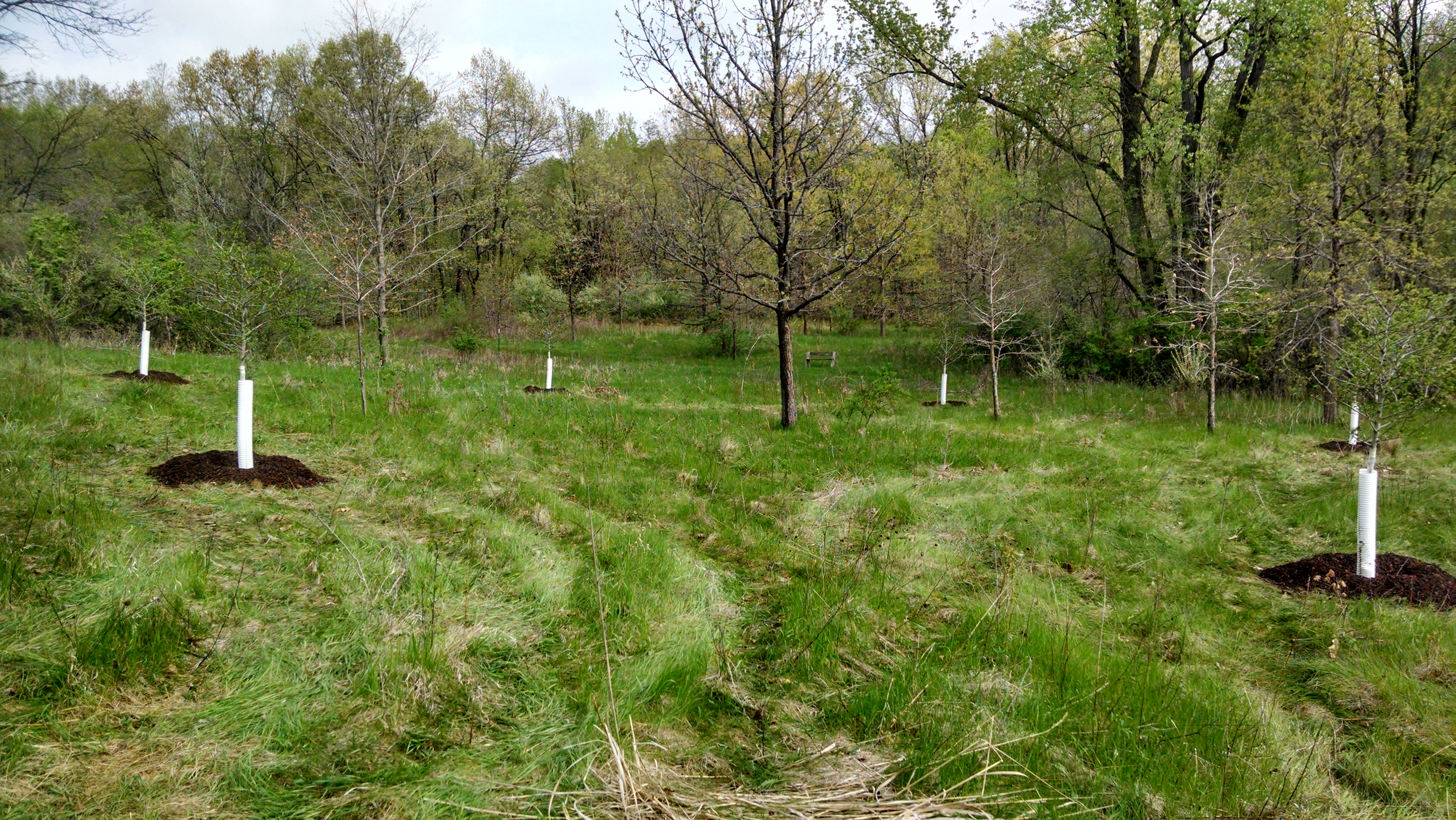
This spring, we planted six cockspur hawthorn¹ (Crataegus crus-galli) trees at Indian Creek Nature Center, as part of a woodland restoration project. For restoration purposes, the hawthorns are native trees that only grow about 25 feet tall, easy to overlook when we discuss the grandeur of the mighty oaks and hickories. Yet they provide a lot of ecological benefits, with their thicket-like tendencies that protect young nestlings, blossoms for pollinators, and edible berries for wildlife.

For human guests, the hawthorns² are the latest addition to the native edible forest at the Nature Center. Both the blossoms and berries are good to eat. The trees were planted in a wide circle, forming a grove around one of the maturing oaks. In the not-too-distant future, guests will be able to come, spread a picnic blanket in the semiprivate shade of the grove, listen to the birds all around them, and harvest a handful of berries³ for tea later that evening.

A few notes:

1. The hawthorns serve as a host plant for Cedar Apple Rust, which is hard on apple trees.

2. To find out if a species is native to your state, visit www.plants.usda.gov

3. Consuming hawthorns can help lower blood pressure. To learn more about the medicinal benefits, check out an herbal book, such as the Woman’s Book of Healing Herbs. If you’re under the care of a doctor for a blood pressure condition, talk to your doctor first.

Indian Creek Nature Center’s Living Building Challenge

When I think about nature, the impact it has on me, and the relationship I have with it, I tend to think about the joy of being in nature, and that all-encompassing sensory experience that we can only barely begin to understand. But I suspect, if nature were to think about me, the relationship is less positive. I drive on paved roads; I put things in the landfill that will never decompose; some of the products I use leach toxins into the water; and, I predominantly burn coal for my electricity. Now, I also work full-time to care for the environment, I am making great improvements in the products I choose, and I am conscientious about my energy use. But that doesn’t change that homo sapiens are by far the most ecologically invasive, permanently destructive species on the planet-and I am part of that problem.

The solutions are often neither obvious or easy.  So I am thrilled to be part of Indian Creek Nature Center’s new construction project that is rising to meet the standards set by the International Living Future Institute’s Living Building Challenge. Not obvious and not easy (and my posts are likely to be far less frequent). But being on the leading edge of the green construction revolution will help us-all of us-live in better harmony with the environment and sustainably care for our natural resources.

Syruping Season

IMG_20150309_132422847

As the maple syruping season winds down, Indian Creek Nature Center is sharing the first harvest of the year with the community this weekend. The daytime temperatures have been unseasonably warm, in the 60’s and 70’s, and the night time temperatures have also been unseasonably warm, in the high 30’s and mid 40’s. Without the nights getting below freezing, the trees have produced a modest 280 gallons of sap-only enough to make about 6 gallons of syrup.

IMG_20150317_142215012
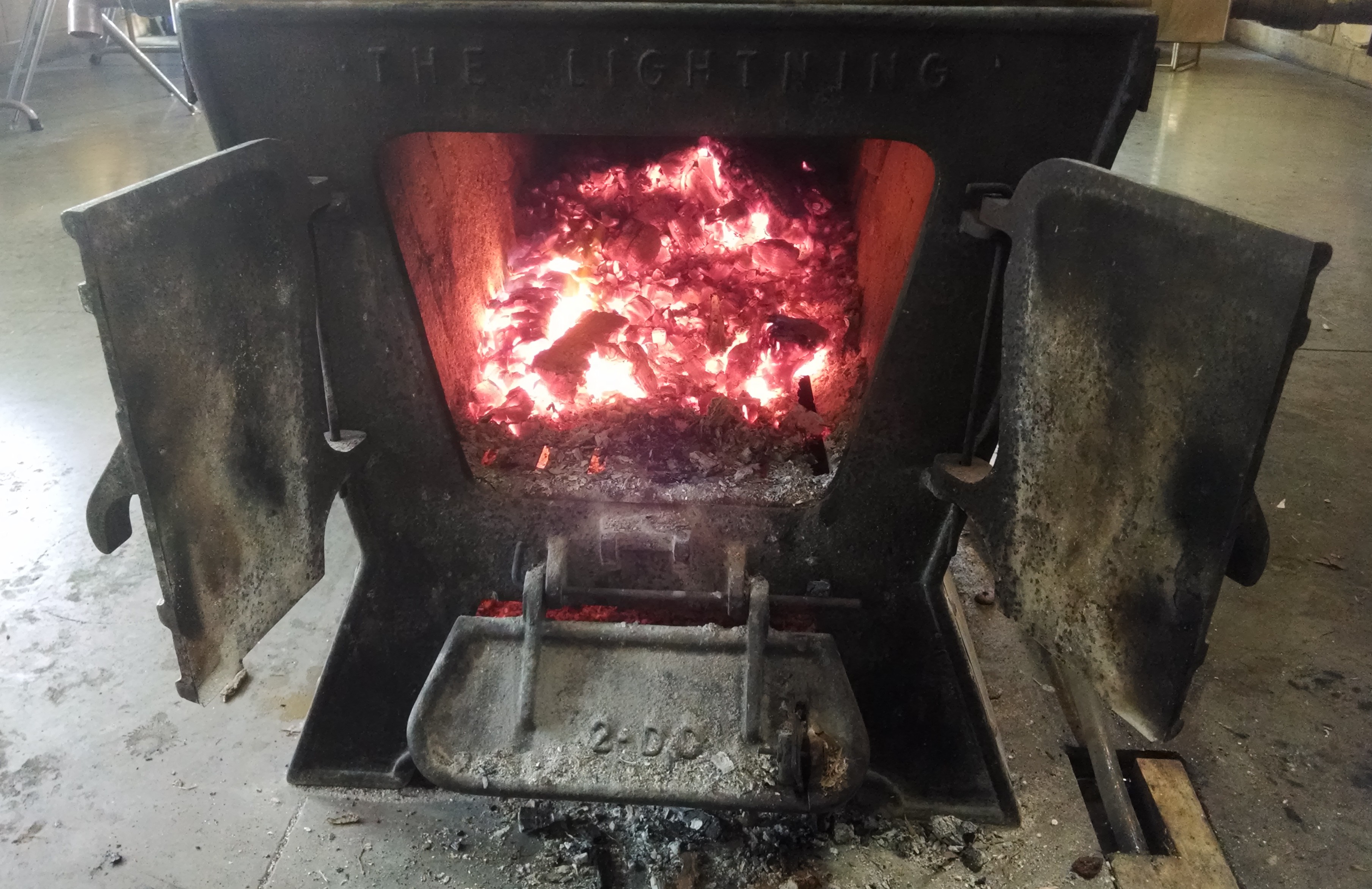
Maple syrup boils at 219 degrees, or 7 degrees above the boiling temperature of water. Wood, sustainably harvested at the Nature Center during restoration projects, provides the fuel for boiling.

If you only have one or two trees to tap or lack a good thermometer, consider drinking the sap or using it to make soups and stews. It has great flavor and is rich in minerals.

 While the temperatures will likely get cold again, the silver maple trees are already budding out, signaling that the sugars (=good syrup) are changing to starches (=bad syrup). Many of the trees have simply stopped producing sap altogether.
Another sign that the seasons are shifting:

IMG_20150318_143543973_HDR
Mallard ducks are beginning to pair up.
The syruping is ending, but the next wild edible to emerge-stinging nettle-is just beginning to poke through the softening ground.
IMG_20150318_162615210
As spring progresses, keep an eye on the maples. Their flowers in March attract bees, and their sap attracts other things all year long.

sapsucker Sept 12 copy
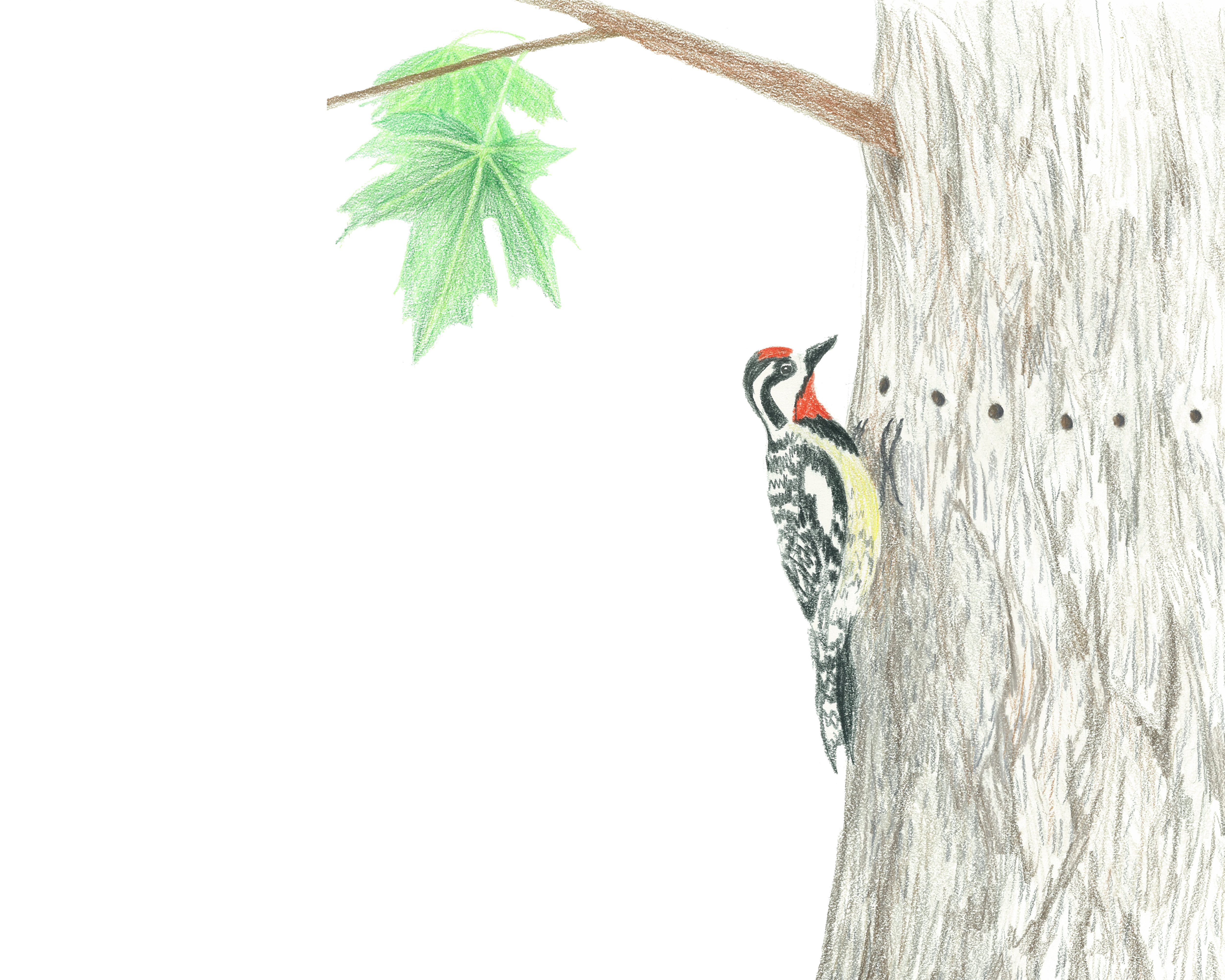
Yellow bellied sapsucker by Gabrielle Anderson from Hunting Red.

This page contain affiliate links which help support the site. Click here for more information.

On the cusp of Spring

A great way to be in nature this time of year is maple syruping.

IMG_20150221_141115732_HDR (2)
Annie taps a silver maple tree. Silver maples usually grow along creeks and river bottoms.

When winter is still firmly entrenched but the change in the birdsong indicates spring must be playing hide and seek just under the snow, we take our power drills, our 7/16″ drillbits, our sapsacks and spiles, and head into the sugarbush.

IMG_20150221_143108542
All maples have branches that come out directly opposite each other, in pairs. Look for young twigs to see the branching pattern, as older branches may be broken.

All maple trees, including the sugar maple and the box elder, have opposite branches. Its one good indicator that the tree is a maple tree–the only other large tree in this area that has opposite branches is the ash tree.

Jeff hammers in the spile, which spills the sap out of the tree, and hangs the bag to collect the sap.

If you don’t have a maple tree, plant one! Maples grow quickly, which will allow you–or someone who comes after you–to enjoy harvesting the sap, boiling it into syrup, and living directly off the land.

IMG_20150221_140652311_HDR
Hole tapped by a pileated woodpecker, hunting for insects. Unless a dead tree is threatening a path or building, they create rich habitat if left standing.

Being in the Sugarbush is a great way to see who else is spending time in the woods and what they are eating. As soon as it warms up a bit and the sap starts running, we’ll be back every warm day over the next five weeks to gather it. The repeated trips to the forest over the next five weeks will give us opportunities to explore the gradual shift into spring, as well as collect gallons of sweet sap. Visit www.indiancreeknaturecenter.org to learn more about syruping.

Pileated woodpecker by Gabrielle Anderson, from Hunting Red.

Snowshoeing to See the Woods

The eleven inches of fresh falling snow transformed Bena Brook, creating a magical, monochromatic wonderland

upthebrook

From the exquisite sunlight filtering through the canopy

heaven

To the delicately wrought arched lairs formed by trees bending under the weight of the snow

archway

I had thought that my snowshoes would be the only red to be seen (snowshoeing is a great way to stay warm in the winter), but five red-headed woodpeckers came crashing through the woods in a very vocal territorial dispute

red, unsmudged

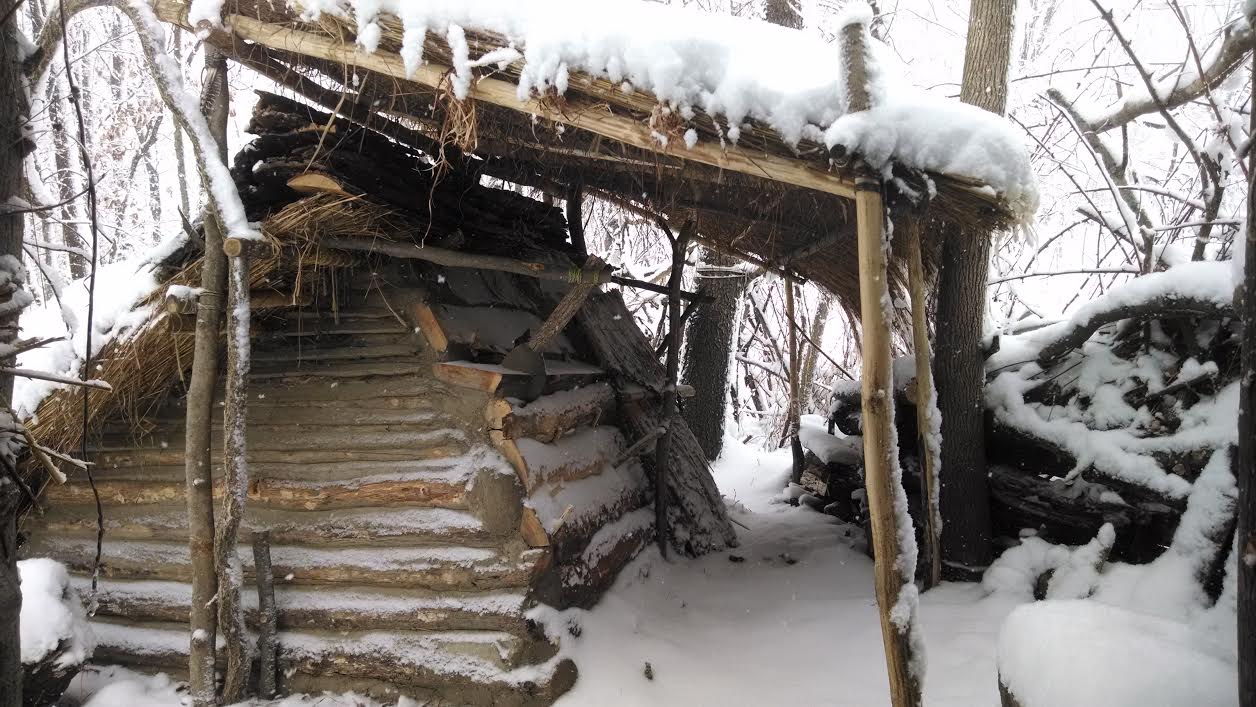
Both Two Point Dugout Lodge and the Leaf Tipi remained snug, providing dry cozy places to rest out of the wind and drink tea.

2point

leaftipi2

 To visit Bena Brook, rent snowshoes, or find Two Point Dugout Lodge, visit www.indiancreeknaturecenter.org