5 Reasons to Walk in the Woods this Winter

5 Reasons to Walk in the Woods

Need a reason to go for a walk in the woods this winter?  I have 5 for you today!

  1. You can hear more. Ever walked in the woods when it was snowing? Remember the hush? Even when it isn’t snowing, a winter nature walk is quiet. No insects are singing, so you can easily distinguish the bird calls you do hear.
  2. You can see more. When you do hear a bird call, you can find the source easily. You can point it out to your children before it disappears among the leaves. You can see more than just the flash of a fox, you can watch it run – flaming orange against the white snow. And the tracks! So many tracks on the new fallen snow.
  3. You can go farther and to new places. You can leave the trail. We have walked through parts our woods that just weren’t accessible to us in the summer. We’ve been able to turn right at the creek, instead of always turning left to follow the trail. We have found a young bamboo forest, and an old well, and
  4. You don’t have to worry about poison ivy, ticks, or thorns. This possibly should have been #1. As the mom who has to remove the ticks, bandage the cuts, and prepare the soothing compresses, I love not having to worry about what the children will bring home.
  5. You get more exercise. Breaking though a foot of snow can be hard work. Your body warms up, and you feel good! And because you’re hearing more, seeing more, going farther and discovering you things without worry, you don’t want to stop.

As Jean said we are on the cusp of spring, less than a month until the Vernal Equinox (March 20, the first day of spring). There is still time to walk in the woods in winter though. Remember these 5 reasons when you’re wondering if all the bundling and preparation to “go outside” is worth it!

What is your favorite thing about walking in the woods in winter?

On the cusp of Spring

A great way to be in nature this time of year is maple syruping.

IMG_20150221_141115732_HDR (2)
Annie taps a silver maple tree. Silver maples usually grow along creeks and river bottoms.

When winter is still firmly entrenched but the change in the birdsong indicates spring must be playing hide and seek just under the snow, we take our power drills, our 7/16″ drillbits, our sapsacks and spiles, and head into the sugarbush.

IMG_20150221_143108542
All maples have branches that come out directly opposite each other, in pairs. Look for young twigs to see the branching pattern, as older branches may be broken.

All maple trees, including the sugar maple and the box elder, have opposite branches. Its one good indicator that the tree is a maple tree–the only other large tree in this area that has opposite branches is the ash tree.

Jeff hammers in the spile, which spills the sap out of the tree, and hangs the bag to collect the sap.

If you don’t have a maple tree, plant one! Maples grow quickly, which will allow you–or someone who comes after you–to enjoy harvesting the sap, boiling it into syrup, and living directly off the land.

IMG_20150221_140652311_HDR
Hole tapped by a pileated woodpecker, hunting for insects. Unless a dead tree is threatening a path or building, they create rich habitat if left standing.

Being in the Sugarbush is a great way to see who else is spending time in the woods and what they are eating. As soon as it warms up a bit and the sap starts running, we’ll be back every warm day over the next five weeks to gather it. The repeated trips to the forest over the next five weeks will give us opportunities to explore the gradual shift into spring, as well as collect gallons of sweet sap. Visit www.indiancreeknaturecenter.org to learn more about syruping.

Pileated woodpecker by Gabrielle Anderson, from Hunting Red.

Walking the Nature Talk

Walking the Nature Talk

Starting a Nature board on Pinterest isn’t enough. I can’t just believe nature to be important, I have to walk the talk. Literally.

Wednesday I wrote the original draft of yesterday’s post on noticing, knowing, and being in nature. I knew I had to take the children and myself outside. I can’t just believe nature to be important, I have to walk the talk. Literally.

We bundled up. Extra pants, hats, scarves. As it turned out, 23 degrees and sunny isn’t too cold.

Spirals in the Snow
Spirals in the Snow

My 5yo made large footprint spirals in the fresh snow and then insisted on pretending to be a dragon and travel through the snow on the edge of the road on all fours. I was impatient. Why couldn’t she just walk on the asphalt with me? That would certainly be faster. And my older boys were ahead, out of sight, in the woods already.

That is not walking the nature talk. I needed to stop. Well, I already was stopped, waiting for her to catch up. I needed to breathe. I needed to notice she was being in nature. Her face was inches from the snow as she galumped along.

We did reach the woods. We spent an hour in total outside – looking at tracks, testing the ice on the creek, climbing over fallen logs. It was a good hour, a great hour. It was a nature walk. Not a march, not a hike, just a walk.

We took an evening walk as well, to the park. It was colder then, but we enjoyed it. The clouds had started to move in, but as we walked home, one of the boys looked up and there was the constellation Orion. We all stopped to find his three star belt – the one constellation we all know. There were, noticing the stars, knowing the stars, being under the stars together. Walking the talk.

How many constellations will we learn this year? How many will we be able to name if we stop looking down at our cellphones as we walk under the sky?

Snow Den

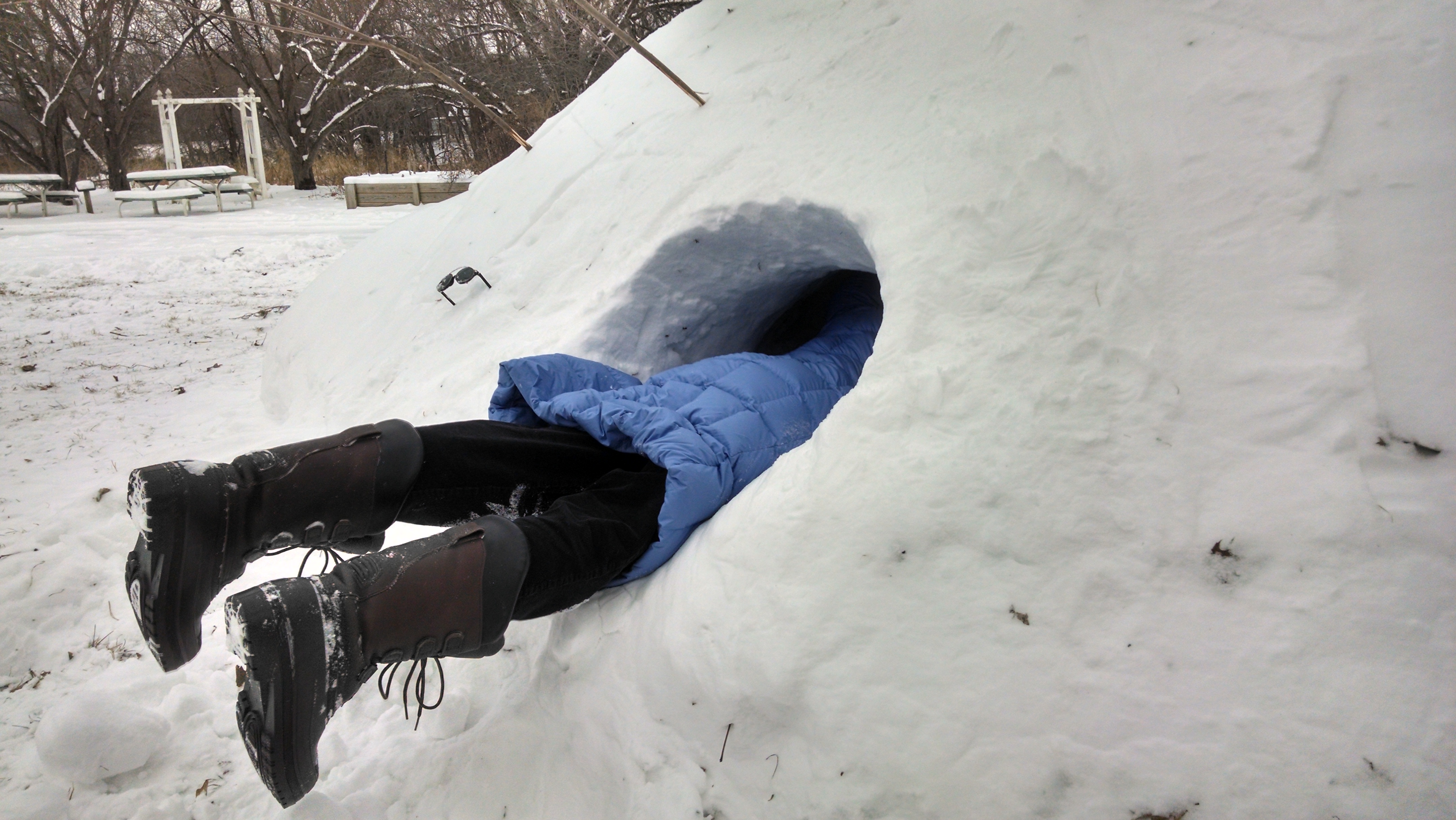
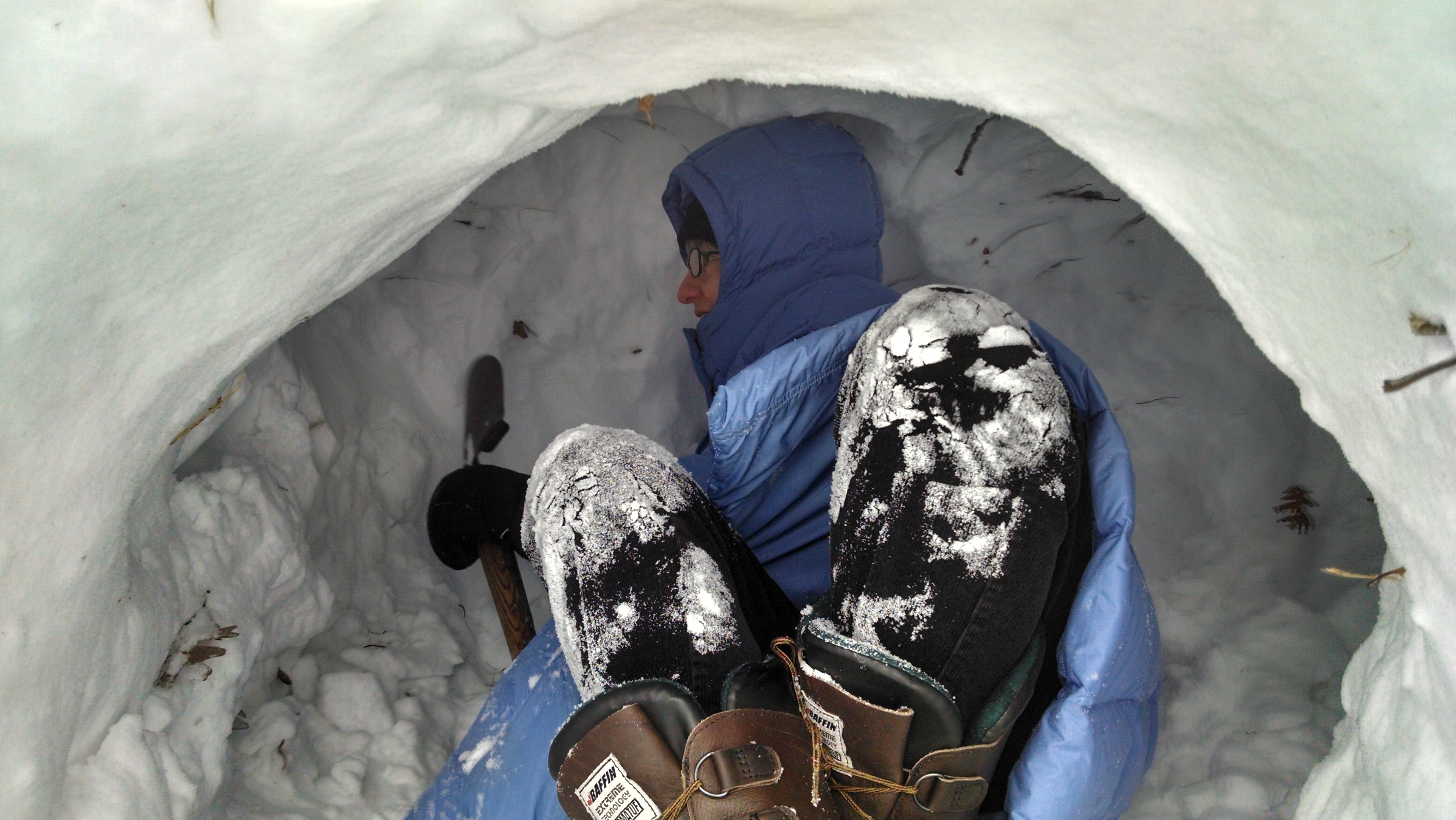
Yesterday it was even colder, 11 degrees, and yet we bundled up again and went out. My 12yo checked his snow den and discovered it really was warmer.  We don’t just need quality time in nature, we need quantity time in nature. Even in the cold.

In the woods, by the creek, we saw a bird – it seemed blueish, with a large head and had a kind of crest, and made a very distinctive call as it flew by. Definitely not a blue jay, could it be a kingfisher? When we got home (and thawed out) my 5yo and I searched the Merlin Bird app on my phone. Yes, there is a time for technology!  When she played the call of the kingfisher, my 12yo called from the other room, “That was it!” We noticed, we know!

We are walking the nature talk. Won’t you walk with us?

~Lee

Notice. Know. Be…in nature.

Notice Know Be in NatureWinter’s heavy hand rests on the Eastern Coast. Freezing rains, snow that won’t pack, sullen gray skies, and the toe-numbing cold. What is a mom who believes that “nature is important” to do when the both she and the kids are in danger of turning into screen-zombies?

Yesterday, I pulled out a book for inspiration: Hunting Red.

The young narrator notices nature all around. She hunts with her eyes for the royal catchfly flower, and with her ears for the piercing whistle of the cardinal.

She knows what she finds by name – from the enormous pileated woodpecker to the tiny scarlet cup.

And she takes time to just be in nature – sitting quietly against a dead tree trunk or hiking the tallgrass prairie.

To notice nature we will have to be in nature. To know nature we will have to be in nature, and we will have to do some research. To be in nature we will have to make the conscious choice to go outside.

Notice.

Know.

Be.

This is what I want for my children and myself. It’s time to go outside and walk the talk. Come along for the adventure!

Snowshoeing to See the Woods

The eleven inches of fresh falling snow transformed Bena Brook, creating a magical, monochromatic wonderland

upthebrook

From the exquisite sunlight filtering through the canopy

heaven

To the delicately wrought arched lairs formed by trees bending under the weight of the snow

archway

I had thought that my snowshoes would be the only red to be seen (snowshoeing is a great way to stay warm in the winter), but five red-headed woodpeckers came crashing through the woods in a very vocal territorial dispute

red, unsmudged

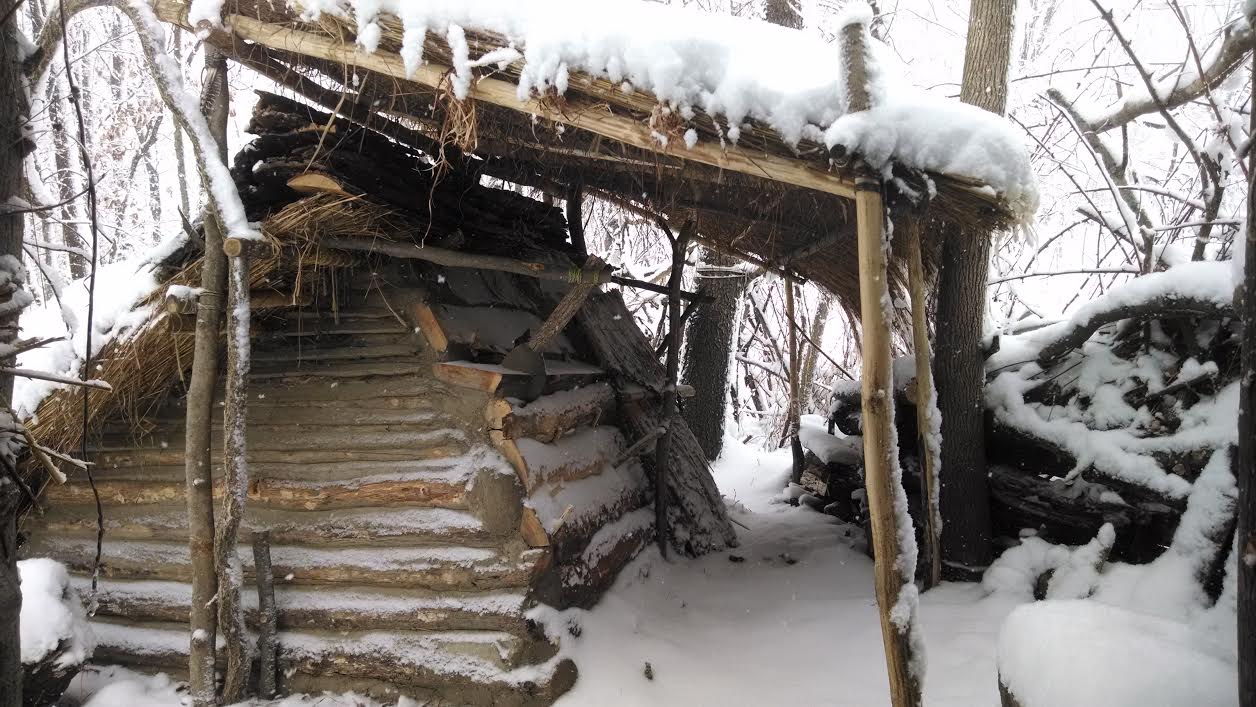
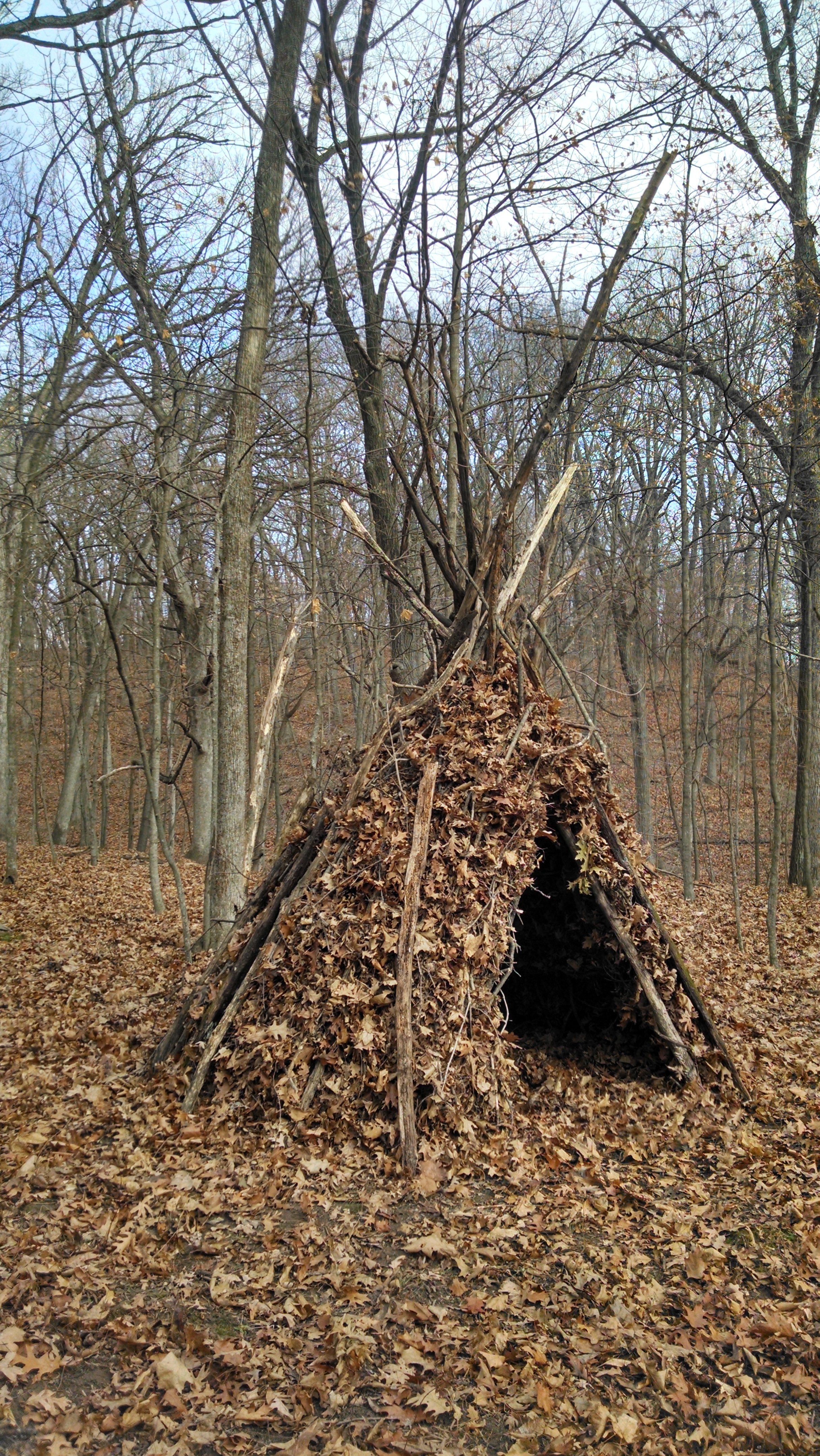
Both Two Point Dugout Lodge and the Leaf Tipi remained snug, providing dry cozy places to rest out of the wind and drink tea.

2point

leaftipi2

 To visit Bena Brook, rent snowshoes, or find Two Point Dugout Lodge, visit www.indiancreeknaturecenter.org

Staying warm when it is below zero

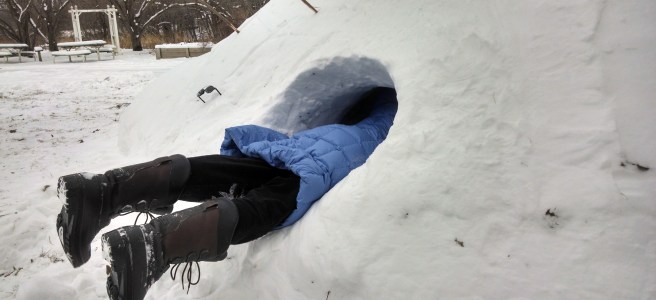
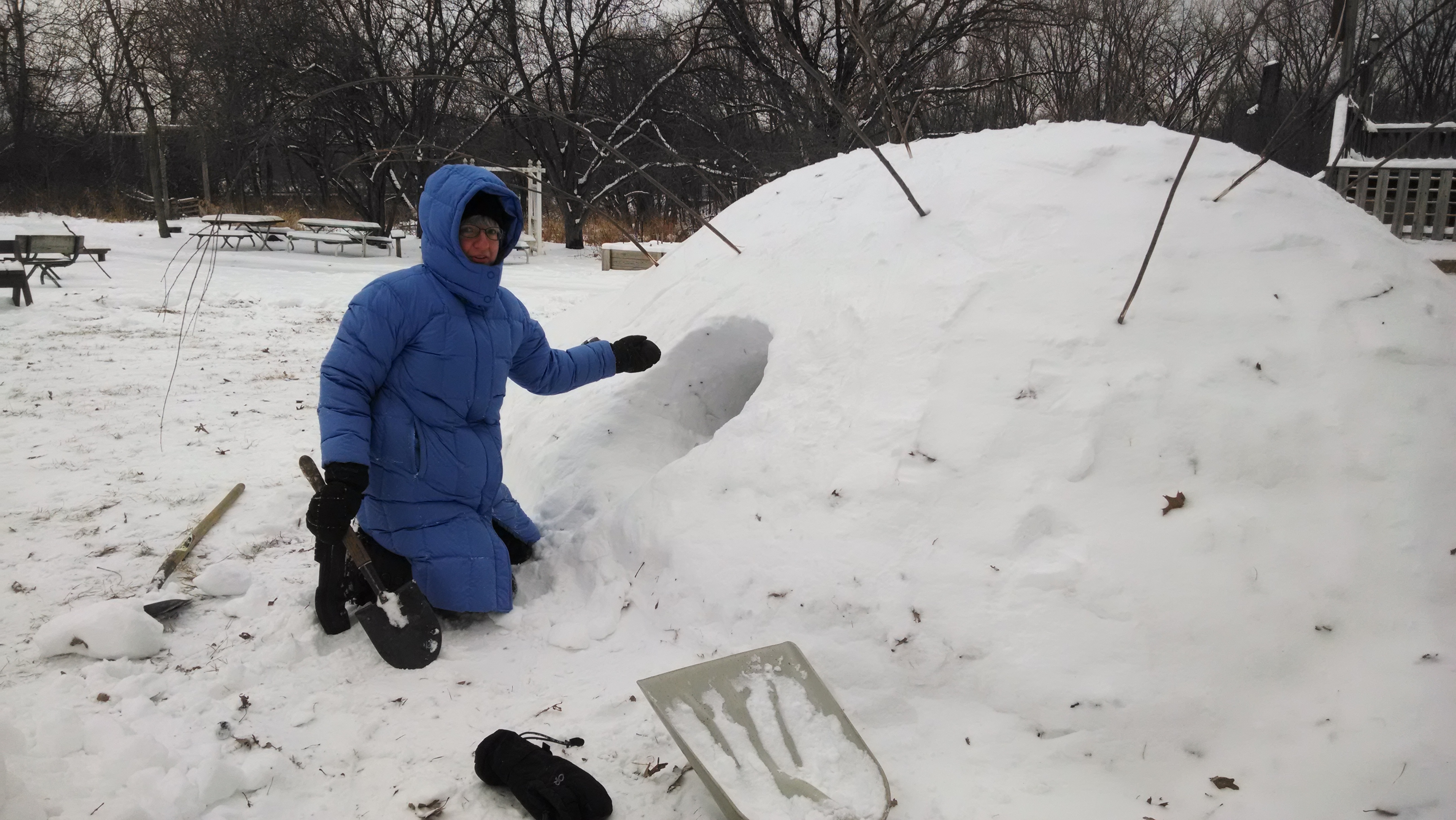
A fun way to stay warm in the winter is to build small, all-natural structures that block the wind. That way, whenever you’re out hiking and exploring, you have a cozy den as a destination to snug up inside. This quinzee is easy to find if you’re at the Indian Creek Nature Center. The leaf tipi is also at the Nature Center-you’ll just have to go on a longer adventure to discover it.

Leaf tipi
Leaf tipi
The quinzee mound is made, the door dug
The quinzee mound is made in the shape of a turtle, and the doorway is carved out
Nancy going inside
Nancy goes inside
And digs out a bit more space for us, so a few people can fit inside
And digs out a bit more space for us, so a few people can gather in the turtle