Forests in the not-too distant-past once provided primary sustenance for people, not just the other mammals and the birds. Today, agriculture and urbanization have made that relationship more challenging. The felling of many trees has reduced both the size and species composition of the woods. Forests are increasingly unhealthy, and lack many of the sustenance-providing species they once held. Among the foods we do eat regularly, it is a crop’s harvestability and transportability that have become valued over many other traits. Foods are increasingly single-sourced, and bear little resemblance-including nutritional value-to the myriad of plants on which we once depended.
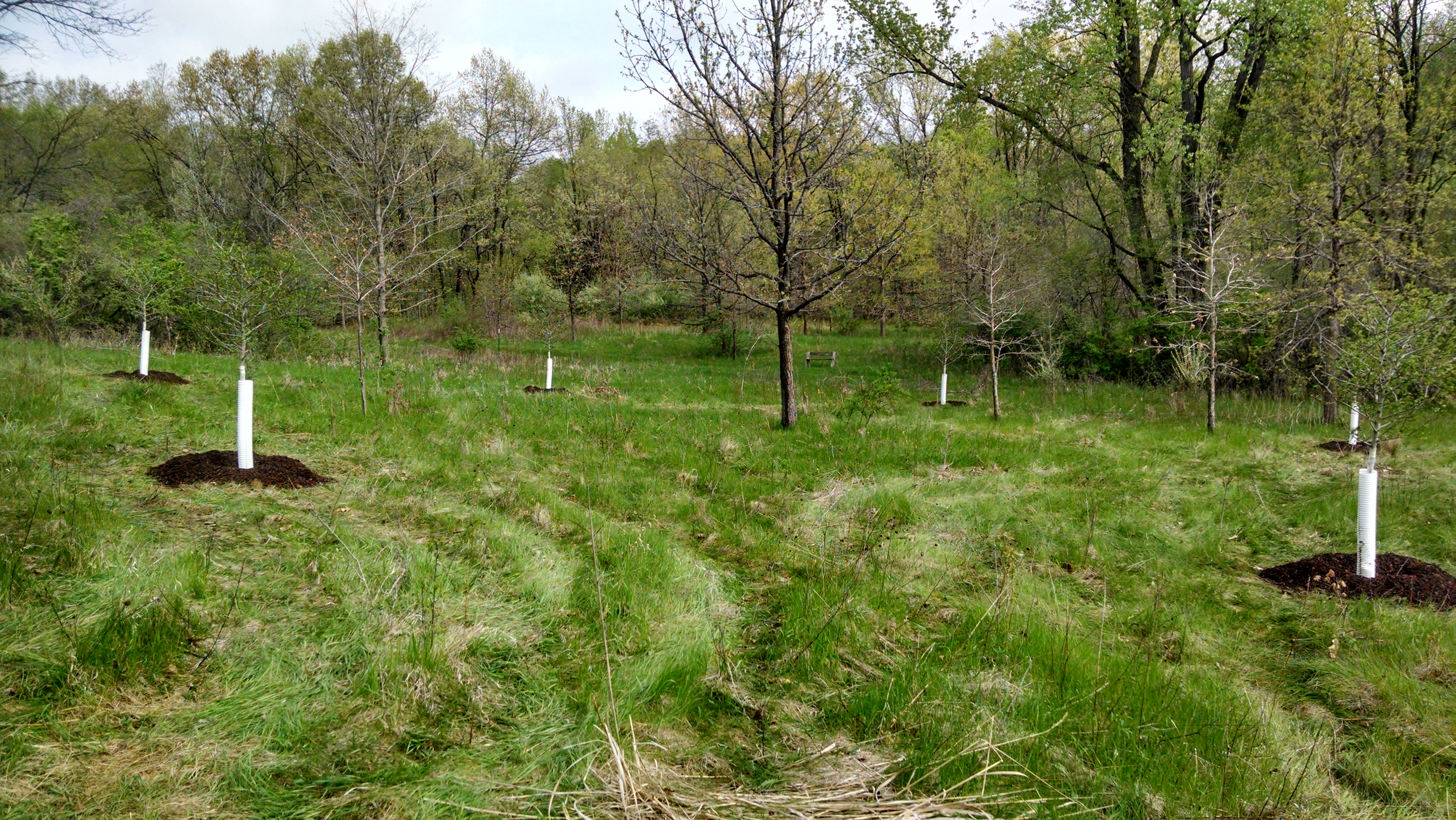
This spring, we planted six cockspur hawthorn¹ (Crataegus crus-galli) trees at Indian Creek Nature Center, as part of a woodland restoration project. For restoration purposes, the hawthorns are native trees that only grow about 25 feet tall, easy to overlook when we discuss the grandeur of the mighty oaks and hickories. Yet they provide a lot of ecological benefits, with their thicket-like tendencies that protect young nestlings, blossoms for pollinators, and edible berries for wildlife.
For human guests, the hawthorns² are the latest addition to the native edible forest at the Nature Center. Both the blossoms and berries are good to eat. The trees were planted in a wide circle, forming a grove around one of the maturing oaks. In the not-too-distant future, guests will be able to come, spread a picnic blanket in the semiprivate shade of the grove, listen to the birds all around them, and harvest a handful of berries³ for tea later that evening.
A few notes:
1. The hawthorns serve as a host plant for Cedar Apple Rust, which is hard on apple trees.
2. To find out if a species is native to your state, visit www.plants.usda.gov
3. Consuming hawthorns can help lower blood pressure. To learn more about the medicinal benefits, check out an herbal book, such as the Woman’s Book of Healing Herbs. If you’re under the care of a doctor for a blood pressure condition, talk to your doctor first.
My challenge in loving nature isn’t usually the “getting outside” part, its avoiding the poison ivy that thrives in the woods. Poison ivy is beautiful, especially in the spring and fall, but the oil causes my skin to break out in open, weeping, ever-expanding, never-healing sores, which causes me to go to the doctor for prednisone, which wreaks havoc on my immune system. Last summer, I avoided the doctor/prednisone, and I am going to do my best again this summer.
Step 1. Identify.
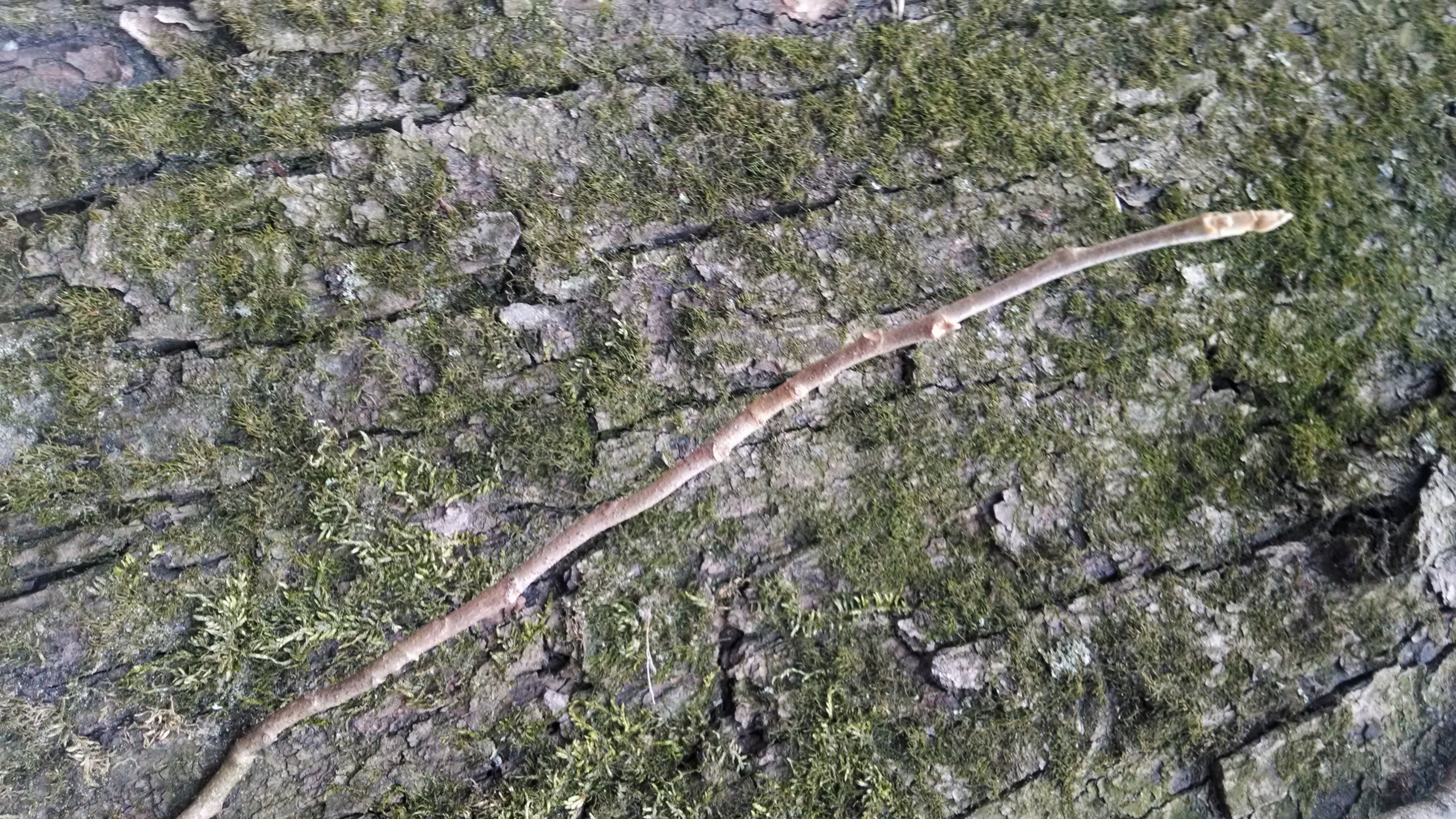
I nearly walked into this poison ivy branch, hanging face-high from a tree.The fine hairs on the main vine gave it away.
Step 2. Avoid.
The young leaves in the spring are a deep red.
Step 3. Wash thoroughly, assuming avoidance wasn’t good enough. Always a good idea after playing outside, because it provides an opportunity for a thorough tick check.
If I was in the general vicinity of poison ivy, I just use soap and water. If I’m fairly sure I actually contacted the plant, I use Goop first, which binds with the oil.
Step 4. At the first sign of breakout, start drinking copious amounts of tea made from reishi mushrooms, stinging nettle leaves, and budding goldenrod flowers. The challenge is on-we’ll see how this season goes!
The stinging nettle leaves that emerged mid-April are getting too big too harvest, but there are young plants still coming up around the edges of the nettle patches.
How are you celebrating Earth Day 2015? If enjoying all the abundance of the Earth – like the wildflowers and rainbows under the sun isn’t enough, you could get up before the sun rises to see a spectacular shooting star show! The Lyrid Meteor Shower 2015 will peak in the wee hours of April 23, 2015.
First some vocabulary:
A Shooting Star is bright streak of light caused by a meteor.
A Meteor Shower is the Earth passing through the wake of the comet and named for constellation nearest the point the meteors seem to radiate from.
A Comet is an icy-rock ball that orbits the sun and has tails of dust and gas streaming away from the sun
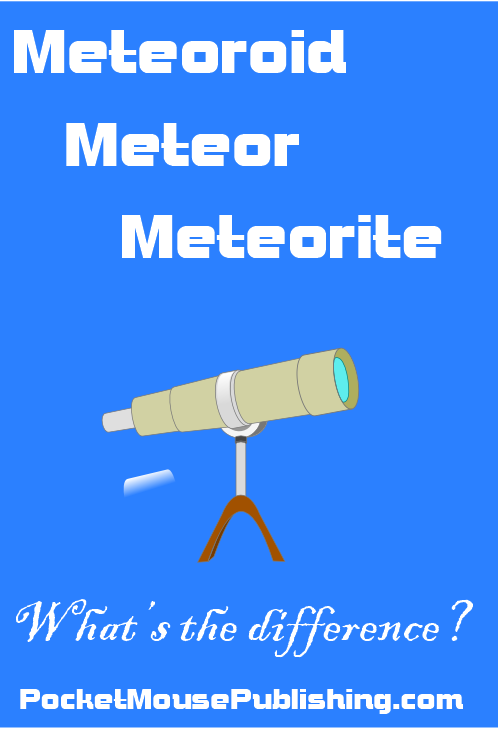
Meteoroid – relatively small particles in space
Meteor – a meteoroid that entered Earth’s atmosphere (shooting star)
Meteorite – a meteor that didn’t burn up before landing on earth
The Lyrid Meteor Shower seems to radiate from the constellation Lyra. Lyra is from the Greek word for lyre and is connected the myth of Orpheus, a musician who charmed all with his playing. The Classical myth ends sadly for Orpheus, but if you’d like to hear a folk version with a happy conclusion, I highly recommend the song “King Orfeo” written by Lisa Theriot and sung by Ken Theriot on the CD Human History.
But I digress!
Lyra Constellation Map (creative commons use)
The constellation Lyra contains the star commonly known as Vega — 5th brightest in the sky and part of the Summer Triangle. To learn more about Lyra check out Solar System Quick’s guide.
The comet wake or path that causes the Lyrid Meteor Shower is called Comet Thatcher and was seen in 1861 — and isn’t expected again until 2276, according to EarthSky. Add that to your smartphone’s calendar before you forget!
Thank you! We’ll nominate our own favorite blogs soon, but in the meantime, a bit about us in answer to the questions posed by Seedling — Lee in blue, Jean in red, and Gabe (the elusive illustrator of Hunting Red) in green!.
What is something that you appreciate today and why?
Lee: Eating outside on the front porch in the sunshine.
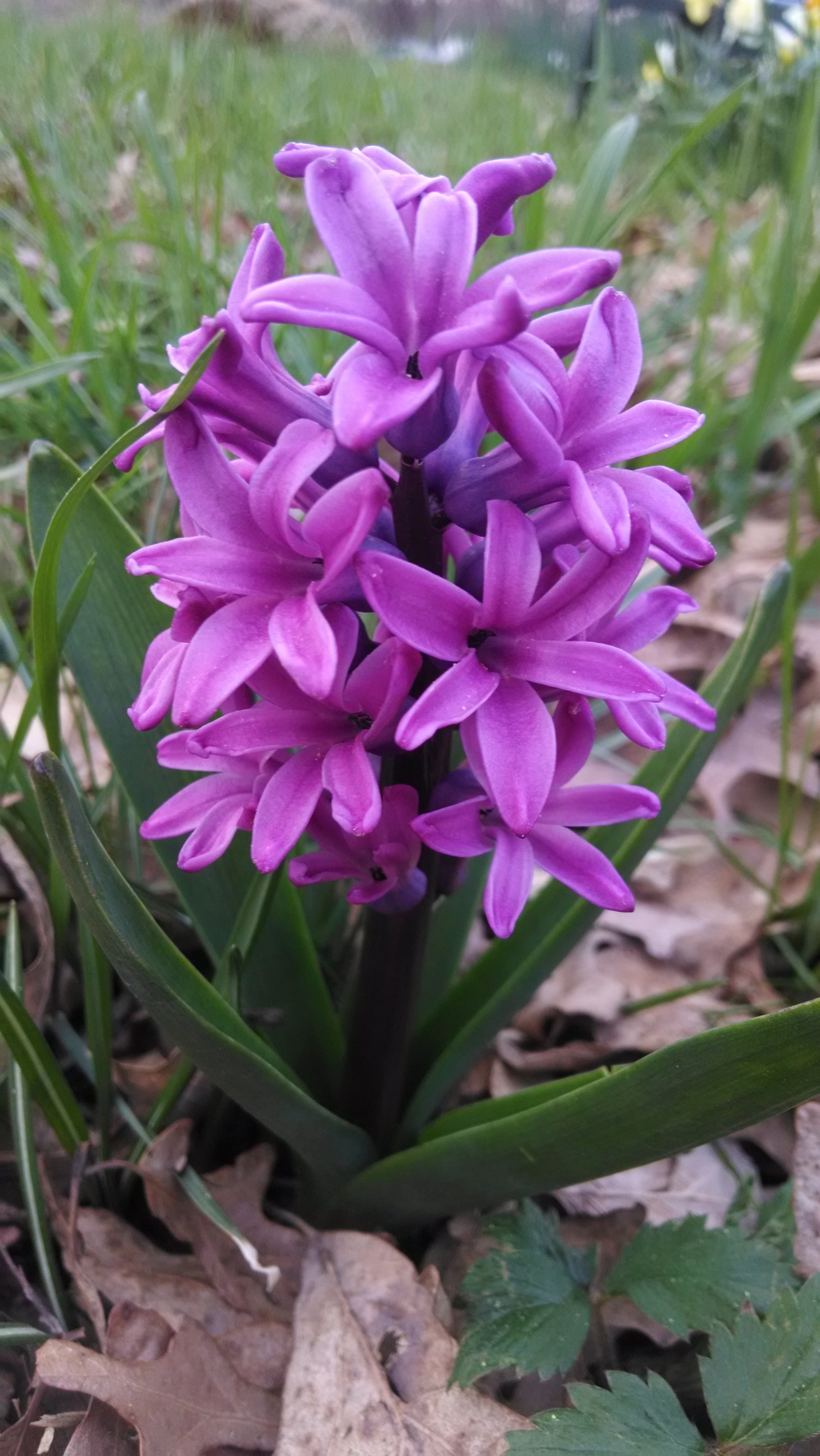
Jean: Everything. Life should be lived in appreciation. Specifically, there is a flower blooming in my yard that I don’t recognize.
Gabe: Today? I don’t have to go to work or class!
Do you recognize this flower?
What is something that you recently learned?
Lee: How to post to twitter — @pocketmousepub!
Jean: How to make charcoal. My knowledge heretofore has been theoretical.
What is something that you love about yourself and why?
Lee: My cursive handwriting. It’s legible, uniform, and well, lovely. Sadly, none of my children have inherited it.
Gabe: I taught myself to be ambidextrous (after reading The Queen of Attolia).
What is something that you had always wished to do and achieved?
Lee: I always wanted to homeschool. I heard about it while I was in high school, and now I have two who have graduated and four I’m still homeschooling.
Gabe: Complete the full 50,000 word NaNoWriMo this past November.
What is something that you still wish to do before you pass on?
Lee: Travel the world with my husband on a sailboat or catamaran.
Jean: I try to avoid bucket lists. If there is something I want to do or experience, I try to prioritize it for its own sake and create a plan for making it happen. If it doesn’t happen, it should either be because 1) I never got beyond the wishful thinking stage to fully develop it, or 2) I decided, consciously or not, that other priorities were more important.
How many languages do you speak?
Lee: Just English. I know a little Latin and a smattering of Ancient Greek from learning alongside my children. Not that those will help me while I’m sailing!
Jean: I’m fairly adept at English and appreciate etymology.
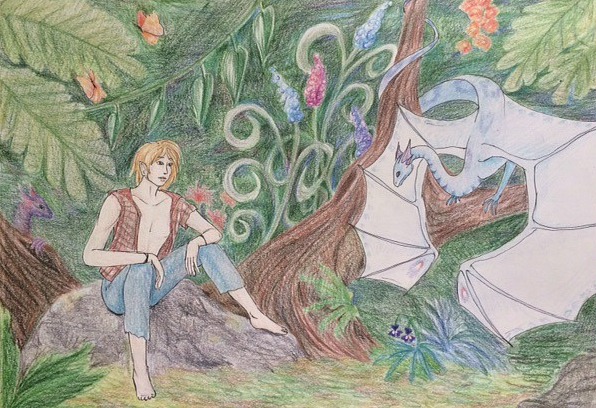
Gabe: Not Spanish or Latin (sorry, Mom). I’m creating my a language for world I made — check back in 5 years to see if I speak it yet.
Sketch from a World created by Gabe
If you made a New Year’s Resolution this year, are you still working towards it? If so, in what way?
Lee: Not a New Year’s Resolution but back in mid-February I made a commitment to get my children out into nature every day. We haven’t missed a day yet! Of course, not everyone goes every day. Getting 8 people around the dinner table at one time is hard enough, let alone out for an hour in the woods!
Gabe: I resolved to keep working on my 50,000 word NaNo novel. April is Camp NaNo, and I’m adding at least 30,000 words to scenes I skipped in November.
What is one way in which you live authentically?
Lee: My priorities are my own. Reading aloud to my children daily and only buying quality dark chocolate are high on my list. Dressing stylishly and dusting the house are very low.
Jean: I am developing a better understanding of the plants around me on a deeper level. Specifically, I’m focusing on their nutritional and medicinal value, and how valuing them can bring me into harmony.
What is one of your own ‘natural highs’?
Lee: Being near rushing water: from the babble of the creek running over the rocks, to the thunderous noise of the rapids on a big river — I love the sound.
Jean: Riding in the fields with Frank, my horse. Hiking in the woods with Nitro, my dog.
Gabe: Riding my bike downhill very fast. Hitting people with sticks — SCA heavy-combat style, of course.
What is your wish for the world and how do you work towards it?
Jean: Sharing the joy, learning, and wonder that come from being in nature. That passion was the basis for writing Hunting Red and why I’m the Land Stewardship Director at Indian Creek Nature Center.
Thanks for reading, and when we get those questions & nominations together, we’ll share!
This is a magical season in the forest, as the spring ephemerals are just beginning to bloom. When we think of forest, our minds immediately go to the trees. Right now, with the trees in various stages of budding out, there is not a leaf to be seen. But there is a whole rainbow of color to be found.
Cottonwood tree inflorescence, brought down in a windstorm (Red).OK, I haven’t seen any orange butterflies yet, but these fun chairs are sitting outside Indian Creek Nature Center’s Butterfly Hoop House, beckoning a visit. Or……set 1/2 an orange out on a tray feeder or deck railing to attract the Baltimore Oriole. This one, painted by artist Brenna O’Hara, is a permanent resident along ICNC’s woodland trail (Orange).
Lots of life is beginning to emerge from the ground. Wildflowers of Iowa Woodlands by Sylvan Runkel and Alvin Bull is a great resource to put in your backpack before setting out. If that’s too big, try the laminated Woodland in Your Pocket pamphlet. Finding flowers is fun: knowing what you’re looking at is thrilling.
Bloodroots are one of the first spring ephemerals to explode in the spring (Yellow).
Delicate, small forbs take advantage of all of that sunlight streaming through the bare branches to send up their own leaves, flower, and reproduce.
Wild Ginger is just beginning to peek out, with soft folded leaves (Green). Open your copy of Hunting Red to preview the ginger in bloom.A blue jay was here. As the feathers of most birds are protected, take pictures, not the feathers (Blue).
To help identify feathers you find, visit the U.S. Fish and Wildlife Service’s free online Feather Atlas.
These bluebell flowers have not fully opened, but show some of the great diversity of color within the species (Indigo).The petals of the wild violet are edible, and are a beautiful edition to any salad (Violet).
Spend Earth Day outside, exploring what is happening with the earth as spring surrounds us in a rainbow of color. What colors will you find?
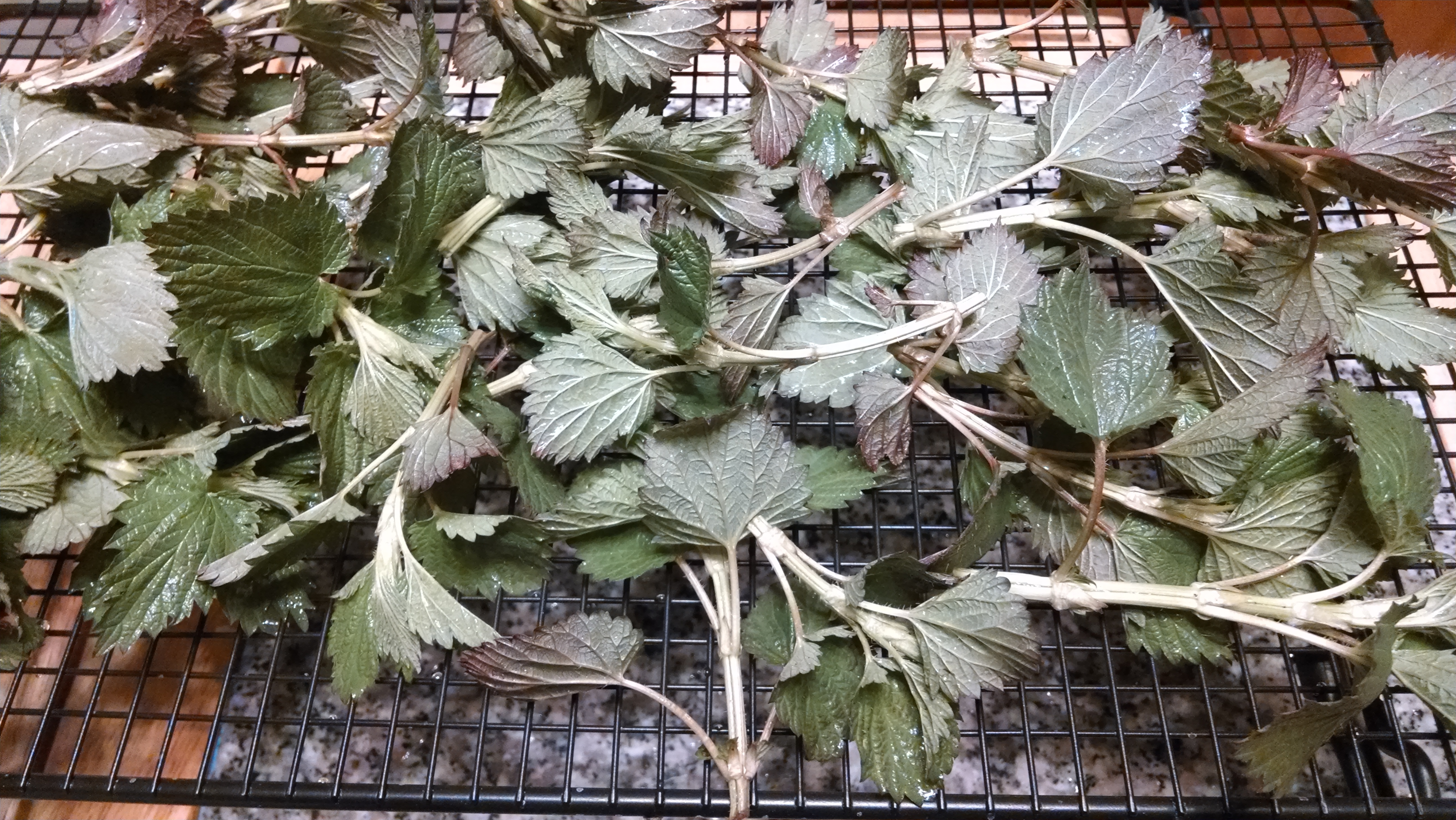
Pick nettles that are approximately 8″ tall, taking the top 6″.
By mid summer, moist woodlands are thick with stinging nettles. Long pants and long sleeve cotton t-shirts are a must, to keep waist-high plants from assaulting skin with trichomes. But right now, the stinging nettles are just beginning to emerge. Celebrate Earth Day by enjoying hunting for, gathering, and eating this delicious plant.
The leaves are tender and full of iron, vitamin A and vitamin C. The tiny hairs are just beginning to produce trichomes, so they aren’t nearly as painful if you break them off into your skin. Grasp the plant gently at the base and break the stem cleanly off. It won’t hurt the plant. If you can’t seem to get the knack of it without getting stung, wear a pair of gardening gloves or use a pair of clippers. As the nettles are a ubiquitous invader throughout the woods, stick a paper sack in your pocket to collect them in.
Once home, rinse them off and boil them for about five minutes. The boiling breaks down the toxins, making them safe to eat. Treat the leaves like spinach, adding a little bit of butter, salt, or lemon juice before serving.
Dry the rest. The trichomes also break down as the plant dries. Add a teaspoon of dried nettle leaf to the teapot whenever you make a cup of tea, to take advantage of the nutrients in the plant long after the plants leaves are large and tough, and the trichomes are vigorous about defending it.
This book is older than I am, but the information in it is still a great foundation for foraging for food in nature.
As the maple syruping season winds down, Indian Creek Nature Center is sharing the first harvest of the year with the community this weekend. The daytime temperatures have been unseasonably warm, in the 60’s and 70’s, and the night time temperatures have also been unseasonably warm, in the high 30’s and mid 40’s. Without the nights getting below freezing, the trees have produced a modest 280 gallons of sap-only enough to make about 6 gallons of syrup.
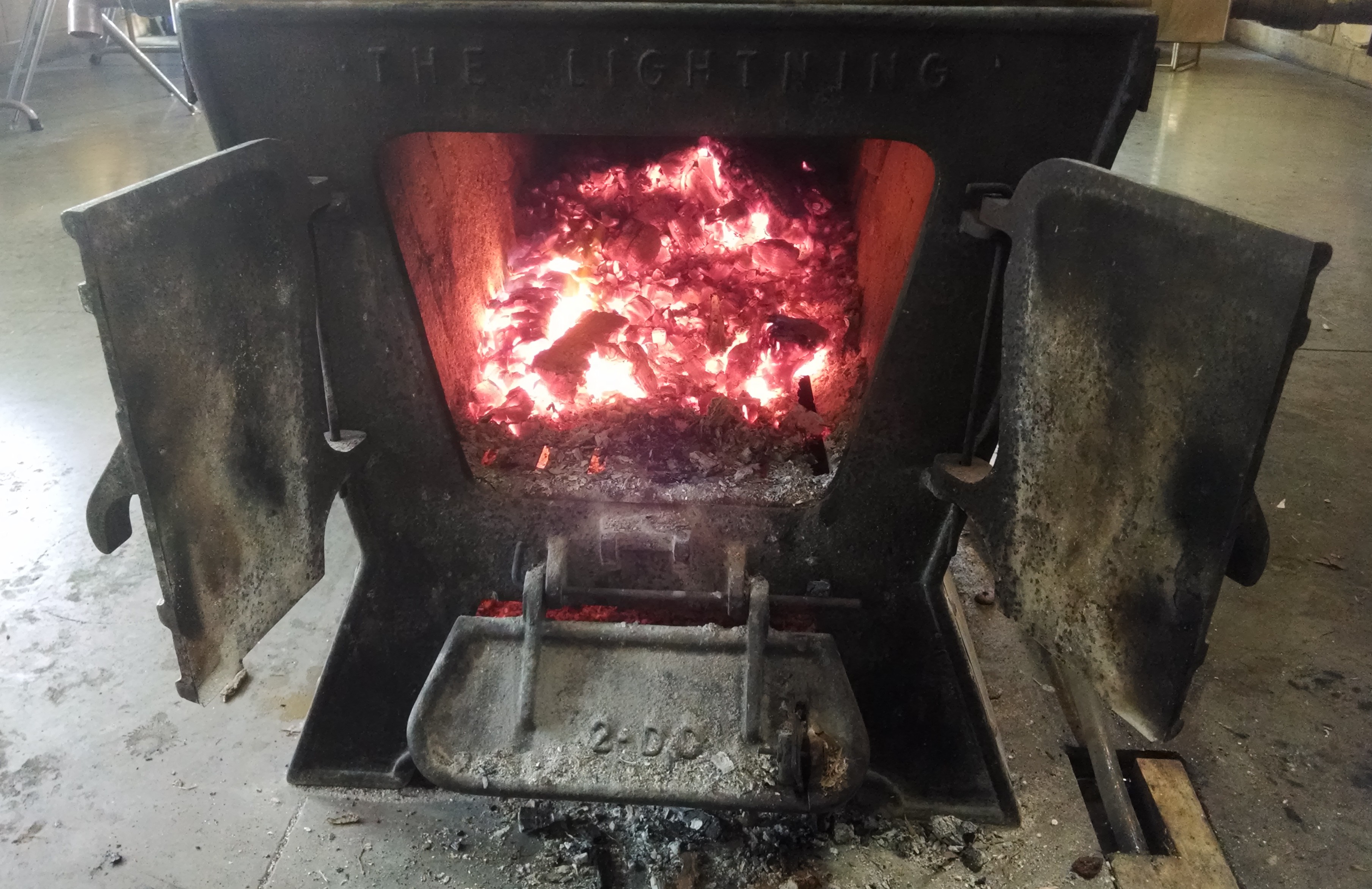
Maple syrup boils at 219 degrees, or 7 degrees above the boiling temperature of water. Wood, sustainably harvested at the Nature Center during restoration projects, provides the fuel for boiling.
If you only have one or two trees to tap or lack a good thermometer, consider drinking the sap or using it to make soups and stews. It has great flavor and is rich in minerals.
While the temperatures will likely get cold again, the silver maple trees are already budding out, signaling that the sugars (=good syrup) are changing to starches (=bad syrup). Many of the trees have simply stopped producing sap altogether.
Another sign that the seasons are shifting:
Mallard ducks are beginning to pair up.
The syruping is ending, but the next wild edible to emerge-stinging nettle-is just beginning to poke through the softening ground.
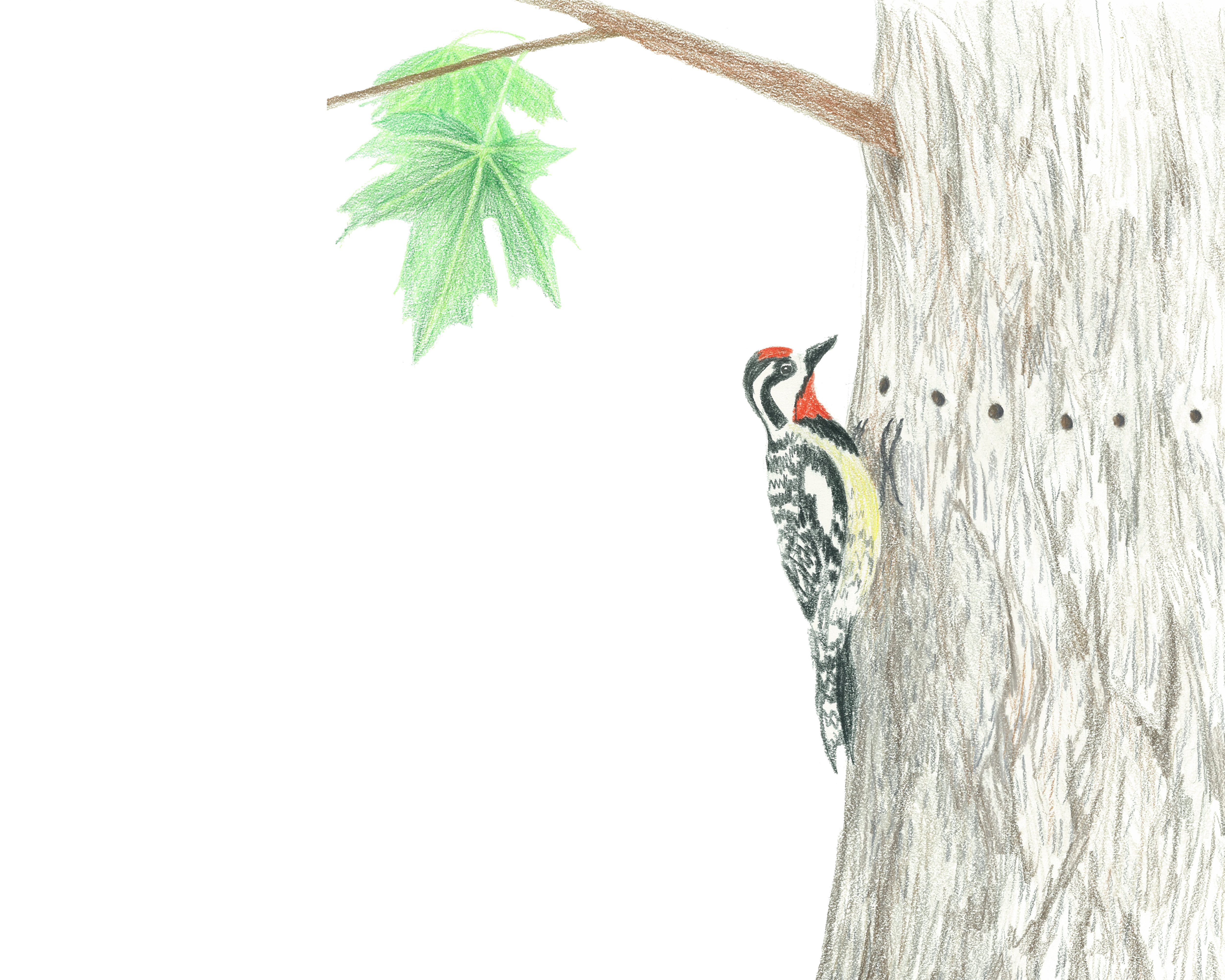
As spring progresses, keep an eye on the maples. Their flowers in March attract bees, and their sap attracts other things all year long.
Yellow bellied sapsucker by Gabrielle Anderson from Hunting Red.
This page contain affiliate links which help support the site. Click here for more information.
In this, the International Year of Soil, I hereby propose a Clean Soil Act for 2015! Healthy soil, a finite resource, is the lifeblood of healthy food. For fun soil activities, visit here.
by guest Scott Koepke, New Pi Soilmates Organic Garden Educator.
Current law allows us to apply certain classifications of chemicals to soil that microscopes indicate can greatly diminish biological life. Them’s fightin’ words in the Corn Belt. In my outreach, however, I have found that there are ways to find—excuse the pun—common ground with both conventional and organic farmers on this vital issue. We are building bridges on themes of biodiversity and cost savings. Let’s look at some of the science:
Exhibit A: Organically-farmed soil is biologically robust, teeming with microbial diversity that, as it consumes and decomposes organic matter in what is called the “poop loop,” produces chemically-available nutrients for root systems to absorb. Regenerative—not extractive—practices that build organic matter, like composting and cover cropping, are nature’s free gifts of fertilizer. They also create soil structure that retains hydration more effectively during drought conditions. Organic methods grow nutrients.
Exhibit B: Soil samples from fields that have been conventionally monocropped with corn and soy rotations, and sprayed annually with synthetic fertilizers, herbicides, and pesticides, often test to be biologically sterile. The soil itself is less friable and hard-packed. Elevated levels of nitrates, phosphorous, neonicotinoids, atrazine, glyphosates, anhydrous ammonia, chlorides, and heavy metals (to name a few) also leach into municipal water sources.
This is a debate that threatens certain corporate interests and can often boil down to an impasse about “safe rates of application.” How much glyphosate can I apply and not have it be destructive?
I would suggest that conventional agriculture isn’t going away anytime soon, and that we all need to, at the very least, consider the ever-changing science that provides ample evidence of pollutive thresholds, for which models like the Clean Air and Clean Water Acts mandate regulations. There comes a time when enough is a enough. I’m encouraged that, to their credit, farmers of all persuasions are increasingly acknowledging the need for safer alternatives. As my dear Grandma Helen used to remind me, “Scotty, just because it’s legal, doesn’t make it right.”
March is a wonderful time to take a bird walk — the weather is warming, but the leaves are not hiding the birds yet. And the birds are so active! Today we saw a wren and a nuthatch, plus numerous cardinals, juncos, crows, and robins.
I created a free printable coloring page with the nine birds found inHunting Red*. I am working on creating a set of worksheets featuring each of the birds individually as well. While the birds are shown smaller than life-size on this coloring page, they are sized relative to each other.
Enjoy a bird walk this month, and then enjoy coloring these nine birds, while you sip hot chocolate or cool lemonade, depending on how warm the weather is!
Want to be updated when the printable pages are available and when new posts are added here at Pocket Mouse Publishing? Just click the follow button in the upper right!
*This page contains affiliate links which help support the site, click here & scroll to the bottom of the page for full disclosure.
The eleven inches of fresh falling snow transformed Bena Brook, creating a magical, monochromatic wonderland
From the exquisite sunlight filtering through the canopy
To the delicately wrought arched lairs formed by trees bending under the weight of the snow
I had thought that my snowshoes would be the only red to be seen (snowshoeing is a great way to stay warm in the winter), but five red-headed woodpeckers came crashing through the woods in a very vocal territorial dispute
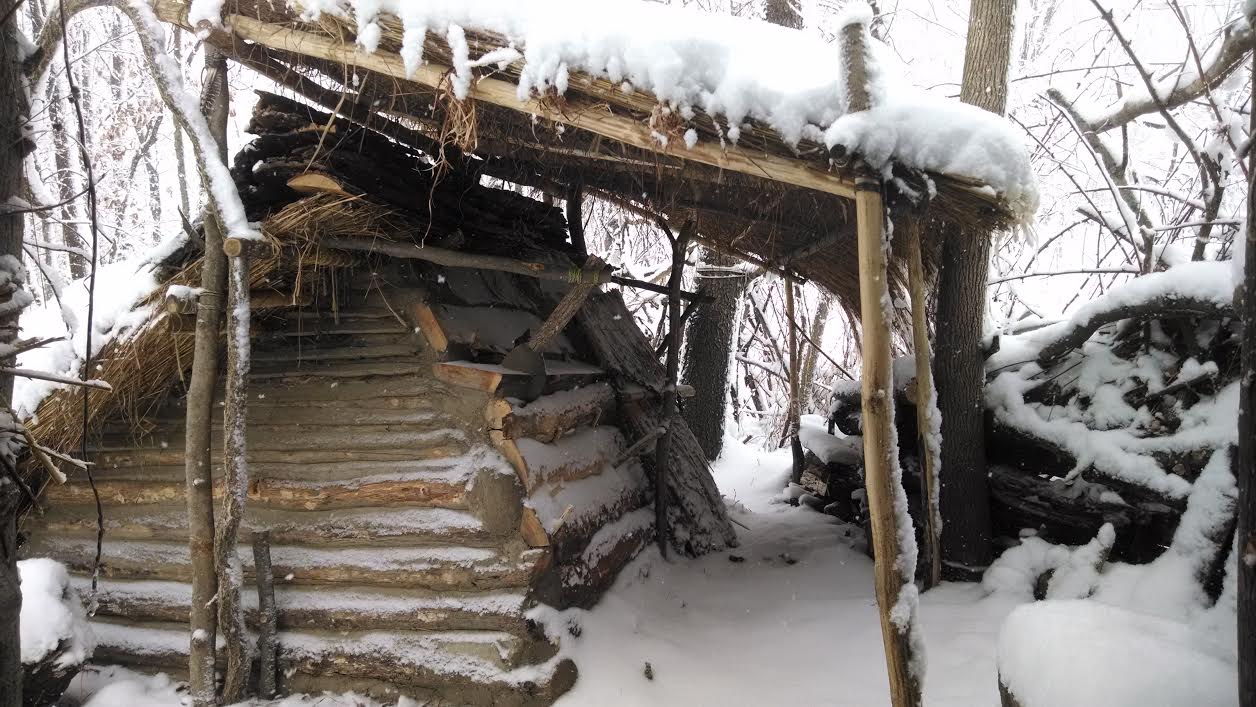
Both Two Point Dugout Lodge and the Leaf Tipi remained snug, providing dry cozy places to rest out of the wind and drink tea.












 Pocket Mouse Publishing