As the maple syruping season winds down, Indian Creek Nature Center is sharing the first harvest of the year with the community this weekend. The daytime temperatures have been unseasonably warm, in the 60’s and 70’s, and the night time temperatures have also been unseasonably warm, in the high 30’s and mid 40’s. Without the nights getting below freezing, the trees have produced a modest 280 gallons of sap-only enough to make about 6 gallons of syrup.
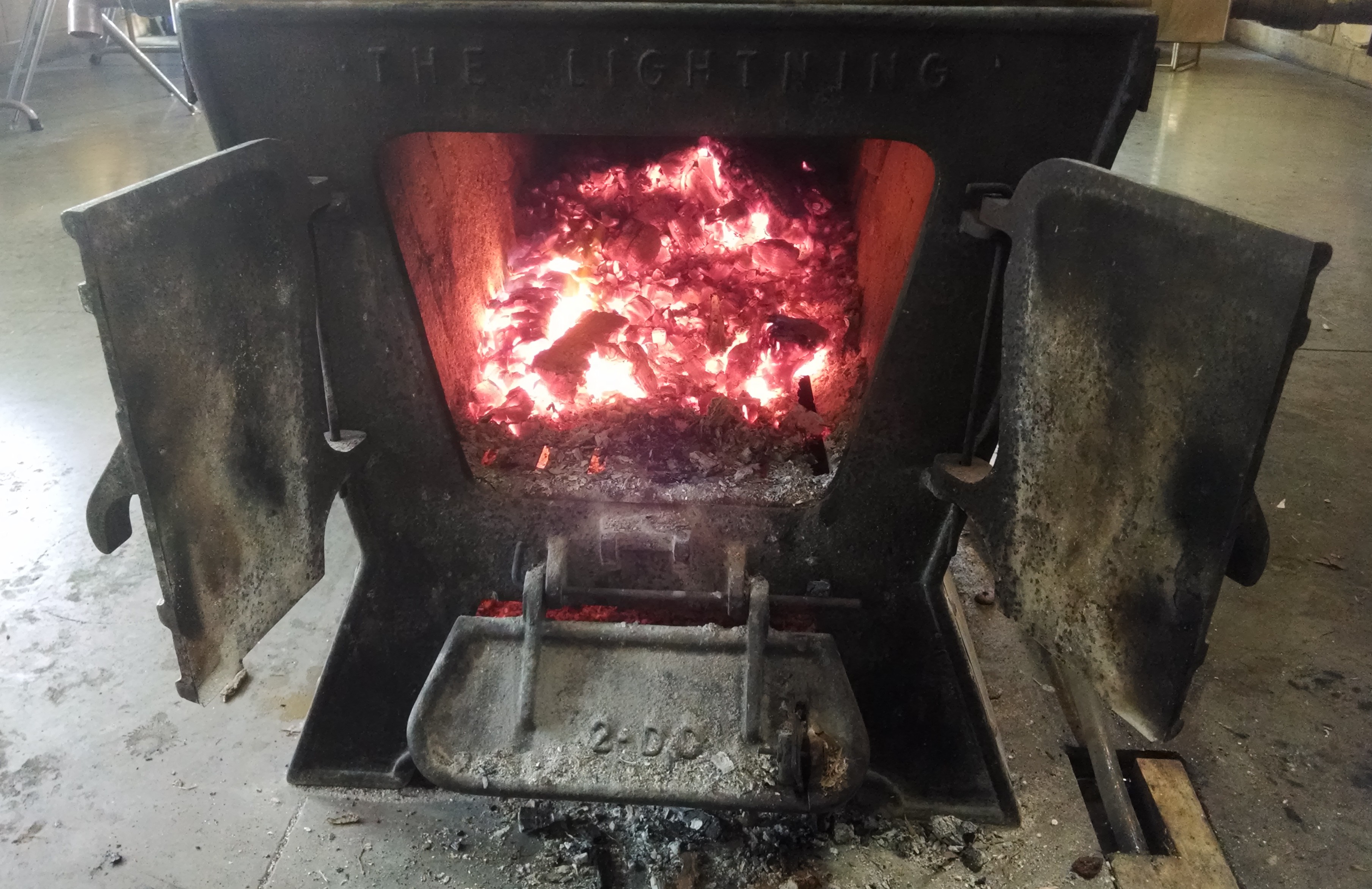
Maple syrup boils at 219 degrees, or 7 degrees above the boiling temperature of water. Wood, sustainably harvested at the Nature Center during restoration projects, provides the fuel for boiling.
If you only have one or two trees to tap or lack a good thermometer, consider drinking the sap or using it to make soups and stews. It has great flavor and is rich in minerals.
While the temperatures will likely get cold again, the silver maple trees are already budding out, signaling that the sugars (=good syrup) are changing to starches (=bad syrup). Many of the trees have simply stopped producing sap altogether.
Another sign that the seasons are shifting:
Mallard ducks are beginning to pair up.
The syruping is ending, but the next wild edible to emerge-stinging nettle-is just beginning to poke through the softening ground.
As spring progresses, keep an eye on the maples. Their flowers in March attract bees, and their sap attracts other things all year long.
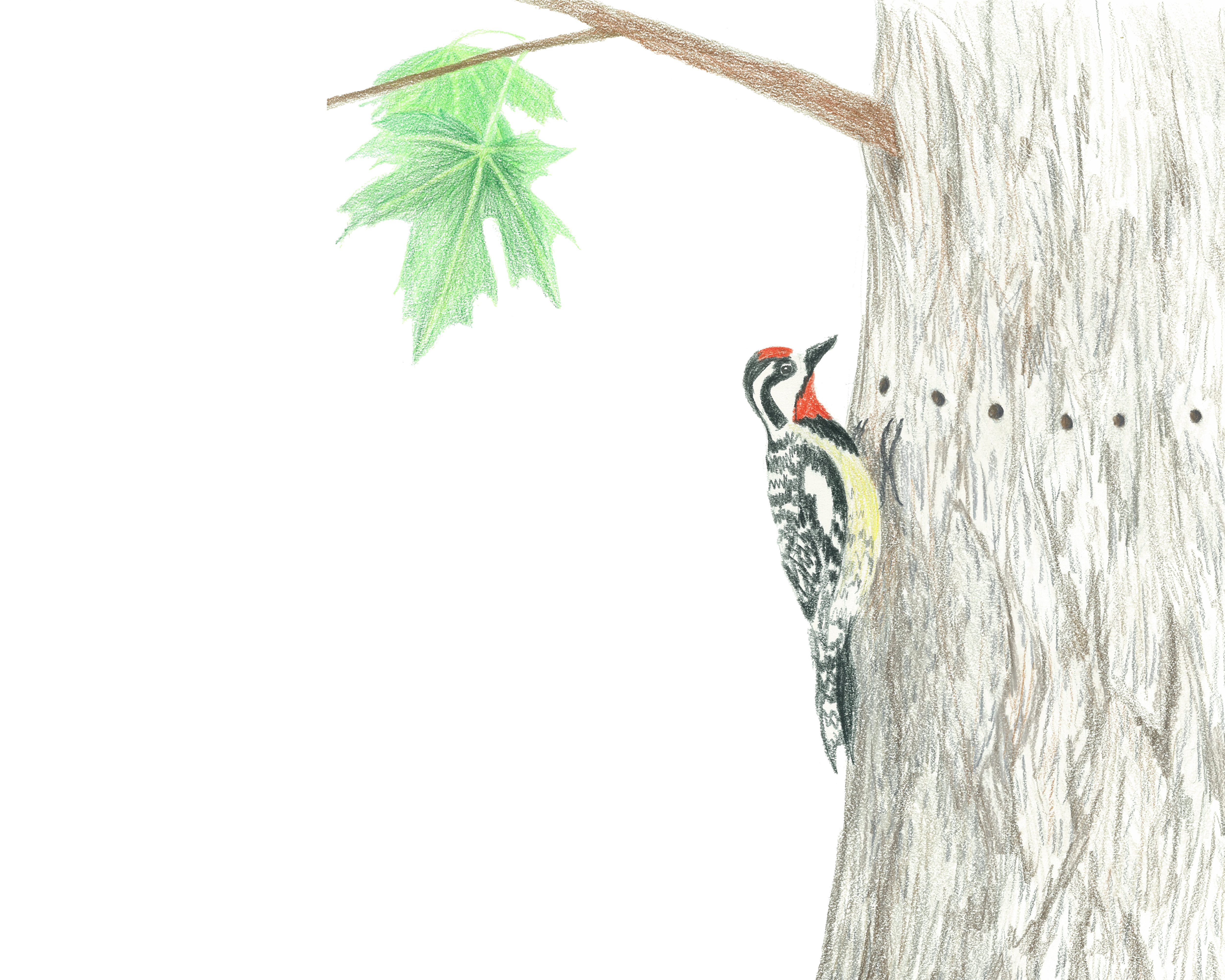
Yellow bellied sapsucker by Gabrielle Anderson from Hunting Red.
This page contain affiliate links which help support the site. Click here for more information.
In this, the International Year of Soil, I hereby propose a Clean Soil Act for 2015! Healthy soil, a finite resource, is the lifeblood of healthy food. For fun soil activities, visit here.
by guest Scott Koepke, New Pi Soilmates Organic Garden Educator.
Current law allows us to apply certain classifications of chemicals to soil that microscopes indicate can greatly diminish biological life. Them’s fightin’ words in the Corn Belt. In my outreach, however, I have found that there are ways to find—excuse the pun—common ground with both conventional and organic farmers on this vital issue. We are building bridges on themes of biodiversity and cost savings. Let’s look at some of the science:
Exhibit A: Organically-farmed soil is biologically robust, teeming with microbial diversity that, as it consumes and decomposes organic matter in what is called the “poop loop,” produces chemically-available nutrients for root systems to absorb. Regenerative—not extractive—practices that build organic matter, like composting and cover cropping, are nature’s free gifts of fertilizer. They also create soil structure that retains hydration more effectively during drought conditions. Organic methods grow nutrients.
Exhibit B: Soil samples from fields that have been conventionally monocropped with corn and soy rotations, and sprayed annually with synthetic fertilizers, herbicides, and pesticides, often test to be biologically sterile. The soil itself is less friable and hard-packed. Elevated levels of nitrates, phosphorous, neonicotinoids, atrazine, glyphosates, anhydrous ammonia, chlorides, and heavy metals (to name a few) also leach into municipal water sources.
This is a debate that threatens certain corporate interests and can often boil down to an impasse about “safe rates of application.” How much glyphosate can I apply and not have it be destructive?
I would suggest that conventional agriculture isn’t going away anytime soon, and that we all need to, at the very least, consider the ever-changing science that provides ample evidence of pollutive thresholds, for which models like the Clean Air and Clean Water Acts mandate regulations. There comes a time when enough is a enough. I’m encouraged that, to their credit, farmers of all persuasions are increasingly acknowledging the need for safer alternatives. As my dear Grandma Helen used to remind me, “Scotty, just because it’s legal, doesn’t make it right.”
Being organic should be fun as well as tasty. Today, in celebration of National Pi Day, we are making a lemon pie. You will need a glass of water and:
Preheat the oven to 350 degrees Fahrenheit. Zest the lemon skins, slice the lemons in half, and squeeze out ½ cup of juice.
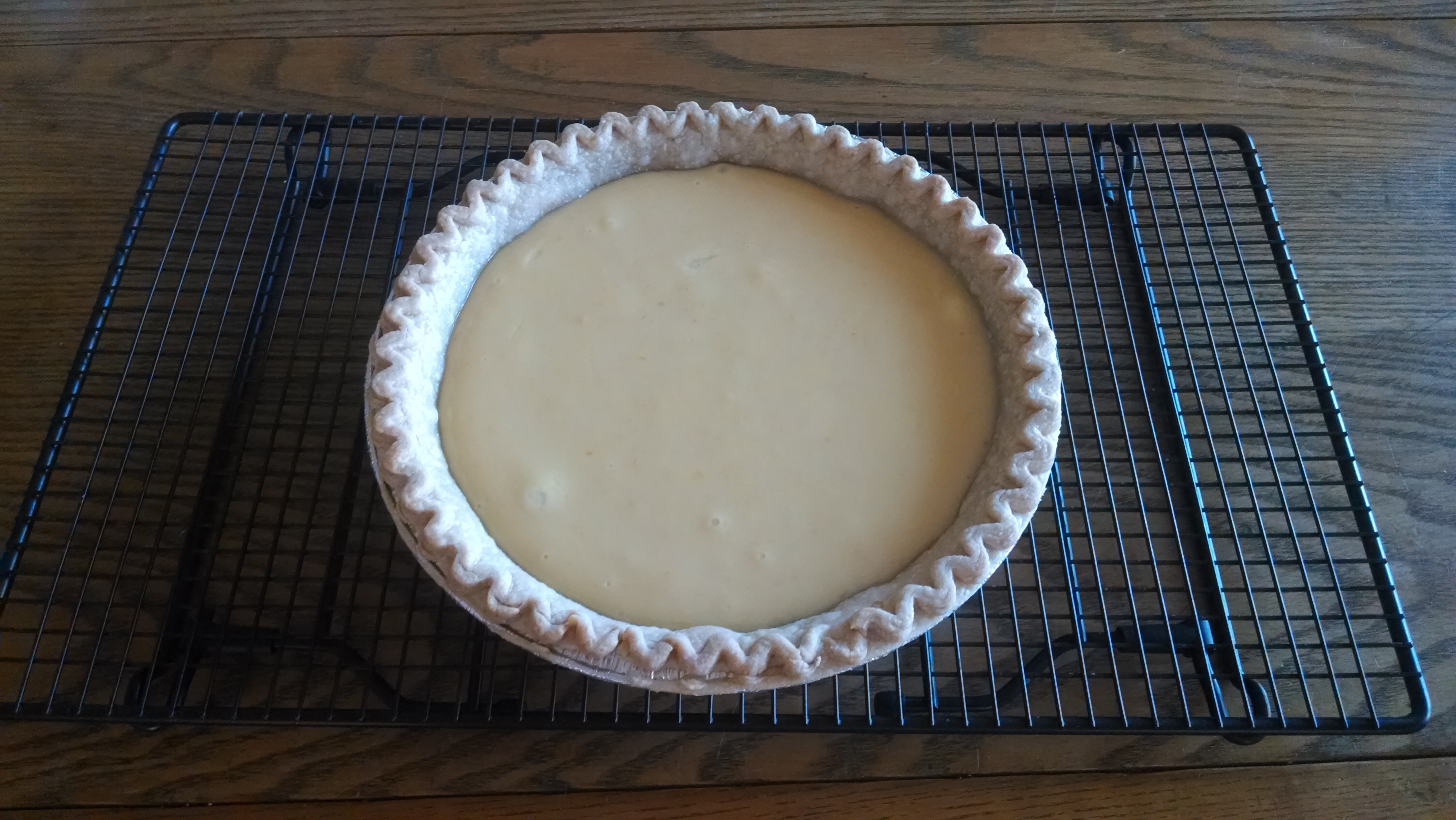
Separate the egg yolks from the whites. Stir the yolks together with the sweetened condensed milk, the lemon zest and the lemon juice. Pour the mixture into pie crust and bake for 17 minutes. Put the lemon rinds in the glass of water and drink it while the pie is baking.
Lemons are full of nutrients and vitamins. Pi is the circumference of a circle divided by its diameter. It never changes, and it is irrational. 3.1415 is just the beginning. Wait until the pie is cool before you use it for math! But you can eat it while it is still warm. It goes well with whipped cream.
A great way to be in nature this time of year is maple syruping.
Annie taps a silver maple tree. Silver maples usually grow along creeks and river bottoms.
When winter is still firmly entrenched but the change in the birdsong indicates spring must be playing hide and seek just under the snow, we take our power drills, our 7/16″ drillbits, our sapsacks and spiles, and head into the sugarbush.
All maples have branches that come out directly opposite each other, in pairs. Look for young twigs to see the branching pattern, as older branches may be broken.
All maple trees, including the sugar maple and the box elder, have opposite branches. Its one good indicator that the tree is a maple tree–the only other large tree in this area that has opposite branches is the ash tree.
Jeff hammers in the spile, which spills the sap out of the tree, and hangs the bag to collect the sap.
If you don’t have a maple tree, plant one! Maples grow quickly, which will allow you–or someone who comes after you–to enjoy harvesting the sap, boiling it into syrup, and living directly off the land.
Hole tapped by a pileated woodpecker, hunting for insects. Unless a dead tree is threatening a path or building, they create rich habitat if left standing.
Being in the Sugarbush is a great way to see who else is spending time in the woods and what they are eating. As soon as it warms up a bit and the sap starts running, we’ll be back every warm day over the next five weeks to gather it. The repeated trips to the forest over the next five weeks will give us opportunities to explore the gradual shift into spring, as well as collect gallons of sweet sap. Visit www.indiancreeknaturecenter.org to learn more about syruping.
Pileated woodpecker by Gabrielle Anderson, from Hunting Red.
Being organic isn’t primarily about doing what’s right for the environment, although it has a lot of environmental benefits.
It’s not about eating food that tastes better, because there’s no evidence to support that it universally does.
It’s not about eating food that’s more nutritious, because you can find everything from organic peanut butter cups (which are delicious) to organic soda pop.
Being organic is first and foremost a personal decision, about limiting the amount of chemicals you put in your body. What makes your yoga mat springy—Azodicarbonamide—is the same stuff that makes your conventional bread springy. Ponder that while we gear up for the second J4 24 hour organic challenge. The four of us who attempted the first one failed. Read more about that here.
All you have to do to play is commit to eating only organic food for 24 hours. It is so, so simple. But those nonorganic items are insidious, and doing the challenge together gives us a forum for learning and sharing. Try it by joining us on Thursday, February 19.
Jeff’s tip: keep it simple and extra healthy. Drink water and fast for the 24 hours.
Jerry’s tip: To avoid sticker shock, start “replacing” staples with organic items. In Cedar Rapids, organic avocados sell for $1.25 at the New Pioneer Food Coop. Hy-Vee sells their freshly made, organic bread at buy 1 get one free starting at 6pm, bringing the price down to $3 a loaf.
Jan’s tip: Make sure you have organic coffee. It’s easier to make it through the 24 hours if you don’t have to change your routine, and easier to do everything when you’re not in caffeine withdrawal.
The eleven inches of fresh falling snow transformed Bena Brook, creating a magical, monochromatic wonderland
From the exquisite sunlight filtering through the canopy
To the delicately wrought arched lairs formed by trees bending under the weight of the snow
I had thought that my snowshoes would be the only red to be seen (snowshoeing is a great way to stay warm in the winter), but five red-headed woodpeckers came crashing through the woods in a very vocal territorial dispute
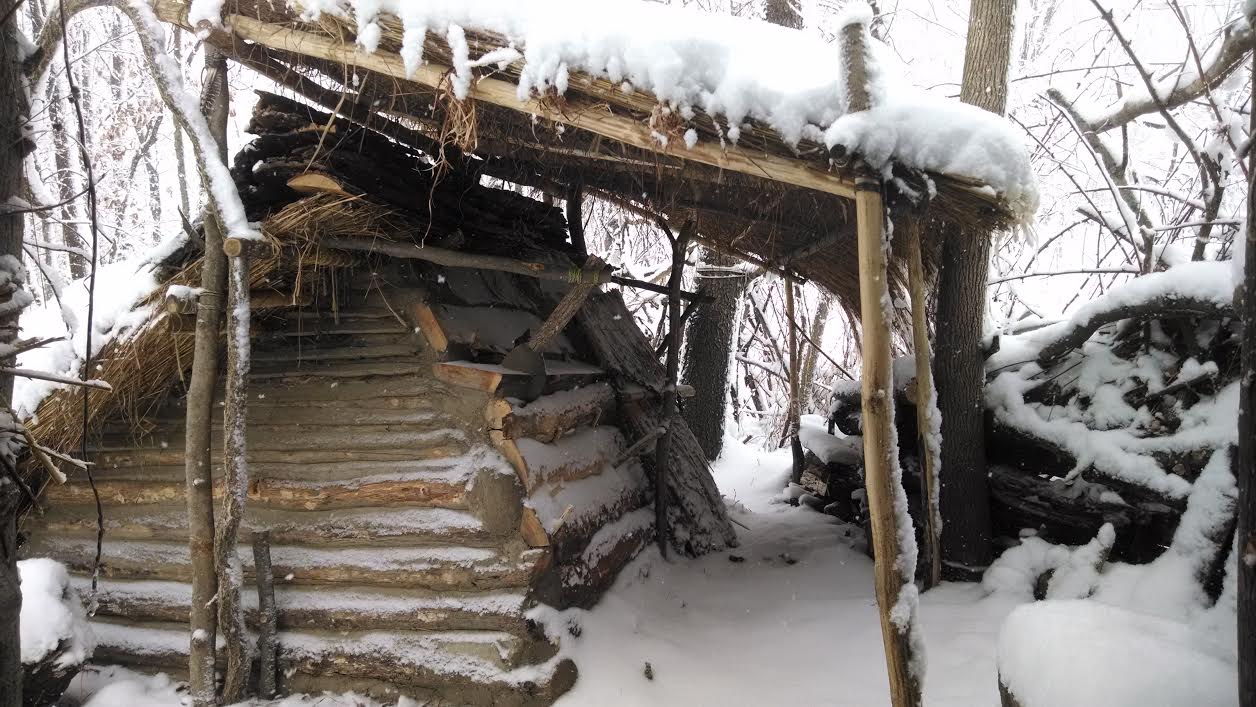
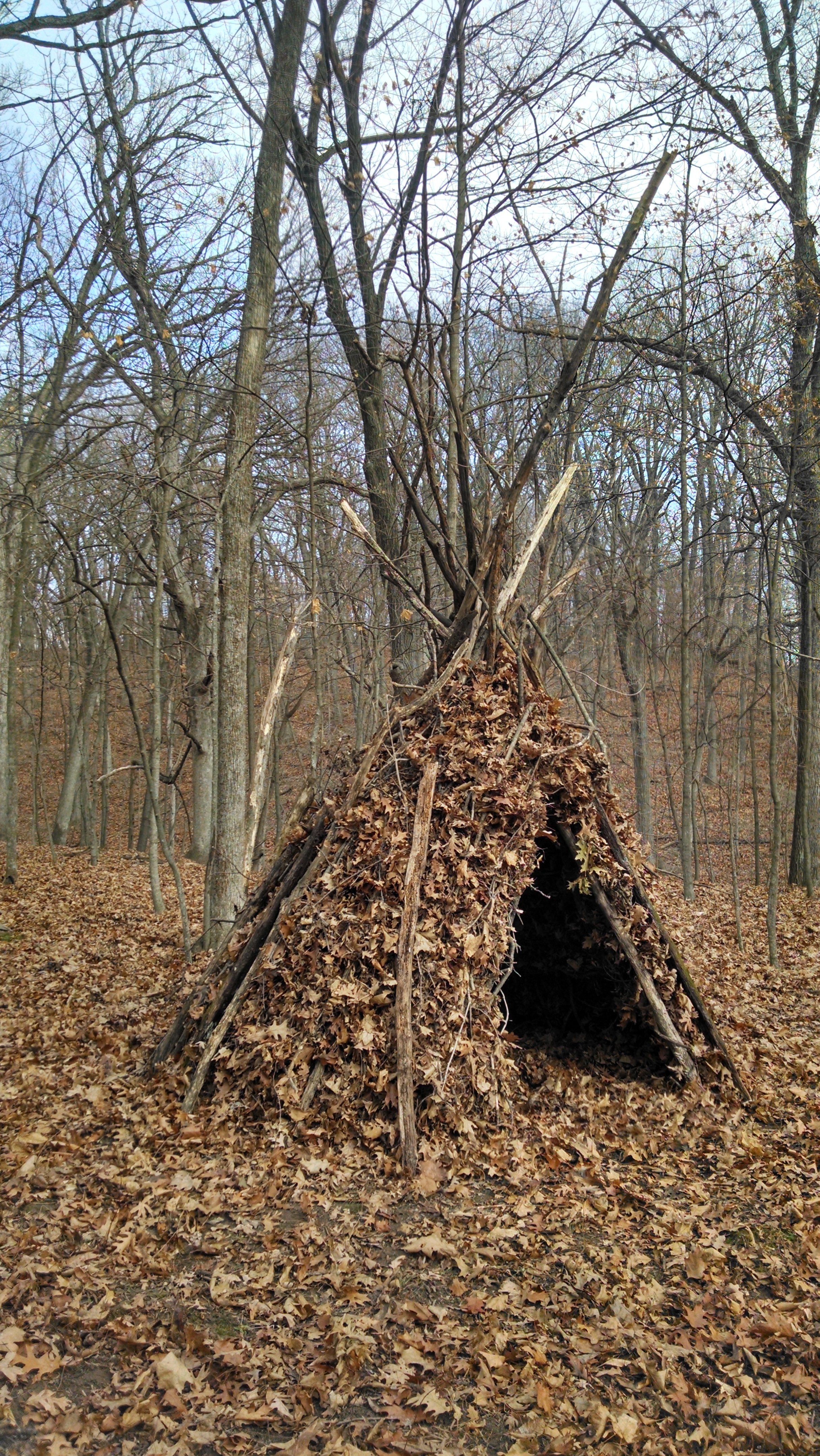
Both Two Point Dugout Lodge and the Leaf Tipi remained snug, providing dry cozy places to rest out of the wind and drink tea.
J4 issued a 24 hour eat organic only challenge, and this is what we learned:
Most of us have some organic things in our kitchens, but not enough to make complete or typical meals.
Our drink rituals-be it coffee, tea, or soda-can be our biggest downfall.
A trip to the local grocery store to fill out the planned meals in organic fashion resulted in sticker shock and non-availability.
From Jan:
The challenge was on – I had to eat only organic foods for the next 24 hours. Piece of cake! Well, maybe not cake but I was already mentally taking an inventory of my cupboards. Whole grains, beans, fresh fruit and veggies, granola – healthy food, right? Upon opening the cupboard doors I realized the quinoa was non-GMO, gluten-free, 100% whole grain but not organic. The whole grain kaniwa “superfood” touted the same labels but not organic. Neither was the heart-healthy whole grain pasta, or the natural granola. Okay, on the beans that I soak and simmer before eating. No luck. I was going to have to work harder at this. Yes! Finally, an organic banana was lurking on top of the microwave. Breakfast was in the bag but I’d better get ready for caffeine withdrawal because the coffee did not qualify. Nor did the tea. So on to lunch … a large container of organic spring greens would make a lovely salad and after rummaging through my freezer I found some dehydrated cherry tomatoes from last summer’s garden. Score! Dinner was looking a bit dismal. The yummy pumpkin soup I’d made from a volunteer pumpkin in my garden was disqualified by the chicken broth base that certainly was not organic. A frozen package of squash emerged from the depths of the freezer. Yes, this was a gift from a friend who belonged to an organic CSA last fall. Things were looking up. Then I remembered the venison steak my brother-in-law gave me. Hmmmm – local but I wonder what was on that corn that deer raided from the farm fields. It will have to do. I know this deer only ate grass! Now there are some black raspberries from the wild and the jar of dried mushrooms from last fall’s walk in the woods. Whew! I will survive but I think there is a trip to a different store in my future and I am starting to plan my 2015 garden!
Tip of the Challenge: Choose wisely where you shop.
Join the Iowa Valley Food Coop to get good prices on local, organically-raised meats. Shopping on-line at the co-op saves time hunting at the grocery store. http://www.iowavalleyfoodcoop.com
Fill in the gaps at New Pioneer Food Coop. Almost everything is organic and prices are close to the typical prices of non-organic items at conventional stores. As it is a further drive for all of us, a bit of planning is essential. www.newpi.coop
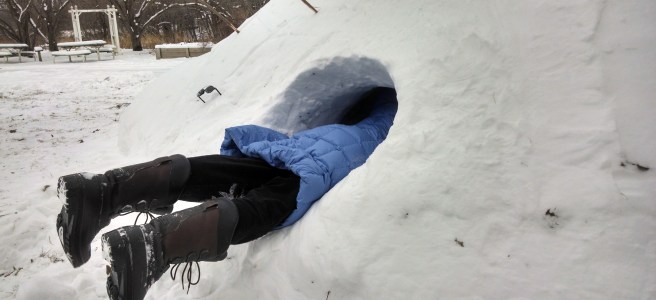
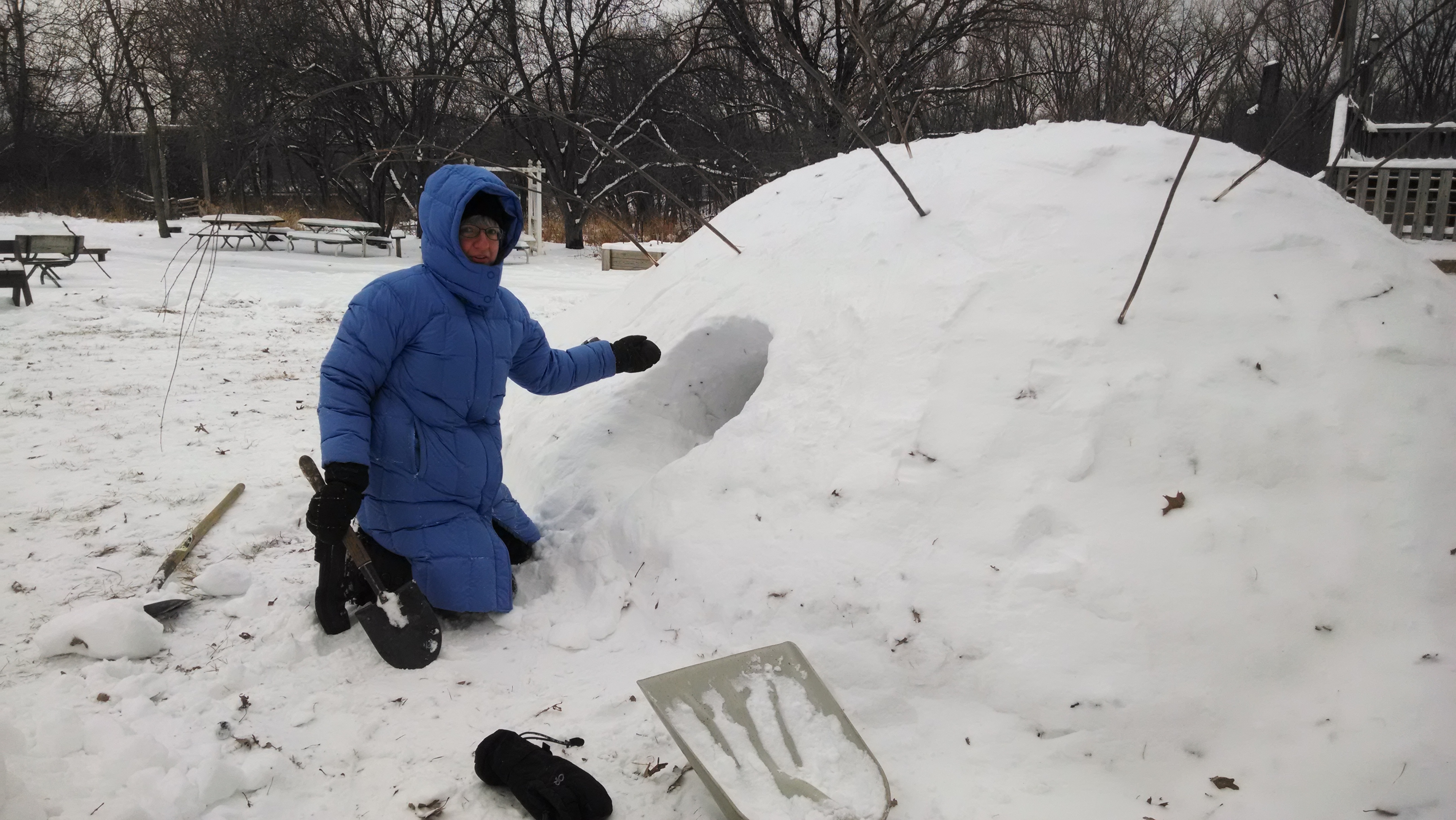
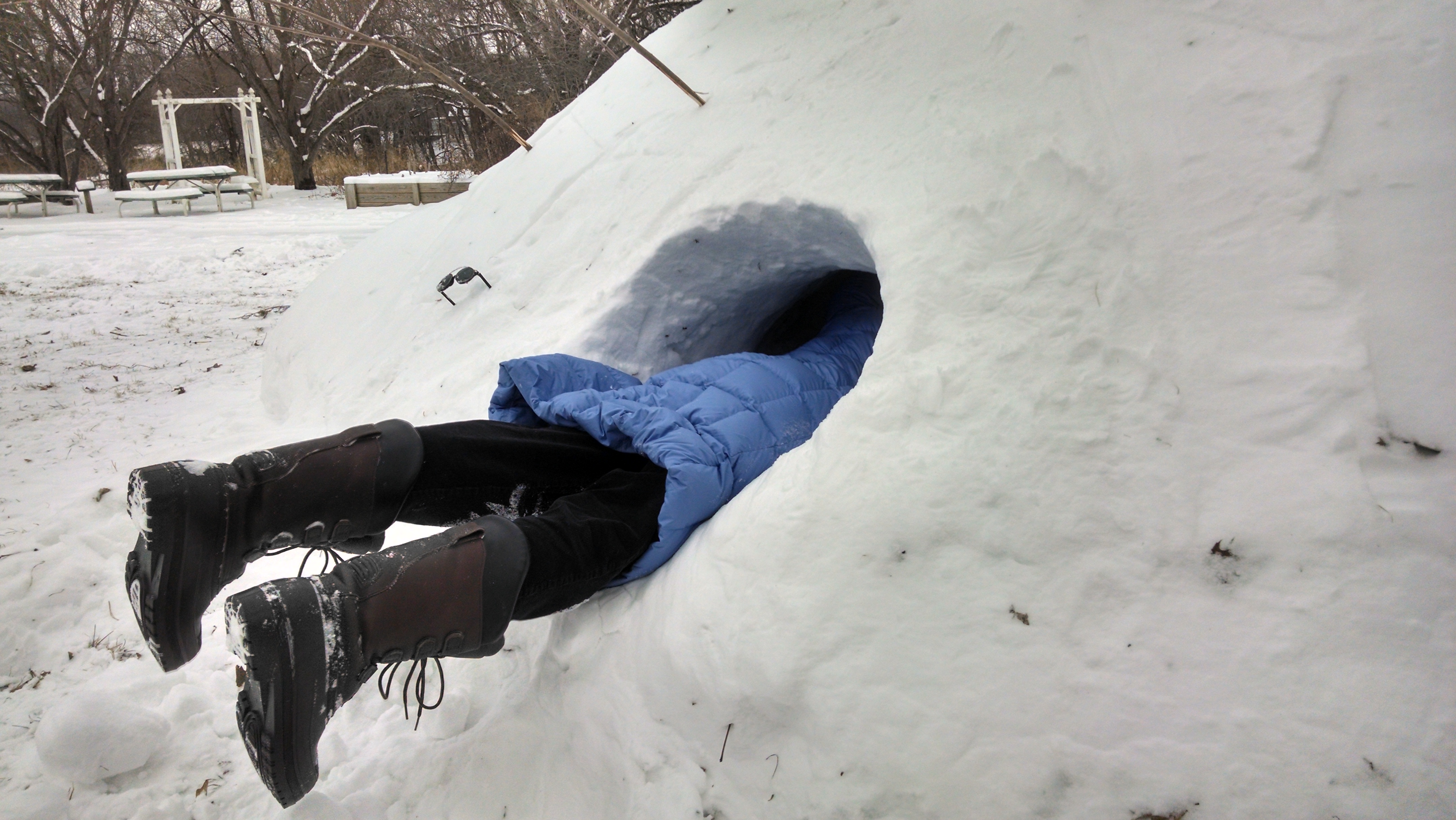
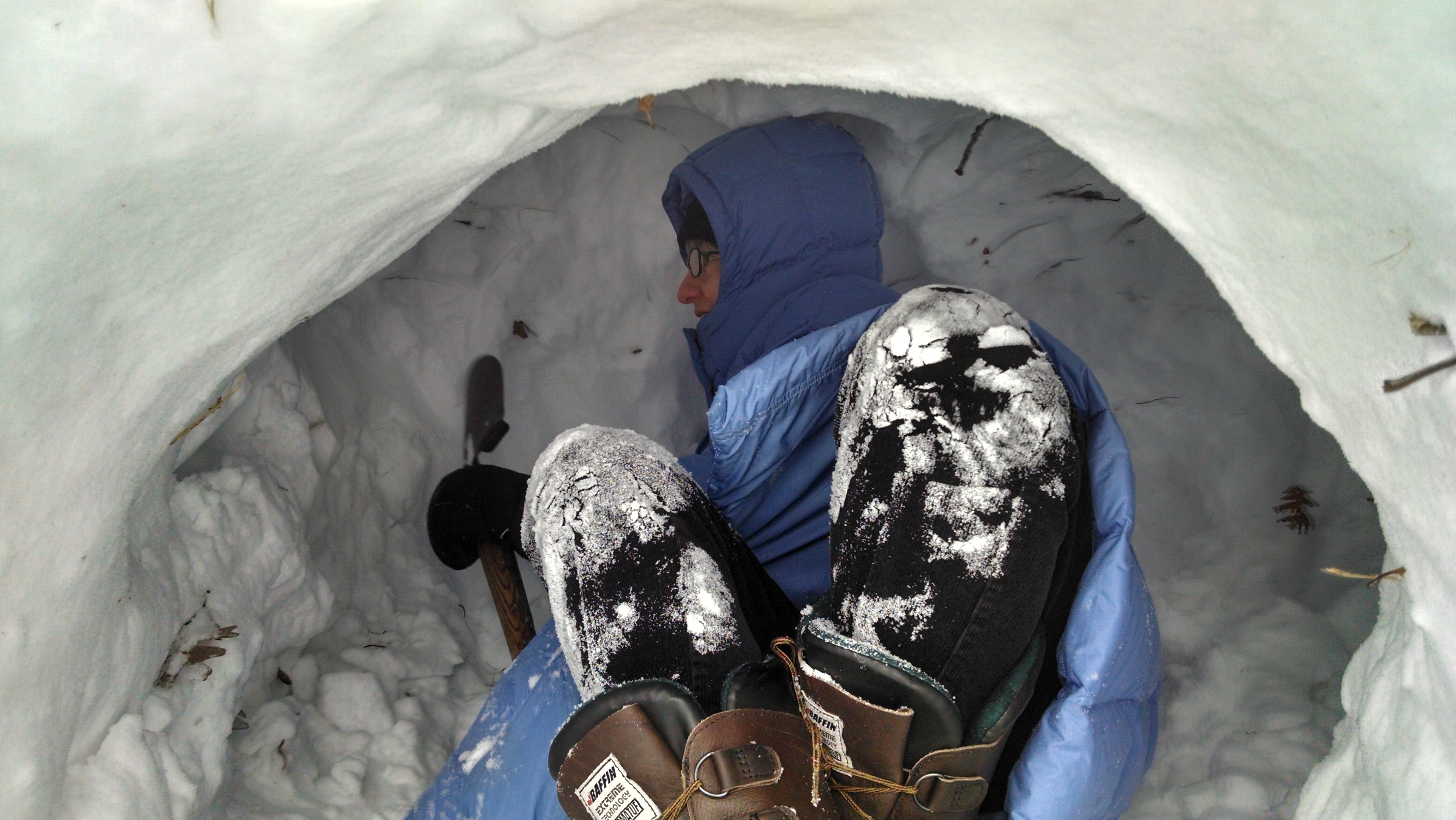
A fun way to stay warm in the winter is to build small, all-natural structures that block the wind. That way, whenever you’re out hiking and exploring, you have a cozy den as a destination to snug up inside. This quinzee is easy to find if you’re at the Indian Creek Nature Center. The leaf tipi is also at the Nature Center-you’ll just have to go on a longer adventure to discover it.
Leaf tipiThe quinzee mound is made in the shape of a turtle, and the doorway is carved outNancy goes insideAnd digs out a bit more space for us, so a few people can gather in the turtle
Dig down to the frost line, so everything doesn’t shift in the winter. Enlist friends to help with the digging.
Snuffies helps digNanotig helps dig
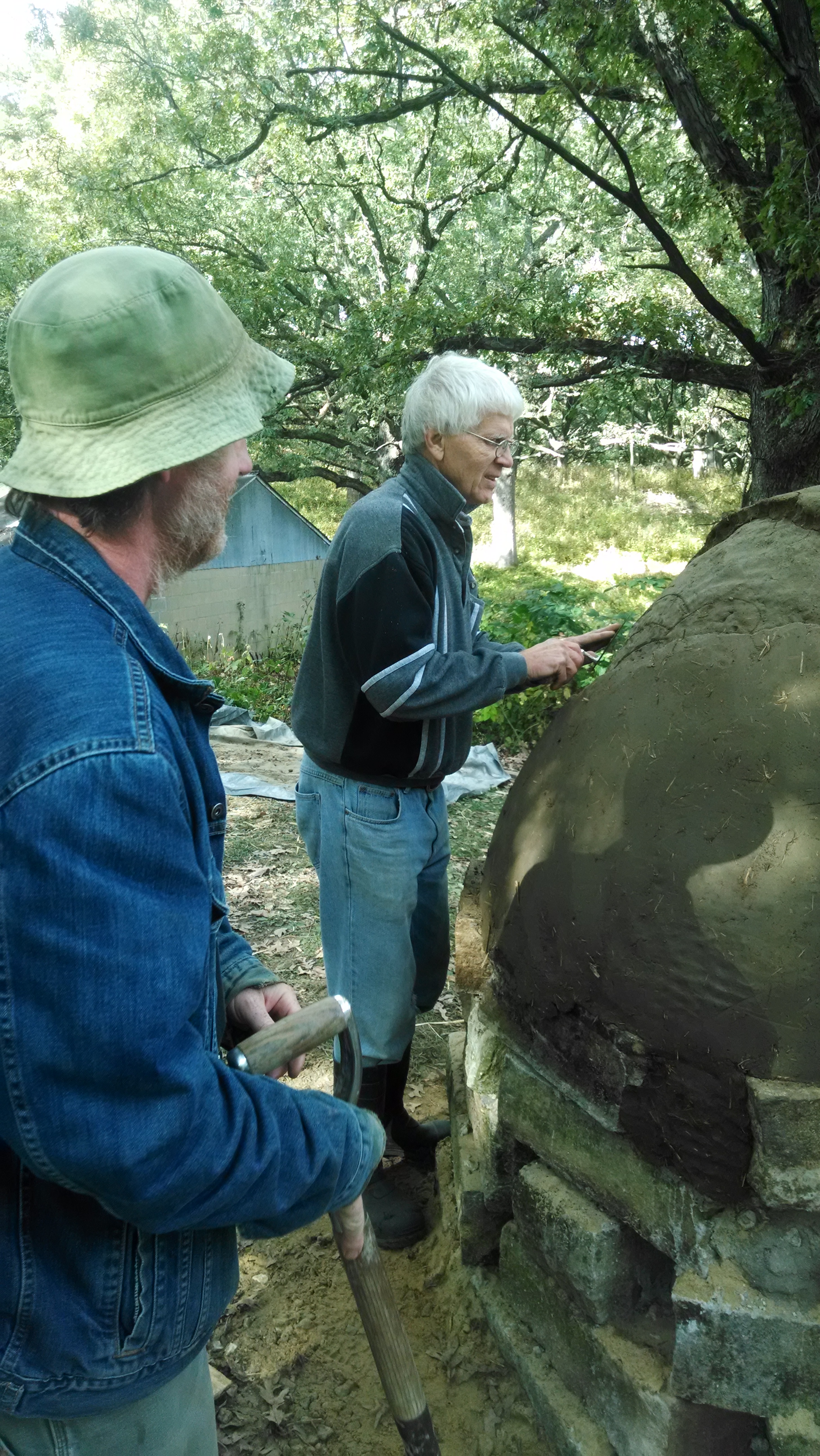
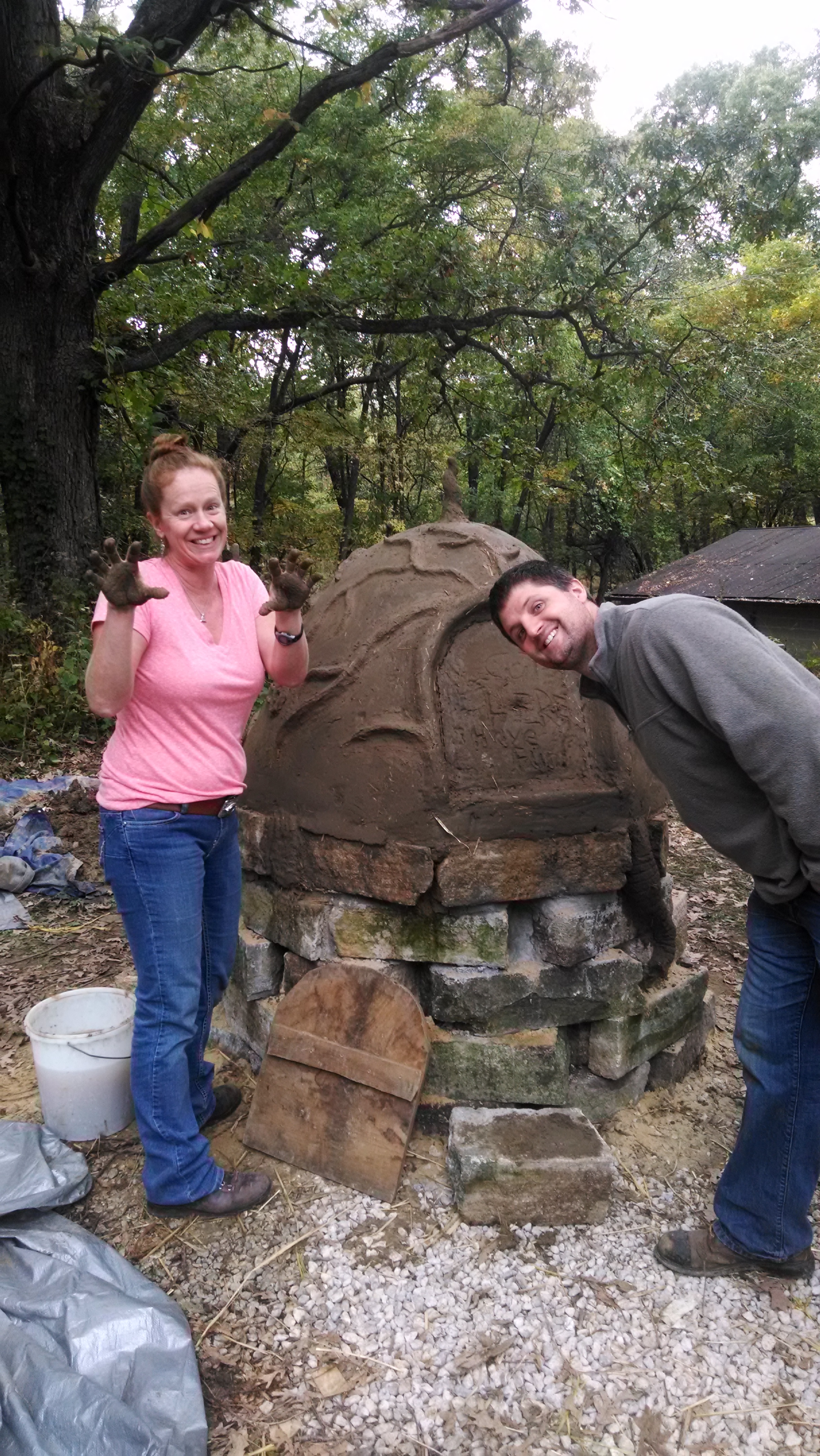
Build a foundation, then level up the fire bricksJoe doing the mud stomp, a mixture of clay and sand to form cobThe first layer of cob, applied over a dome of sand.Take a break from stomping mud to appreciate the beautiful autumnAndrea, doing the mud stomp with straw, clay and sand to form the second thermal layer of cob.Mick and Jerry, applying the second layer of cob.Maria and Chauncey at the end of forming the oven.After things have had a few days to dry, we cut out the doorway.Elaine is digging out the sand form.A complete cob oven.Behind the wooden door.The first pizza party coincided with the first snowfall of winter.
Forest on the Fringe author Bill Haywood has been working in Indian Creek Nature Center’s woodlands recently.
In some areas, there are massive elms still standing and butternut trees still producing nuts-everything you could possibly want in a healthy Iowa woodland. But in other areas, invasive black locust and mulberry dominate the landscape. Bringing those sections back to health would involve massive ecosystem destruction, followed by expensive reconstruction. Bill has a better way. Through the woods, he has been dropping small, 3”-9” diameter trees.
This allows the mature-canopy trees, regardless of species, to continue stabilizing the existing ecology. Young desirable trees, including white oaks, butternuts, and shagbark hickories will be able to grow up in the pockets of sunlight he has created. Periodic fire will be used to keep the undesirable trees from reclaiming the sunlight. This long-term approach prevents erosion, relies on the intact components of the forest, and creates a healthy range of different age trees and amounts of sunlight throughout the woodlands.
Then the storms of last week hit, and overlaid on Bill’s careful work was the awesome path of wreckage left by a strong wind pattern. “Trail Destructo,” as my colleague Andrea Blaha calls it.
One of the butternuts was cracked in half and trails were covered by broken and twisted trees.
At first I felt devastated. But then, I remembered the notes from the 1842 survey of this area. A significant windfall band that swept across the township was noted, not unlike what happened in Monday’s storms. While the damage to some of the existing trees is extensive, these wind events create pockets of open sunlight, allowing new growth and different species to develop in the woods. Downed trees are also great for fungus and replenishing the soil.














 Pocket Mouse Publishing